
For quality and safety teams, a reliable closed wardrobe door alignment checklist is essential to spot installation defects before handover. In cabinet projects, even minor door misalignment can affect appearance, function, and customer satisfaction. This guide outlines practical inspection points to help quality inspectors evaluate wardrobe door alignment efficiently and maintain consistent standards across residential and commercial interior projects.
Why a Checklist Works Better for Closed Wardrobe Door Alignment Inspection
In building decoration material projects, wardrobe installation is often completed near the final stage of fit-out, when schedule pressure is high and visual quality expectations are even higher. A checklist-based method helps inspectors avoid subjective judgment and ensures that every closed wardrobe door alignment review follows the same sequence. This is especially useful in apartment batches, hotel rooms, serviced residences, and villa projects where 20, 50, or even 200 units may need consistent inspection within a short handover window.
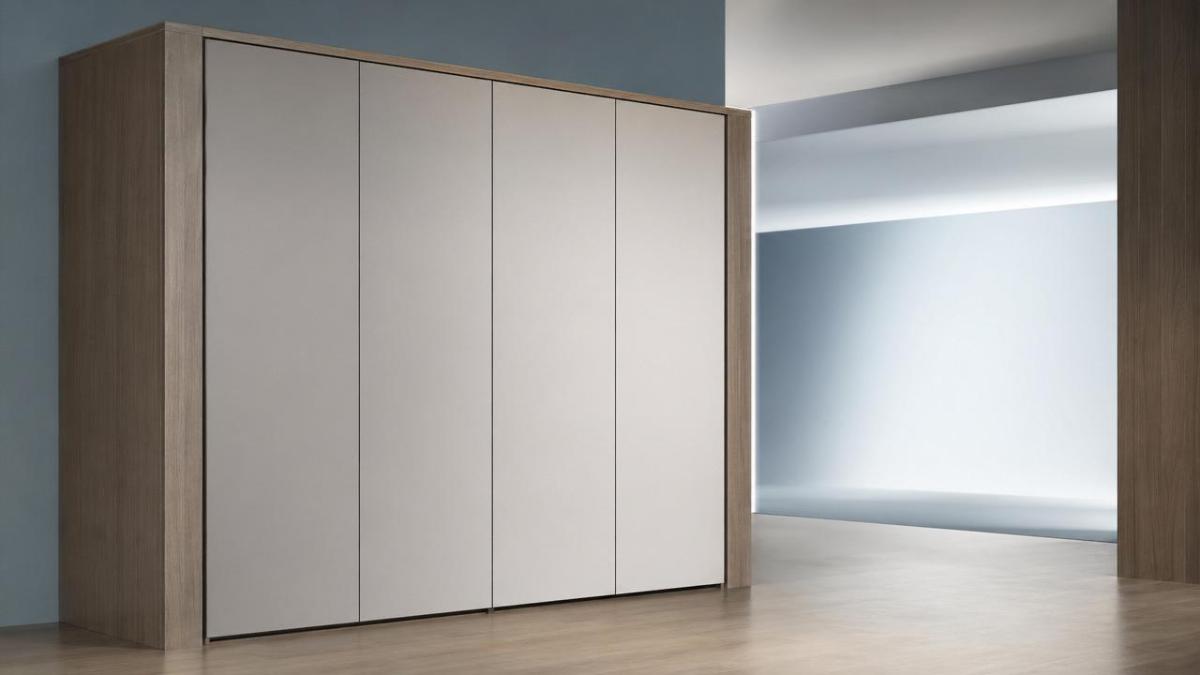
The term closed wardrobe door alignment refers to how well the doors line up when fully shut: gaps should be even, door faces should sit on the same plane, reveal lines should be consistent, and opening-clearance behavior should be smooth. For quality teams, this is not only an appearance issue. Poor alignment can indicate hinge adjustment problems, unstable carcass leveling, panel warpage, screw loosening, or installation on an uneven floor or wall. A visible 2 mm to 4 mm inconsistency may also point to larger hidden risks.
A structured closed wardrobe door alignment checklist also improves communication between inspectors, site supervisors, installers, and suppliers. Instead of writing vague notes such as “door not straight,” the inspector can record measurable findings like top gap 3 mm left and 6 mm right, center meeting line offset by 4 mm, or bottom rubbing detected after 5 opening cycles. That level of detail shortens rectification time and reduces repeated site visits.
What the quality team should confirm before inspection starts
- Confirm whether the wardrobe uses swing doors, double doors, tall full-height doors, or mixed modules with drawers and open niches, because alignment tolerances vary by configuration.
- Check whether the cabinet has already been fixed to wall and floor, and whether adjacent ceiling, skirting, and flooring works are complete.
- Prepare simple inspection tools such as a steel ruler, feeler gauge, spirit level, flashlight, masking tape marker, and defect record sheet.
- Review the approved shop drawing or sample standard so that the inspection follows project expectations rather than personal preference.
When teams standardize the sequence, inspection efficiency usually improves. In many interior projects, a trained inspector can complete a first-pass closed wardrobe door alignment review in around 3 to 8 minutes per unit, depending on the number of leaves and accessories. More importantly, the defect classification becomes more consistent, which supports more reliable snagging and acceptance reporting.
Core Closed Wardrobe Door Alignment Checklist for Daily Quality Control
The most effective checklist starts with visible geometry, then moves to functional movement, and finally checks supporting conditions. Quality inspectors should observe the wardrobe from front view, side angle, and standing distance of roughly 1 meter to 1.5 meters. This combination captures both measurable defects and real user-facing appearance issues.
The following checklist table can be used during pre-handover inspection, mock-up approval, or incoming finished installation review. The ranges below are practical industry references for customized cabinet works; final project requirements should still follow contract drawings, approved samples, and site tolerance rules.
This table shows that closed wardrobe door alignment is not one single measurement. It is a combination of reveal consistency, plane consistency, operational clearance, and visual straightness. If one item fails, the root cause may lie in hinges, carcass squareness, panel flatness, or surrounding building tolerance. For that reason, inspection should never stop at “adjust door only” without checking the supporting structure.
Step-by-step field inspection sequence
- Stand directly in front of the wardrobe and inspect overall symmetry before touching the doors.
- Measure the top and side gaps at at least 3 points if the door height exceeds about 2100 mm.
- Check the center meeting line on double doors from top, middle, and bottom.
- Open and close each leaf 3 to 5 times to confirm no rubbing, rebound, or hinge noise.
- View the doors from the side to identify face stepping or panel twist.
- Confirm final latch, magnet, or soft-close behavior when the doors return to the closed position.
If the wardrobe includes mirror panels, glossy finishes, or dark solid colors, the closed wardrobe door alignment check becomes more sensitive because reflections make defects more visible. In these finishes, even a 1 mm to 2 mm surface step can be easy to notice under corridor light or daylight from side windows. Inspectors should therefore review both artificial light and natural light conditions whenever possible.
Priority defects that should not be deferred
Some alignment issues can be corrected during final adjustment, while others should trigger immediate hold points. A door that rubs against the floor, has a pronounced center offset, or springs open after soft-close engagement should be treated as a priority defect. These conditions affect function and may worsen after occupancy due to hinge fatigue or seasonal movement.
Likewise, if multiple wardrobe units in the same zone show similar alignment problems, the issue may be systematic rather than isolated. In a block of 30 units, for example, repeated right-side sagging may suggest template drilling error, hinge batch inconsistency, or installer setup variation. Recording this pattern early allows the project team to correct the process before the final 70% to 80% of units are completed.
For quality managers, trend-based review is as important as unit-based review. A strong closed wardrobe door alignment process should therefore combine single-unit acceptance with batch defect tracking and escalation rules.
How to Judge Root Causes Behind Alignment Defects
A wardrobe door may appear misaligned even when the hinge is correctly adjusted. That is why inspectors should distinguish between symptom and source. In cabinet and wardrobe works, the visible defect often comes from one of four areas: door panel condition, hinge installation, cabinet carcass geometry, or site substrate condition. A clear root-cause checklist reduces unnecessary rework and prevents repeated adjustment attempts that do not solve the actual problem.
The table below helps quality teams connect common closed wardrobe door alignment symptoms with likely technical causes and recommended first actions. This is particularly useful when coordinating with installers, project engineers, and furniture suppliers during snagging review.
This root-cause table is valuable because many site teams lose time by adjusting hinges before confirming the cabinet box itself. If the carcass is out of square by several millimeters, no amount of hinge tuning will create perfect closed wardrobe door alignment. In these cases, inspectors should mark the installation as a structural or setting-out issue rather than a simple hardware adjustment issue.
Common hidden factors inspectors should not miss
- Wall unevenness behind the cabinet can distort the carcass after fixing, especially on full-height units above 2400 mm.
- Moisture variation in newly completed interiors can slightly affect panel stability during the first few weeks after installation.
- Different flooring elevations across a room can influence how the eye reads bottom line consistency.
- Overloaded internal shelves or hanging rails may indirectly affect the cabinet geometry in lighter constructions.
In practical site work, inspectors should also verify whether protective films have been removed from critical hardware interfaces. Sometimes a door looks slightly proud or fails to close fully because packaging foam, tape residue, or transport protection remains in the hinge or catch area. These are simple issues, but they can distort the closed wardrobe door alignment judgment if not cleared before inspection.
Another useful method is comparative inspection. If one wardrobe in a room appears misaligned, compare it with another unit installed by the same team on the same day. A pattern of similar defects often reveals a process issue, while a single isolated defect more often points to panel damage, localized substrate deviation, or handling impact.
Checklist Differences by Wardrobe Type, Finish, and Project Scenario
Not every project should use exactly the same emphasis during closed wardrobe door alignment inspection. The core checks remain the same, but priority points change according to door size, finish sensitivity, hardware type, and user expectation. A residential developer handover, a luxury villa fit-out, and a hotel operator acceptance may all require different inspection attention even when the cabinet material family is similar.
For example, a narrow bedroom wardrobe with 2 leaves may mainly require reveal consistency and smooth closing. A large walk-in wardrobe with multiple tall doors may require closer review of panel warpage, line continuity across several modules, and long-term hardware stability. In commercial residential projects, repetitive consistency across many rooms often becomes more important than perfection in one isolated unit.
Scenario-based inspection priorities
The following table helps quality teams adjust the checklist based on installation context. This supports faster decision-making when reviewing different interior packages under one procurement or project management structure.
This scenario-based approach prevents over-inspection in low-risk areas and under-inspection in high-visibility zones. It also helps suppliers and contractors allocate manpower better during project closeout. In many fit-out programs, around 20% of wardrobe locations create 80% of visible snagging pressure because they sit in highly exposed rooms, entrance areas, or premium sales units.
Finish and hardware factors that change inspection sensitivity
Matte textured surfaces can hide slight plane variation better than high-gloss lacquer or mirror-facing doors. Likewise, handleless groove profiles make horizontal alignment more visually critical because the eye follows the groove line continuously across multiple fronts. When inspecting closed wardrobe door alignment in these designs, even small misalignment becomes more obvious.
Tall doors above about 2300 mm also deserve special attention. Their height increases leverage on hinges, and minor substrate movement can become amplified at the free edge. In such cases, inspectors should review hinge quantity, door stiffness, and vertical line stability after repeated operation, not only at first close.
Where wardrobes are supplied as part of integrated interior packages, coordination with skirting, ceiling bulkheads, and adjacent wall panels is also important. A door may technically align within its own cabinet, yet still look wrong if neighboring decorative lines are inconsistent. Quality review should therefore consider both product-level and interface-level appearance.
Risk Reminders, Documentation Tips, and Execution Advice for Quality Teams
A good closed wardrobe door alignment process does not end when the inspector spots a defect. Teams also need clear defect grading, documentation discipline, and follow-up timing. Without that structure, the same units may be checked multiple times, responsibility becomes unclear, and completion reports lose value. In active fit-out sites, efficient documentation can save several days across a final snagging cycle.
For most projects, quality teams should record at least the room number, wardrobe location, defect type, measured condition, photo angle, and corrective action owner. If the same installer or production batch is involved in repeated defects, the record should flag it for trend review. This is especially useful when the project includes dozens of identical wardrobes manufactured in one production run.
Frequent mistakes during alignment inspection
- Checking door gaps before confirming cabinet level and squareness.
- Judging only by visual impression without taking at least one measured reading.
- Ignoring finish reflection, which can make slight stepping look much more severe after occupancy.
- Approving a door after one smooth close instead of verifying 3 to 5 repeat cycles.
- Focusing on the door leaf alone and missing adjacent flooring, wall, or skirting interference.
It is also wise to define inspection timing clearly. If the wardrobe is checked before flooring protection is removed, before air-conditioning is stable, or before adjacent works are complete, the result may not reflect final in-use conditions. Many teams therefore conduct one preliminary check at installation completion and one final closed wardrobe door alignment review within the last 7 to 14 days before handover.
Practical execution advice for contractors and suppliers
To reduce defects at source, installers should work with a simple pre-adjustment routine: confirm carcass plumb and level, tighten all fixing points, adjust hinges in a consistent sequence, and perform operation testing before leaving the room. Suppliers can support this by issuing a one-page alignment standard with target reveal ranges and photo examples of acceptable versus non-acceptable conditions.
For batch projects, mock-up approval is highly recommended. A single approved sample room or sample wardrobe can define the visual benchmark for the next 50 or 100 units. This reduces disputes later because all parties can compare finished work against an agreed reference rather than against inconsistent individual expectations.
When defects appear repeatedly, the response should go beyond rework. The team should review whether the issue comes from manufacturing tolerance, transport handling, hardware selection, site setting-out, or installer training. That is where a manufacturer with integrated production, design, and export coordination can provide more stable support across specification, packaging, and installation guidance.
Why Work With a Cabinet Supplier That Understands Inspection Priorities
For builders, design firms, decoration companies, and property owners, the value of a wardrobe supplier is not limited to manufacturing alone. The right partner should also understand how products are checked on site, where closed wardrobe door alignment problems usually occur, and what details help quality teams achieve faster acceptance. This becomes more important when projects involve custom sizes, multi-room repetition, or export coordination.
KUCU Building Materials Co., Ltd. is located in Foshan, Guangdong, China, with a 40,000 square meter manufacture center and 8 high-configuration production lines. With 20 years as a customized cabinet supplier, KUCU combines production, design, and exportation capabilities and provides kitchen cabinets, wardrobes, and bathroom vanity solutions for project-based clients. For quality-focused buyers, this integrated workflow can help align specification review, production planning, packing protection, and installation expectations more effectively.
If your team is preparing a residential or commercial cabinet package, we can support discussions around wardrobe configuration, material matching, door style selection, and practical quality checkpoints before mass production or site installation begins. Early coordination on closed wardrobe door alignment expectations can reduce avoidable snagging, improve visual consistency, and support a smoother project handover.
What you can contact us about
- Confirmation of wardrobe door structure, hinge type, and suitable alignment allowance for your project.
- Product selection advice for apartments, villas, hotels, and other interior fit-out scenarios.
- Lead time discussion, batch delivery planning, and export packing support.
- Customized cabinet solutions based on drawings, room dimensions, and finish requirements.
- Sample support, quotation communication, and coordination of inspection expectations before order confirmation.
If you need to review parameters, compare wardrobe options, estimate delivery timing, or discuss a customized solution for your next cabinet project, contact us with your drawings, target quantities, finish preferences, and quality requirements. We will help you evaluate practical product options and key inspection points, including the closed wardrobe door alignment details that matter most during final acceptance.