

For quality control and safety managers, effective custom kitchen maintenance tips are essential to protect cabinet finishes, hinges, and edges from daily wear, moisture, and improper handling. With the right inspection routines and care standards, customized kitchens can maintain appearance, performance, and long-term value while reducing repair risks and ensuring consistent project quality.
Why a checklist-based maintenance approach matters for custom kitchens
In the building decoration materials industry, damage rarely starts as a major defect. More often, a cabinet finish loses gloss near the sink, a hinge begins to sag after repeated overloading, or a sharp edge lifts slightly because of moisture migration. For quality control and safety managers, the value of checklist-based custom kitchen maintenance tips is that they convert these gradual changes into visible inspection points before they become complaints, safety hazards, or replacement costs.
A practical checklist also improves coordination across installation teams, project supervisors, property managers, and end users. In most residential and commercial kitchen environments, a 30-day post-installation review, a 90-day usage check, and then a 6 to 12 month maintenance cycle can catch most common issues related to finish abrasion, hinge loosening, and edge stress. This rhythm is especially useful when cabinets are supplied in batches across multiple units or phases.
For customized cabinet projects, maintenance is not separate from quality assurance. Surface panels, hardware, edging, sealants, and handling methods all influence lifecycle performance. A custom kitchen may look correct at handover, but without clear care standards, even a well-made product can show premature wear within 3 to 18 months in high-humidity or high-frequency use zones.
- Use inspection checklists to standardize acceptance criteria across multiple rooms, buildings, or project stages.
- Separate visible appearance issues from structural function issues so repairs can be prioritized correctly.
- Record moisture exposure, door alignment, and impact marks by zone, because sink areas and corner cabinets usually fail faster than dry storage sections.
- Train site teams and end users on approved cleaning methods, since improper chemicals can damage finishes in a few cleaning cycles.
Priority sequence for routine inspection
When applying custom kitchen maintenance tips, quality teams should avoid random inspection. Start with high-risk zones: sink base cabinets, cabinets next to cooktops, tall pantry doors with heavy loading, and exposed end panels near traffic routes. These four areas often account for a large share of maintenance findings because they combine moisture, heat, frequent opening, and accidental impact.
Second, verify the interaction between material and use pattern. Matte painted doors, laminated boards, PVC edged panels, and metal-framed components do not age in the same way. A simple visual review every 4 to 8 weeks in active projects can identify early scratches, swelling, edge opening, or hinge screw movement before the issue spreads to adjoining parts.
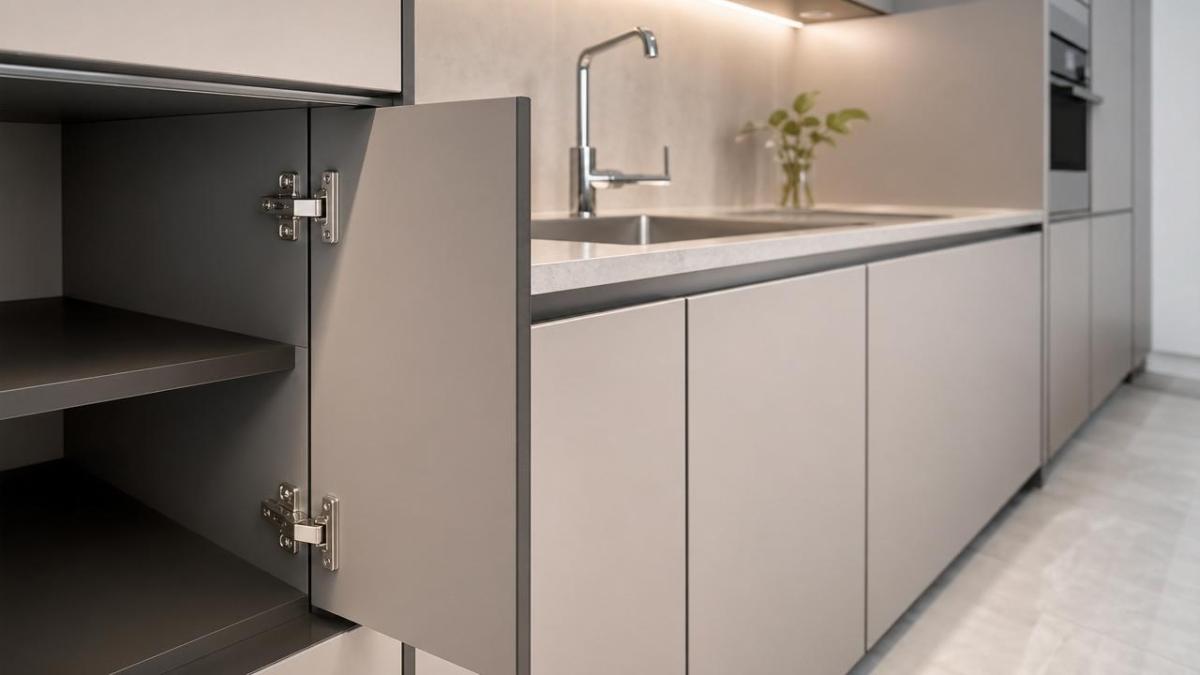
Core inspection checklist: finish, hinges, and edges
The most useful custom kitchen maintenance tips begin with three control points: surface finish condition, hinge performance, and edge integrity. These are the areas where aesthetics, user safety, and long-term usability meet. If a finish fails, moisture can reach the substrate. If hinges lose alignment, door movement becomes unsafe and stresses the panel. If edges lift, both appearance and cleanability decline quickly.
The table below gives a practical inspection standard for quality and safety managers overseeing customized kitchen cabinets in residential developments, commercial apartments, hospitality projects, or model-unit installations. It is designed for fast field use and can be adapted to weekly, monthly, or quarterly reviews.
This checklist helps teams identify not only what is damaged, but what is causing the damage. For example, if edge lifting appears together with hinge misalignment, the source may be repeated door impact rather than material weakness alone. That distinction matters for corrective action, user guidance, and supplier feedback.
Finish protection checklist
Finish care is often underestimated because early damage seems cosmetic. In reality, protective coatings and decorative layers are the first defense against moisture, grease, and abrasion. In kitchens with daily cooking activity, splash exposure near the sink and steam exposure near the cooking area can affect door fronts and exposed side panels within a few months if surfaces are not cleaned correctly.
What quality teams should confirm
- Cleaners are pH-neutral or mild and do not contain abrasive particles, strong solvents, or bleach-heavy formulas.
- Water does not remain on horizontal joints, sink cutout areas, or lower door edges for longer than normal cleaning time.
- Microfiber or soft cloths are used instead of scouring pads that can create micro-scratches after 5 to 10 cleaning cycles.
- Protective films, if used during installation, are removed on schedule and not left too long under heat exposure.
Where finish damage is concentrated in one zone, inspect nearby plumbing, ventilation, and user habits. Persistent splashing or condensation often explains localized swelling better than material defects alone. That is why custom kitchen maintenance tips should always link surface review with environmental review.
Hinge and movement control checklist
Hinges are high-cycle components. A cabinet door in a family kitchen may open and close dozens of times per day, while a shared-use apartment or display kitchen can accumulate much faster wear. Even a 2 mm to 4 mm shift in alignment can increase edge impact, create user dissatisfaction, and accelerate screw loosening in the substrate.
During inspection, open and close each door fully at least 3 times. Listen for scraping, observe the reveal line, and confirm that the soft-close function remains consistent. If one hinge carries more load than the others, the door can twist over time, especially on tall or wide fronts. This is one of the most practical custom kitchen maintenance tips for preventing secondary damage.
Maintenance standards by area and usage scenario
Not every custom kitchen should follow the same inspection frequency. Risk depends on humidity, user behavior, cleaning practices, and cabinet configuration. For quality control and safety managers, dividing the kitchen into use zones helps allocate maintenance time efficiently and improves defect traceability across projects.
The comparison below shows how maintenance focus changes by area. This is useful when developing internal acceptance sheets, after-sales review plans, or property management care guides for customized kitchen installations.
This zoning approach supports better manpower planning. Instead of treating all cabinets equally, teams can place more attention on moisture-sensitive and high-cycle locations. Over a 12-month period, that typically leads to fewer unexpected repair orders and more stable appearance retention across units.
Special points for project types
Builder-led projects often require standardization across large volumes, so maintenance sheets should use repeatable criteria and simple pass-fail language. Design company projects may emphasize finish consistency and visual alignment more strongly. Decoration companies often need maintenance guidance that can be handed over directly to clients. Building owners may focus on lifecycle cost, repair speed, and replacement planning.
KUCU Building Materials Co., Ltd., based in Foshan, Guangdong, China, works with these different project stakeholders by supplying customized kitchen cabinets, wardrobes, and bathroom vanities through integrated production, design, and export capabilities. With a 40,000 square meter manufacture center and 8 high-configuration production lines, the company understands that maintenance planning must match the delivery scale and end-use environment, not just the cabinet style.
For exported or multi-phase projects, it is helpful to define maintenance responsibilities at three stages: pre-handover inspection, early occupancy review, and post-use feedback collection. This makes custom kitchen maintenance tips more actionable because each issue can be linked to installation, environment, or user operation.
Common overlooked risks that shorten cabinet life
Some of the most expensive kitchen cabinet problems begin with issues that are easy to ignore during routine checks. Quality control teams may focus on visible scratches while missing slow water ingress behind a sink line. Safety managers may confirm door function but overlook a sharp chipped edge at child height or near a passage route. Strong custom kitchen maintenance tips should highlight these hidden or low-visibility risks.
A useful rule is to review not just the damaged component, but the damage path. Ask what allowed the issue to start, what accelerated it, and what adjacent component may fail next. In many cases, one ignored defect can trigger two or three additional problems over the next 6 months.
Overlooked items to place on every inspection form
- Underside of sink-front edges, where minor leaks can stay hidden until board swelling appears.
- Inside corners of base cabinets, where cleaning water or mopping moisture may accumulate.
- Handle and hinge-side edge contact points, where repeated impact may chip decorative layers.
- Tall door top hinges, which often show the first signs of overload or misalignment.
- Panels exposed to direct sunlight for several hours per day, where finish fading may become uneven.
Risk reminders for cleaning and handling
One common mistake is treating all cabinet materials the same. High-gloss surfaces, textured laminates, painted fronts, and edge-banded boards respond differently to moisture and friction. Another frequent issue is over-wetting during cleaning. A damp cloth is generally safer than direct water application, especially around joints and hardware seats.
A second mistake is using the door front as a support point when moving items or climbing nearby. This can stress hinges and loosen screws even if no visible crack appears. For safety-sensitive environments, maintenance notices should clearly state load and use restrictions, particularly on tall pantry units and corner mechanisms.
A third overlooked area is edge touch quality. If a repaired edge remains rough, users may continue snagging cloths or creating fresh chips. In practical terms, a good repair is not only visually acceptable at 1 meter distance, but also smooth and safe to touch during daily use.
Execution plan for quality control and safety managers
To turn custom kitchen maintenance tips into a repeatable management process, teams need a simple execution model. The goal is not to overcomplicate maintenance, but to ensure that findings are documented, prioritized, and resolved before appearance issues become structural complaints. A 4-step field workflow is usually effective for project kitchens and customized cabinet programs.
Recommended 4-step workflow
- Map the kitchen by risk zone and assign review frequency, such as 30, 60, or 90 days based on exposure level.
- Inspect finish, hinges, and edges using the same sequence every time to reduce missed items.
- Record defect type, probable cause, and urgency level so maintenance decisions are evidence-based.
- Feed recurring issues back to suppliers, installers, and users to improve future projects and reduce repeat defects.
If your organization manages many units, digital photo records taken from consistent angles can support faster comparison over time. Even without advanced software, keeping a simple log of date, location, defect category, and corrective action can reveal patterns such as moisture concentration, recurring hinge adjustment needs, or edge damage linked to specific traffic routes.
It is also wise to define response levels. For example, cosmetic cleaning issues may be reviewed in the next cycle, while edge sharpness, swelling near plumbing, or unstable hinge movement should be treated as priority findings. This protects users, supports property value, and gives procurement teams better information for future cabinet selection and specification adjustments.
Why choose us for customized cabinet support and maintenance coordination
For builders, design companies, decoration companies, and building owners, effective maintenance starts with cabinet solutions that are planned for real project conditions. KUCU Building Materials Co., Ltd. combines production, design, and export capabilities as a 20-year customized cabinet supplier, offering various types of kitchen cabinets, wardrobes, and bathroom vanities at a competitive price. This integrated approach helps clients align product selection, project requirements, and long-term care expectations from the beginning.
If you are developing maintenance standards, reviewing a custom kitchen specification, or comparing project-ready cabinet options, we can help you discuss practical points such as finish choices, edge protection details, hardware suitability, packaging for export, delivery timing, and use-environment considerations. For quality control and safety managers, these details directly affect the value of custom kitchen maintenance tips after installation.
Contact us to discuss parameter confirmation, product selection, custom solutions, delivery cycle planning, sample support, quotation communication, and project coordination needs. If your team needs clearer maintenance references for finishes, hinges, and edges in customized kitchens, an early technical discussion can reduce avoidable repairs and improve consistency across the full project lifecycle.