
For dealers, distributors, and agents, sharing practical custom kitchen maintenance tips in after-sales guides can strengthen customer trust and reduce service issues. As custom cabinetry buyers expect long-term durability and easy care, a clear maintenance introduction helps position your products as reliable and professional. This guide highlights essential points worth including to support end users while adding value to your after-sales service.
Why After-Sales Maintenance Guidance Is Becoming More Important in the Custom Cabinet Market
A clear shift is taking place in the building decoration materials sector: buyers no longer judge custom kitchens only by door style, color matching, or installation finish. More projects now evaluate the full life cycle of cabinetry, including how surfaces age after 12 to 36 months of daily use, how hardware performs under repeated opening cycles, and how easily owners can maintain appearance without frequent service calls. This change makes custom kitchen maintenance tips a practical sales tool rather than a secondary document.
For distributors and agents working with builders, design companies, and property owners, after-sales guidance has become part of risk control. In residential projects, poor maintenance often leads to claims that are not caused by manufacturing defects but by moisture exposure, chemical cleaners, steam concentration, or incorrect loading. When guidance is missing, service teams may spend 20% to 30% more time explaining preventable issues. A well-structured guide helps reduce this friction and creates a more professional handover process.
The trend is especially visible in customized cabinet supply chains serving export and project-based orders. Clients increasingly ask what should be cleaned weekly, what should be checked every 6 months, and which user behaviors may shorten product life. This is not only about maintenance; it reflects a broader market signal that durable use, fewer callbacks, and documented care instructions now influence purchasing decisions.
Key market signals behind this change
- More end users expect cabinetry to retain visual quality for 5 to 10 years under normal household use.
- Project buyers increasingly compare not only cabinet materials, but also maintenance burden and after-sales clarity.
- Moisture, ventilation, and cleaning errors remain among the most common non-defect causes of surface complaints.
- Dealers handling multiple kitchen cabinet lines need standardized care notes to improve service consistency.
For a manufacturer such as KUCU Building Materials Co., Ltd., with 20 years in customized cabinets and integrated production, design, and export support, this trend matters because after-sales content now influences how channel partners present value. A dealer who can explain correct care for melamine panels, lacquered doors, quartz tops, hinges, and edge-banded components is better positioned to win repeat business and protect margin.
What Is Changing in Maintenance Expectations for Custom Kitchens
The content of after-sales manuals is also changing. In the past, many suppliers offered only simple cleaning advice such as “wipe with a soft cloth” or “avoid sharp objects.” That is no longer enough. Today, practical custom kitchen maintenance tips should reflect the realities of contemporary materials, compact apartment layouts, open kitchens, stronger cooking frequency, and greater exposure to steam and grease. Buyers want useful instructions tied to actual usage conditions rather than generic care phrases.
Another shift is the move from product-only guidance to zone-based guidance. Instead of one short note for the entire kitchen, after-sales teams now benefit from separating maintenance by cabinet doors, carcasses, countertops, sinks, toe kicks, drawer runners, and tall units near heat sources. This matters because wear patterns differ significantly. A base cabinet near the sink may face daily moisture, while an upper cabinet near the cooktop faces heat and vapor several times a day.
A third change is the need for maintenance instructions that match channel use. Dealers and project distributors often need documents that can be adapted for homeowners, installers, and property management teams. A guide that works across these three audiences reduces communication gaps during the first 30 days after installation and again during the first annual inspection cycle.
The table below summarizes how maintenance guidance is evolving in the custom cabinet market and why these changes matter for channel partners in building decoration materials.
This transition suggests that custom kitchen maintenance tips should no longer be treated as an optional appendix. They are now part of product presentation, after-sales efficiency, and brand positioning. For agents managing competitive quotations, a stronger maintenance guide can support differentiation without changing the base cabinet structure or decorative finish itself.
Maintenance topics that now deserve more detail
Daily and weekly care
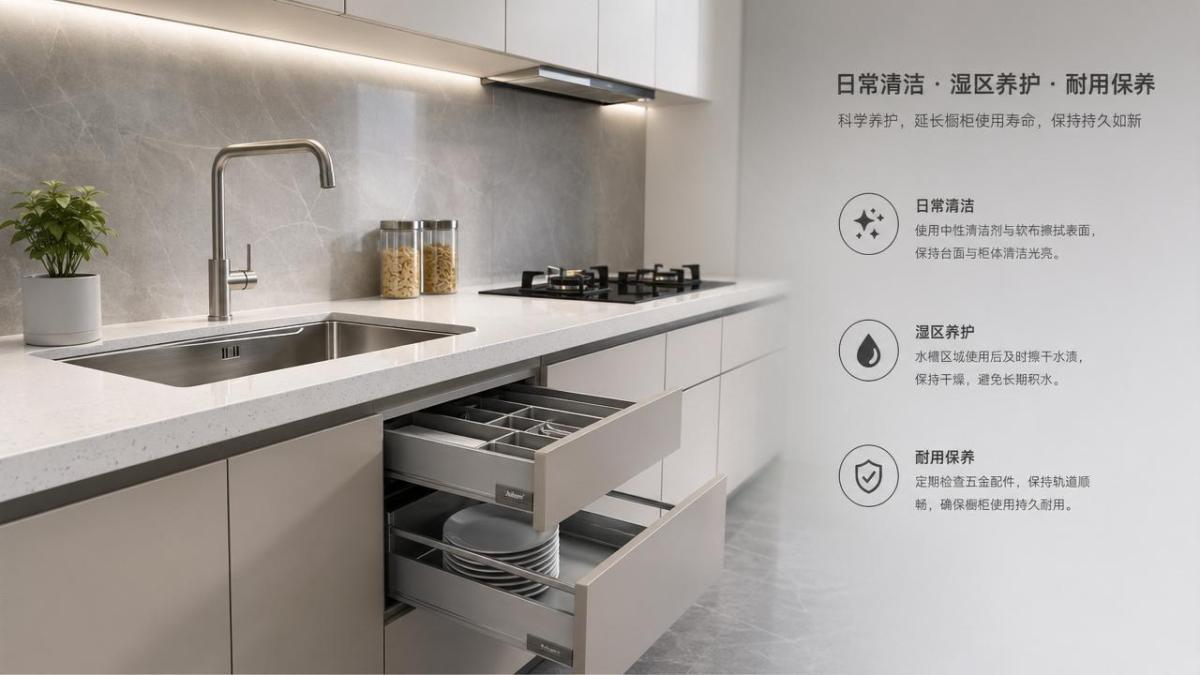
Explain what users should wipe after cooking, how often grease-prone areas need cleaning, and why water should not remain on edges or around sink cutouts for more than a short period. Many service issues begin with small habits repeated every day.
Quarterly inspection points
Include hinge tightening, runner smoothness, silicone condition near sinks, and ventilation checks. These are easy steps that can be reviewed every 3 to 6 months by users or property teams.
Environmental control
Open kitchens, humid climates, and limited natural ventilation increase the need for guidance on airflow, steam extraction, and moisture management. This is highly relevant for South China production supply serving diverse regional markets.
The Main Drivers Behind Better Custom Kitchen Maintenance Tips
Several forces are driving the improvement of after-sales maintenance content. The first is material diversification. Modern custom kitchens may combine melamine board, lacquered or PVC-finished doors, aluminum-framed glass units, quartz or sintered stone counters, stainless accessories, and multiple types of hardware. Each category reacts differently to moisture, heat, abrasion, and cleaning chemicals. A single cleaning sentence cannot address this complexity.
The second driver is the higher frequency of kitchen use. In many homes, kitchens are no longer isolated utility rooms. They function as family interaction spaces used for cooking, storage, cleaning, and display. More use means more opening cycles, more steam exposure, and more chances of accidental impact. Maintenance instructions need to match this reality, especially for cabinet doors and drawers opened dozens of times per day.
The third driver is channel accountability. Dealers and distributors increasingly need to distinguish between product defects, installation errors, and misuse. A structured after-sales guide helps define that boundary in a fair and professional way. It also supports smoother communication when serving developers, decorators, or building owners who require written maintenance recommendations during handover.
Driver analysis for after-sales content upgrades
The following table shows the most practical drivers and how each one affects the type of custom kitchen maintenance tips that channel partners should include.
These drivers show why maintenance communication is no longer a purely technical matter. It is tied to user expectations, project compliance habits, and long-term channel performance. For cabinet suppliers with manufacturing capacity and export experience, the ability to support partners with practical maintenance documentation can strengthen both product credibility and post-installation satisfaction.
Practical areas where guidance should become more precise
- Specify pH-neutral or mild cleaners rather than vague terms such as “household detergent.”
- Recommend drying wet areas within minutes instead of leaving water around edge bands or joints.
- Advise users not to place high-heat appliances too close to door panels or side panels for extended periods.
- Define load awareness for drawers and pull-out systems to reduce hardware strain over 6 to 12 months.
How These Changes Affect Dealers, Distributors, and Project-Based Sales
For channel partners, better custom kitchen maintenance tips create value at several business stages. During quotation, they help frame the product as a complete solution instead of a basic cabinet package. During installation handover, they reduce confusion over what is normal adjustment, what is cleaning-related wear, and what may require service review. During long-term account management, they support trust with contractors, decorators, and repeat buyers.
The impact is particularly clear in multi-unit housing, renovation packages, and builder supply projects. In these environments, even a small percentage of preventable complaints can consume substantial labor time. If 100 kitchens are installed in one phase, and 10 to 15 users report swelling near wet zones or staining on door surfaces caused by unsuitable cleaners, the issue can quickly affect brand perception. Many of these situations are avoidable with better handover instructions.
There is also a competitive influence. Dealers often represent products that appear similar in layout and finish. After-sales support becomes one of the clearest differentiators. A practical guide with maintenance schedules, material notes, and troubleshooting tips can help the sales team answer difficult questions early, especially when buyers compare low-price offers against more complete supply solutions.
Where the business impact is most visible
Customer confidence
A buyer who receives clear care instructions is more likely to believe the supplier understands real-life usage, not only production and installation. This confidence can support referrals and repeat specification discussions.
Service workload
Routine questions about hinge adjustment, cleaning residue, or water marks can often be reduced when maintenance notes explain what users should inspect at 30 days, 6 months, and 12 months.
Margin protection
When non-defect issues are handled with documented guidance, service resources can stay focused on genuine manufacturing or installation matters. This helps protect dealer efficiency across multiple projects.
For companies supplying varied kitchen cabinets, wardrobes, and bathroom vanities, this approach can also create consistency across categories. Moisture control, surface-safe cleaning, hardware checks, and load awareness are all themes that can be standardized while still adjusted to each product line.
What to Include in an After-Sales Guide Today: A More Useful Structure
If the market is moving toward life-cycle value, then after-sales documents should become more structured and easier to use. The best custom kitchen maintenance tips are not necessarily the longest ones; they are the ones that can be understood quickly and applied correctly. For channel partners, this means building a guide that mirrors how customers actually use kitchens over time.
A strong guide should divide maintenance by timing, material, and risk zone. Timing helps users act before visible damage appears. Material-specific notes prevent cleaning mistakes. Risk-zone mapping draws attention to sink bases, areas near cooktops, corners with limited ventilation, and tall cabinets housing appliances. These details are practical, memorable, and highly relevant for post-installation support.
It is also useful to separate “normal maintenance” from “service alert signs.” For example, a light hinge adjustment after installation may be normal, while persistent swelling, peeling, water penetration, or misalignment after repeated correction should be flagged for professional review. This distinction helps end users respond appropriately and reduces unclear complaints.
Recommended framework for a dealer-ready guide
- Daily care notes for cleaning, drying, and ventilation after cooking or washing.
- Weekly checks for grease build-up, sink-area moisture, and countertop residue.
- Quarterly hardware inspection covering hinges, runners, handles, and fasteners.
- Material-specific do and do not instructions for panel finishes, counters, and accessories.
- A simple troubleshooting section showing when users can self-check and when to contact the supplier.
A sample maintenance schedule worth adapting
The table below shows a practical maintenance schedule that dealers, distributors, and agents can adapt for homeowners or project handover packs.
This kind of schedule makes maintenance more actionable. Instead of giving broad advice, it turns care into a simple routine. That is useful for end users and even more useful for channel partners who need a clear, repeatable after-sales communication format.
How to Judge Future Demand and Prepare Better Support Materials
Looking ahead, the demand for better custom kitchen maintenance tips is likely to keep growing, especially in projects where product life, user convenience, and lower service frequency matter. Dealers and distributors should watch not only material trends, but also support-document expectations. Buyers increasingly want installation drawings, finish samples, and maintenance notes to work together as one complete handover package.
A practical response is to treat maintenance content as part of pre-sales and after-sales planning. Before order confirmation, identify key materials, high-moisture zones, hardware type, and user profile. Before delivery, prepare a guide that aligns with those details. After installation, make sure the client receives a version suited to actual use conditions. This process does not require complicated systems, but it does require consistency.
For channel businesses sourcing from experienced manufacturers, support quality can be a major advantage. KUCU Building Materials Co., Ltd., based in Foshan, Guangdong, operates a 40,000 square meter manufacture center with 8 high-configuration production lines and focuses on customized cabinets, wardrobes, and bathroom vanities. For partners serving builders, design companies, decoration companies, and building owners, this kind of integrated supply background can help turn product support and maintenance communication into a stronger commercial offer.
What to monitor in the next stage
- Whether project clients request more detailed material-specific care instructions at quotation or handover stage.
- Whether moisture-related or cleaning-related complaints cluster in certain kitchen zones within the first 6 months.
- Whether users need shorter visual checklists rather than longer technical manuals.
- Whether your product range would benefit from separate care guides for kitchens, wardrobes, and bathroom vanities.
Why choose us
If you are a dealer, distributor, or agent looking for a customized cabinet supplier that can support both product delivery and practical after-sales communication, we can help you evaluate more than appearance and price. We can discuss cabinet material options, finish matching, maintenance guidance priorities, project application conditions, and product combinations for kitchens, wardrobes, and bathroom vanities.
Contact us to confirm product parameters, suitable cabinet configurations, delivery lead time ranges, sample support, customization details, packaging expectations, and quotation planning for your target market. If you want to improve your after-sales documents with more effective custom kitchen maintenance tips, we can also help you identify which care points are most relevant for your customer type and project use scenario.