

Before project handover, checking closed wardrobe door alignment is a critical step to avoid client complaints, rework, and costly delays. For project managers and site leaders, a quick but accurate inspection helps confirm installation quality, visual consistency, and functional performance. In this guide, you will learn how to identify common alignment issues efficiently and ensure wardrobes meet handover standards with confidence.
In building decoration projects, wardrobe installation is often one of the last visible trades to be reviewed, yet it has a strong impact on final client perception. Even when the cabinet carcass is structurally sound, poor closed wardrobe door alignment can make a premium interior look unfinished. For builders, fit-out contractors, design firms, and project owners, that visual defect can trigger punch-list items, delayed sign-off, and additional labor costs in the final 24 to 72 hours before handover.
For teams managing multi-unit apartments, villas, hotels, and furnished residences, the inspection process must be fast, repeatable, and practical. KUCU Building Materials Co., Ltd., based in Foshan, Guangdong, operates a 40,000 square meter manufacturing center with 8 high-configuration production lines and 20 years of experience in customized cabinets, wardrobes, and bathroom vanity supply. That production and export background makes one point clear: handover quality is not only about manufacturing accuracy, but also about on-site installation control and final adjustment discipline.
Why Closed Wardrobe Door Alignment Matters at Handover
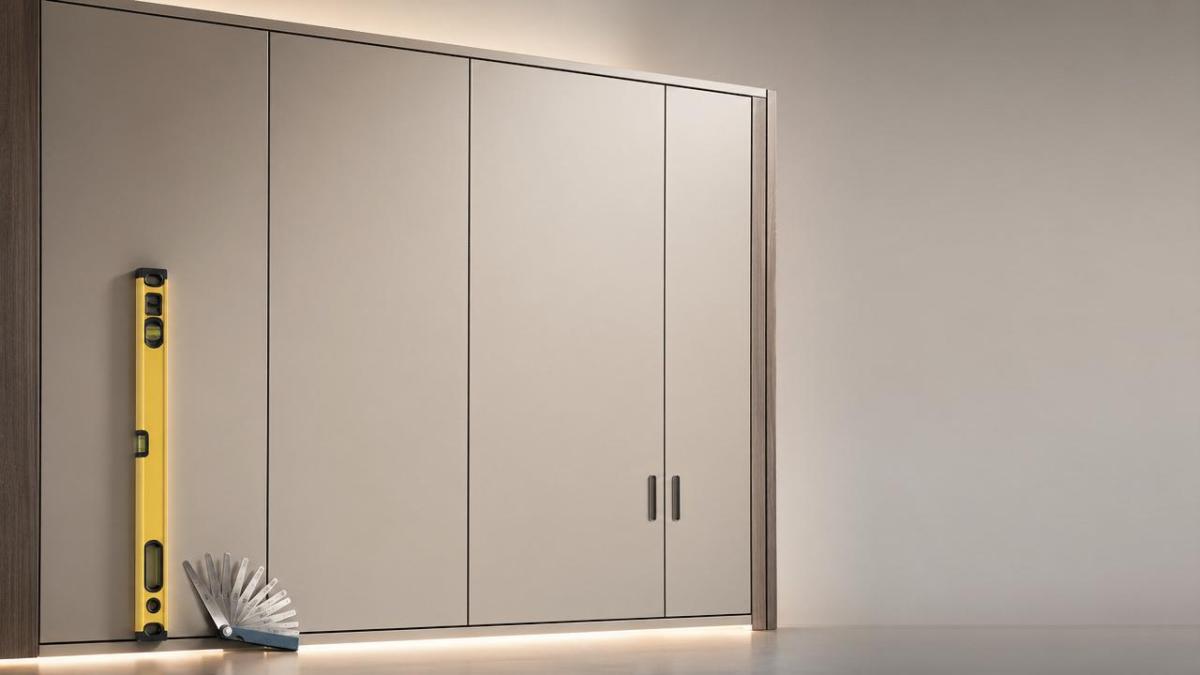
Closed wardrobe door alignment is the visual and functional condition of the doors when fully shut. Project managers usually assess 4 basic factors: even gaps, flush door faces, consistent top and bottom lines, and smooth closing action. If any of these fail, occupants notice immediately because wardrobes are used daily and are typically installed in bedrooms, dressing areas, and entry storage zones where sight lines are direct and lighting is strong.
A misaligned door may appear to be a minor defect, but the downstream effect is larger than many teams expect. A gap difference of 2 mm to 4 mm between adjacent doors can be obvious in matte finishes, while a level variation of more than 3 mm across a tall wardrobe elevation may suggest poor workmanship. In high-volume residential projects, repeating this defect across 20, 50, or 100 units can turn a simple adjustment issue into a major closing-stage bottleneck.
From a functional perspective, poor alignment can also indicate hidden installation risks. These include out-of-plumb side panels, loose hinges, twisted carcasses, uneven floor levels, or inconsistent door sizing. If the problem is ignored at handover, the wardrobe may later develop rubbing, self-opening, hinge noise, soft-close failure, or edge chipping. That means one visible defect can become a warranty call within the first 30 to 90 days of occupancy.
Common project consequences of poor alignment
- Delayed handover because wardrobes remain on the snag list after other trades are complete.
- Extra site visits for installers, especially when hinges need re-adjustment across multiple rooms.
- Lower perceived product quality, even if board material, hardware, and finishing meet contract requirements.
- Greater risk of owner disputes in furnished apartment, hotel, and developer-delivery projects.
For B2B buyers, the issue is especially important when wardrobes are supplied as part of a broader fit-out package. Kitchen cabinets, wardrobes, and bathroom vanities are judged together as one finishing system. If wardrobe alignment fails, confidence in the whole millwork package can drop. That is why site leaders should treat closed wardrobe door alignment as a measurable acceptance item rather than a purely visual opinion.
Key Inspection Standards and What to Check On Site
A practical inspection routine should focus on what can be checked quickly without complex instruments. In most interior fit-out projects, the goal is not laboratory precision but reliable acceptance. For closed wardrobe door alignment, the best approach is to define measurable site tolerances before handover. Typical visual and installation checks can be completed in 3 to 5 minutes per wardrobe when access is clear and protective film has been removed from the visible edges.
The most useful reference points are door-to-door gap consistency, top reveal, side reveal, base line, and face flushness. On standard hinged wardrobe doors, a reveal variation within about 1.5 mm to 2 mm is often acceptable for most residential decoration projects, while premium projects may require tighter visual consistency. For tall doors above 2200 mm, the eye catches vertical inconsistency more easily, so teams should inspect from both close range and 2 to 3 meters away.
It is also important to separate manufacturing issues from installation issues. If all doors are cut correctly but the cabinet is installed out of level by 4 mm across its width, the final closed wardrobe door alignment will still fail. Conversely, a well-installed carcass cannot fully compensate for door panels that differ in size or edge finishing. Project managers should therefore review both product dimensions and installed condition during final inspection.
Recommended site checkpoints
The table below gives a practical handover checklist that can be used by project supervisors, quality inspectors, or installation foremen. These values are typical field-control ranges and should be aligned with contract drawings, approved samples, and client expectations.
These checkpoints work best when applied consistently across all units. If the team inspects only problem rooms, defect patterns may be missed. On projects with 30 or more wardrobes, a sample check of 20% to 30% can identify recurring installation errors early, while full inspection is recommended in luxury or owner-direct handover projects.
Basic tools for a fast check
- A 600 mm spirit level to verify panel plumb and top-line consistency.
- A feeler gauge or simple gap card for quick reveal comparison.
- A flashlight to inspect shadow lines on dark finishes.
- A snag-list form or digital checklist to record unit number, issue type, and adjustment status.
Using a simple 4-tool process reduces argument on site because acceptance becomes evidence-based. It also helps suppliers and installers resolve defects faster, especially when wardrobes are part of a customized package produced off site and assembled under schedule pressure.
A Step-by-Step Inspection Process for Project Managers
A strong inspection method should be easy to repeat across different room layouts and unit types. For closed wardrobe door alignment, a 5-step workflow is usually enough to identify whether the issue comes from the door, hinge, carcass, wall condition, or floor level. This is particularly useful in mixed developments where some wardrobes are swing-door systems and others are integrated with loft storage or side filler panels.
Step 1 is visual review from distance. Stand about 2 meters away and check whether the vertical and horizontal lines appear continuous. At this stage, obvious faults such as one door sitting lower by 4 mm or a center gap widening at the top are easy to spot. Step 2 is close-range reveal checking. Compare top, middle, and bottom gaps because some doors look fine at eye level but twist at the lower hinge position.
Step 3 is operation testing. Open and close each door at least 3 times. A wardrobe may appear aligned when closed, yet still scrape the base panel or require force due to hinge tension problems. Step 4 is carcass verification. Check side panel plumb and top panel level because hinge adjustment alone cannot fully correct a cabinet body that is out by more than a few millimeters. Step 5 is documentation and immediate tagging for correction.
5-step handover routine
- Review the wardrobe front elevation from 1.5 to 2.5 meters away under normal room lighting.
- Measure visible gaps at top, center, and bottom on each closed leaf.
- Open and close each door 3 times to confirm hinge action and soft-close response.
- Check cabinet plumb, top level, and any filler-panel pressure against walls.
- Record defects by unit, room, wardrobe code, and likely cause for faster repair scheduling.
This process becomes even more efficient when linked to trade sequencing. If the fit-out team checks alignment before final silicone touch-up, paint patching, and room cleaning, rework is easier and cheaper. If the same problem is found after tenant readiness or owner walkthrough, the correction cost can rise sharply because finished areas need extra protection and access coordination.
For suppliers such as KUCU that support builders, design companies, decoration companies, and building owners, the value of standardized inspection is clear. Customized wardrobes are made to project dimensions, but final alignment still depends on transport handling, storage conditions, wall accuracy, floor flatness, and installer adjustment skill. A good inspection routine closes the gap between factory precision and site reality.
Typical Causes of Alignment Problems and How to Correct Them
Not every closed wardrobe door alignment issue has the same root cause. Some defects are simple hinge settings, while others point to installation or environmental conditions. The faster the project team can classify the issue, the faster it can assign the right trade for correction. In practice, most handover defects fall into 4 main groups: hinge adjustment, cabinet installation error, substrate or floor deviation, and door panel dimensional inconsistency.
Hinge-related defects are the most common and often the easiest to fix. A modern concealed hinge usually allows 3-way adjustment: side-to-side, depth, and height. If the center gap is uneven, lateral movement may solve it. If one door projects forward, depth adjustment may be needed. If the top line drops on one side, height correction may be required. These adjustments can often be completed in 5 to 10 minutes per door by a trained installer.
However, repeated hinge adjustment should not be used to mask a cabinet body that is out of square. If a wardrobe side panel is off plumb by 3 mm to 5 mm over its full height, the door may never align perfectly in the closed position. Likewise, if the floor drops at one corner and the base is not packed correctly, the whole elevation may twist. In such cases, the right solution is re-leveling, re-shimming, or partial reinstallation rather than endless hardware tuning.
Cause-and-correction guide
The table below helps project teams distinguish between quick adjustment issues and defects that require deeper intervention. This saves time during final snagging and reduces miscommunication between the main contractor, installer, and supplier.
The key takeaway is that closed wardrobe door alignment should be corrected at the source. If a team only treats the visible symptom, the same wardrobe may fail again after occupancy. A disciplined diagnosis-first approach reduces repeat visits and protects the handover schedule.
Common site mistakes to avoid
- Adjusting hinges before checking whether the cabinet itself is level and square.
- Approving wardrobes under poor lighting, then discovering visible misalignment later.
- Ignoring protective packing pressure or wall contact that shifts door position after closing.
- Mixing replacement doors between units without confirming size, drilling position, and finish match.
These mistakes are common on fast-track projects, especially in the last 7 days before handover. A simple control method is to let one person inspect, one person adjust, and one person recheck. That 3-role approach reduces oversight and creates clearer accountability on site.
How to Build a Reliable Acceptance Plan Across Multiple Units
For project leaders managing repeated unit types, the biggest challenge is consistency. One wardrobe can be corrected manually, but 80 wardrobes across several floors require a system. The acceptance plan should start before installation, not after defects appear. That means coordinating design approval, dimensional verification, delivery sequencing, and installer briefing so the final closed wardrobe door alignment is easier to achieve and faster to inspect.
A practical multi-unit plan usually includes 3 stages: pre-installation review, in-process inspection, and pre-handover validation. During pre-installation, teams should confirm wall openings, floor finish levels, and ceiling interface conditions. During installation, supervisors should inspect every 10 to 15 units or every floor section, depending on project scale. During pre-handover, a full visual and functional check should be scheduled at least 48 hours before the client walkthrough.
This planning is especially relevant for customized cabinet suppliers serving export and project markets. KUCU supports production, design, and exportation, which is valuable for builders and decoration companies that need coordinated wardrobe, kitchen cabinet, and vanity packages. But even with strong factory control, the site team must protect components during unloading, storage, assembly, and final tuning. Good product can still fail appearance acceptance if installation management is weak.
Suggested acceptance workflow by project stage
The following workflow can help project managers reduce late-stage defects and improve sign-off efficiency. It is designed for residential and hospitality interior projects where wardrobes are part of the decoration materials package.
The main advantage of this staged method is predictability. Instead of finding 30 similar defects at the end, the team can identify the first pattern within the first few units and correct the installation method. That can save several labor days on medium-size projects and protect completion milestones.
Procurement and coordination tips
- Request clear installation drawings and hinge adjustment guidance from the wardrobe supplier before delivery.
- Confirm whether the project uses standard swing doors, full-height doors, or integrated filler systems, since each affects alignment tolerance.
- Allow a buffer of at least 1 to 2 days for final adjustment in projects with more than 20 rooms or multiple unit types.
- Keep one replacement panel or hardware reserve ratio where practical, especially for export or remote projects.
For procurement teams, supplier capability matters as much as price. A manufacturer with design, production, and export coordination experience can support dimensional review, packing logic, and project documentation more effectively. That reduces site confusion and helps the final wardrobe installation look consistent at handover.
FAQ for Project Handover Teams
How much misalignment is usually visible to the client?
In most finished interiors, a gap or level difference of about 2 mm may already be visible, especially on tall wardrobe doors, light-colored matte finishes, and units with strong natural light. Once the variation reaches 3 mm to 4 mm, many clients will notice it immediately during walkthroughs. That is why visual inspection should always be combined with quick measurement, not just subjective judgment.
Should project teams inspect every wardrobe or use sampling?
For small projects with fewer than 20 wardrobes, full inspection is usually practical and recommended. For larger residential developments, a 20% to 30% sampling method can work during installation, but pre-handover inspection should expand if repeated issues are found. In premium residences, hotels, or owner-sensitive fit-outs, full inspection remains the safer option because appearance defects carry higher reputational risk.
What should be checked first: hinge setting or cabinet level?
Cabinet level and plumb should be checked first. If the carcass is not square or the base is not properly supported, hinge adjustment may only hide the defect temporarily. A good field rule is simple: verify structure first, then hardware, then appearance. This sequence reduces wasted labor and improves long-term closing performance.
When is the best time to perform the final alignment check?
The best timing is usually 24 to 48 hours before formal client handover, after major dusty works are complete and room lighting is available. If inspection happens too early, later trades may disturb the wardrobe position. If it happens too late, there may be no buffer for correction. On large projects, staggered checking by floor or unit block is often the most efficient method.
Closed wardrobe door alignment is a small detail with a large effect on handover quality, client satisfaction, and rework control. By checking reveals, flushness, operation, and cabinet level in a structured way, project managers can identify defects early and resolve them before they become formal complaints. For builders, design companies, decoration contractors, and building owners, this process improves both visual finish and delivery confidence.
If you are sourcing customized wardrobes, kitchen cabinets, or bathroom vanities for residential or commercial projects, KUCU Building Materials Co., Ltd. can support you with manufacturing, design coordination, and export-oriented project supply. Contact us today to discuss your wardrobe specifications, request a customized solution, or learn more about reliable cabinet systems for efficient project handover.