
For finance decision-makers, smart facility spending starts with prevention. These custom kitchen maintenance tips help reduce long-term repair costs, extend cabinet life, and protect the value of residential or commercial projects. With durable, customized solutions from an experienced cabinet manufacturer, you can lower replacement frequency, improve lifecycle budgeting, and make every investment in kitchen infrastructure more cost-efficient.
Why do custom kitchen maintenance tips matter so much for long-term budget control?
For financial approvers in residential developments, apartment projects, hotels, and commercial interiors, the real cost of a kitchen is rarely the initial purchase price alone. The larger expense usually appears over the next 3–10 years through hinge failures, moisture damage, delamination, drawer misalignment, countertop staining, and labor-intensive replacements. That is why custom kitchen maintenance tips should be treated as a cost-control tool, not just an operations checklist.
In the building decoration materials sector, kitchens operate as fixed assets with frequent daily use. If material selection and maintenance planning are disconnected, even a visually attractive installation can generate repeated after-sales spending. Finance teams often see this in the form of small but recurring repair orders every quarter, urgent replacement requests after handover, or unplanned downtime in rental and hospitality properties.
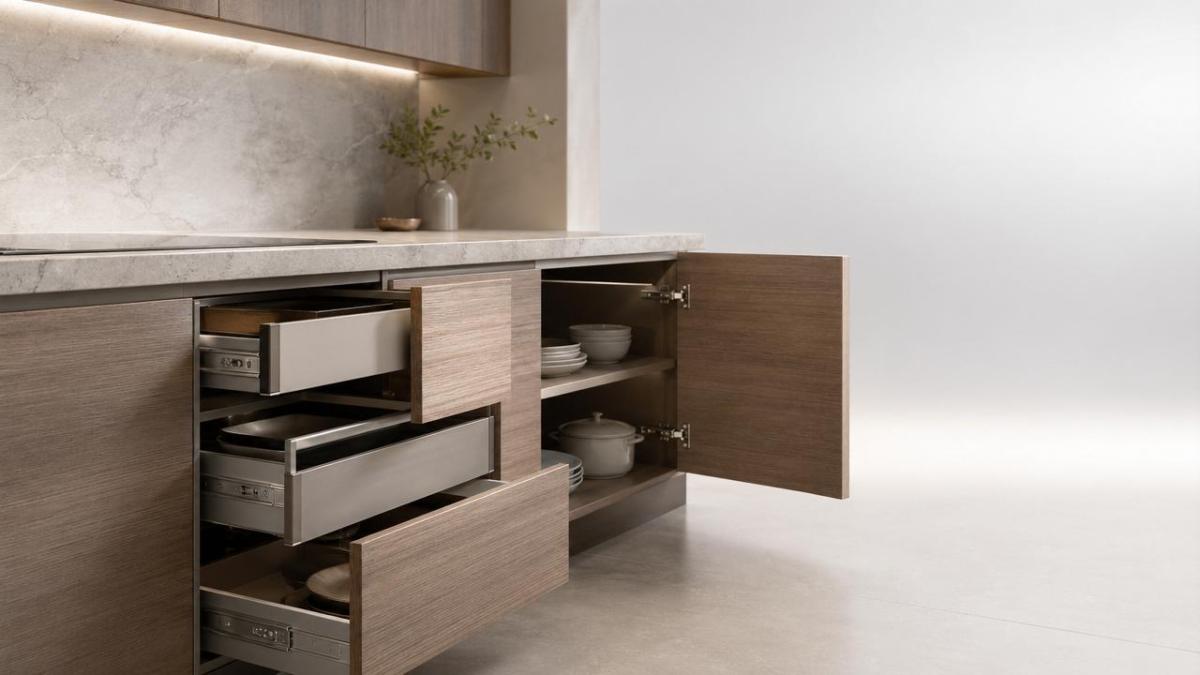
A custom cabinet system changes the equation because maintenance requirements can be anticipated during design, production, and installation. Moisture-prone zones, high-use drawers, corner hardware, sink base ventilation, and cleanability of surfaces can all be considered before the project goes live. This approach reduces the likelihood of premature repair events and supports more predictable lifecycle budgeting.
KUCU Building Materials Co., Ltd., based in Foshan, Guangdong, operates a 40,000 square meter manufacturing center with 8 high-configuration production lines. With 20 years of experience in customized cabinets and integrated production, design, and export capabilities, KUCU is positioned to support builders, design companies, decoration companies, and building owners who need maintenance-conscious kitchen solutions at a competitive price.
Where do repair costs usually come from?
Most avoidable costs come from five areas: water exposure around sink cabinets, poor edge sealing on panels, low-cycle hardware fatigue, inadequate ventilation for enclosed storage, and aggressive cleaning agents that damage finishes. In many projects, these issues start as minor defects within 6–18 months and grow into visible wear that affects tenant satisfaction, resale appeal, or commercial usability.
- Moisture exposure can swell substrate panels and weaken edge bonding near sinks and dishwashing zones.
- Frequent drawer and door use can loosen hinges or runners if hardware selection does not match traffic intensity.
- Improper cleaning routines may dull surfaces, damage coatings, or shorten the useful life of decorative finishes.
- Poor installation tolerance can create misalignment, friction, and earlier wear in a 12–24 month period.
For a finance decision-maker, the key takeaway is clear: repair costs do not happen randomly. They often follow visible design, material, usage, and maintenance patterns. Applying custom kitchen maintenance tips early makes long-term spending easier to forecast and easier to defend during internal approvals.
What maintenance points should finance approvers ask about before approving a custom kitchen project?
A strong approval process should not stop at color, layout, and price. It should include practical questions about service life, replacement intervals, cleaning compatibility, and maintenance access. In B2B kitchen procurement, especially for builders and decoration companies, these details influence how often units require site visits, spare parts, or tenant disruption during the first 2–5 years.
The following table helps translate custom kitchen maintenance tips into procurement checkpoints that finance teams can review with purchasing, project, and design departments. It focuses on maintenance-sensitive components commonly seen in building decoration material decisions.
This comparison shows why custom kitchen maintenance tips should be built into the approval stage. A lower initial quote can become more expensive if the kitchen requires repeated touch-ups, part replacements, or on-site corrections. Finance teams that review maintenance risk at the start usually gain better control over total ownership cost.
A practical 5-point approval checklist
Before releasing budget, ask for a 5-point maintenance review. This is especially useful when comparing several suppliers or evaluating export-ready customized cabinet solutions for mixed residential and commercial use.
- Confirm which areas are designed for wet use and how edges and joints are protected.
- Check whether hardware matches light, medium, or heavy daily use scenarios.
- Request cleaning and maintenance guidance for laminates, painted finishes, and countertops.
- Review spare-part accessibility for hinges, runners, handles, and replacement panels.
- Clarify typical lead time for replacement parts, often ranging from 2–6 weeks depending on customization depth and export logistics.
For finance approvers, these questions reduce uncertainty. They also improve coordination with operations teams that will handle maintenance after project handover.
Which custom kitchen maintenance tips create the biggest savings over 3–5 years?
Not every maintenance action delivers the same financial value. The most effective custom kitchen maintenance tips are the ones that prevent structural deterioration, reduce hardware failures, and simplify routine care. In practice, three categories usually deliver the highest savings: moisture control, scheduled inspection, and correct cleaning methods.
Moisture control is the first priority because water damage spreads quietly. Under-sink cabinets, kickboard edges, and countertop joints should be checked monthly in high-use projects and at least once per quarter in standard residential units. Early detection matters. A small leak fixed in 1 day can prevent panel replacement, mold remediation, and repainting around adjacent finishes.
Scheduled hardware inspection is the second priority. Hinges, drawer runners, and lifting supports should be reviewed every 6–12 months depending on traffic intensity. Minor adjustment often takes minutes, while a delayed response can cause misalignment, screw loosening, and door edge impact. These failures are not dramatic at first, but they create service costs that multiply across multi-unit projects.
Correct cleaning is the third priority. Abrasive tools, high-acidity chemicals, and standing water shorten the service life of decorative surfaces. For laminated or painted cabinet fronts, a soft cloth and mild cleaner are generally safer than aggressive degreasers. Finance teams should request simple maintenance instructions at handover because poor daily care often leads to warranty disputes and unnecessary replacement requests.
Recommended maintenance rhythm by component
The next table converts custom kitchen maintenance tips into a practical inspection rhythm that property managers, builders, and project owners can implement after installation.
A simple schedule like this supports better operating discipline. It also helps finance teams estimate maintenance labor, replacement reserves, and likely service intervals across 10 units, 100 units, or a larger multi-phase project.
Three common mistakes that raise long-term costs
- Treating all cabinet finishes the same, even though wet-zone exposure and cleaning compatibility differ by surface type.
- Waiting for visible failure before adjusting hinges or resealing edges, which turns low-cost maintenance into component replacement.
- Approving customized kitchens without asking how easily spare parts can be matched or shipped later.
For high-volume developments, these mistakes are expensive because the same flaw repeats unit by unit. That is why maintenance planning should be standardized alongside procurement.
How should buyers compare standard cabinets and maintenance-focused custom solutions?
Finance approvers often face a familiar question: should the project use a lower-cost standard cabinet package or a custom solution designed around use intensity, layout, and maintenance risk? The answer depends less on sticker price and more on how the kitchen will be used over the next several years. In many cases, standard solutions look efficient at purchase stage but create avoidable service costs later.
Maintenance-focused customization adds value when the project has repeated unit types, demanding wet zones, rental turnover pressure, or design requirements that make replacement difficult. Builders and decoration companies also benefit when installation details are coordinated early, because fit issues and rework tend to be reduced before site delivery.
The comparison below is useful when discussing custom kitchen maintenance tips in procurement meetings. It highlights why customized cabinets can support stronger lifecycle economics even when the initial specification is more detailed.
This kind of comparison supports better approval decisions because it reframes the conversation. Instead of asking only which cabinet is cheaper today, the team can ask which option is easier to maintain across the project’s operating cycle.
Why KUCU fits maintenance-sensitive B2B projects
KUCU serves builders, design companies, decoration companies, and building owners with customized kitchen cabinets, wardrobes, and bathroom vanities. This matters because maintenance performance is shaped by the whole project system, not by one cabinet box alone. Coordinating product design, production, and export under one supplier can reduce communication gaps that often lead to inconsistency.
With 8 production lines and two decades of cabinet experience, KUCU can support projects that need repeated-unit consistency, practical customization, and competitive pricing. For financial approvers, this means a supplier discussion can move beyond appearance and into topics like maintenance risk, batch consistency, delivery planning, and replacement strategy.
In projects where procurement teams need to compare options across budget levels, KUCU can also help identify where customization creates the highest return. That may include sink base durability, drawer hardware upgrades, easy-clean finishes, or layouts that simplify future service access.
What risks and misconceptions should decision-makers avoid?
One common misconception is that maintenance costs are mostly caused by user behavior. In reality, user behavior matters, but poor detailing, material mismatch, and weak planning usually create the conditions for earlier failure. Custom kitchen maintenance tips work best when they combine user instruction with procurement discipline and installation quality control.
Another mistake is assuming that all customized cabinets are harder to maintain. That can happen if customization is purely decorative. But when customization addresses dimensions, wet-zone details, access, and hardware suitability, maintenance can become easier, not harder. This is especially true in projects with repeated layouts, where standardized custom modules reduce confusion for service teams.
A third risk is approving projects without a replacement-part strategy. Even a well-built kitchen will experience some wear over 3–7 years. The practical question is whether the project can obtain matching panels, compatible hardware, and technical support without excessive delay. For export projects, this should be discussed before order confirmation rather than after handover.
Finally, some teams evaluate only unit price and ignore the service burden across multiple properties. A saving on day one may disappear if maintenance staff spend extra hours every month on hinge adjustment, moisture claims, or finish complaints. Financial approval is stronger when it considers both procurement and post-installation management.
FAQ: common procurement and maintenance questions
How often should a custom kitchen be inspected?
For standard residential use, a quarterly inspection is a practical baseline, with monthly checks for sink cabinets and any area with plumbing exposure. In hospitality, rental turnover, or high-use staff kitchens, a monthly routine is often more appropriate. The aim is to catch leaks, hardware looseness, and seal deterioration before they become replacement-level issues.
Which areas of a kitchen usually fail first?
The first trouble spots are commonly under-sink cabinets, countertop joints, kickboards near wet floors, and high-frequency drawer systems. These zones combine moisture, impact, and repeated movement. Custom kitchen maintenance tips should therefore prioritize water management, hardware adjustment, and proper cleaning routines in these exact locations.
What should finance approvers request from suppliers?
Request at least 4 things: a clear materials description, a hardware specification aligned with expected use, routine maintenance guidance, and a spare-parts or replacement support process. If the project involves export or phased delivery, also ask about lead time ranges, sample confirmation steps, and consistency controls for repeat orders.
Are custom kitchens only suitable for premium budgets?
No. Customization does not always mean luxury-grade specification. It can also mean practical adjustment to project dimensions, wet-zone needs, and use frequency. A balanced custom package often helps finance teams allocate spending where it reduces future repair costs most effectively, while keeping lower-risk components within budget.
Why choose a supplier that understands both customization and lifecycle cost?
When your team evaluates custom kitchen maintenance tips, the best supplier conversation is not limited to finishes and quotations. It should also cover service life assumptions, high-risk zones, replacement planning, and the maintenance burden likely to appear after handover. This is where an experienced customized cabinet manufacturer adds practical value.
KUCU combines production, design, and export capabilities in one operating model. For project buyers, that creates a more direct path for discussing cabinet configuration, material suitability, quantity planning, and delivery coordination. For finance approvers, it supports a more reliable review of cost drivers across specification, installation, and later maintenance stages.
If you are comparing suppliers for apartments, villas, hospitality interiors, or commercial projects, KUCU can help you assess which custom kitchen maintenance tips should be built into the original scheme. Discussion can include 3 core areas: material and hardware selection, expected delivery cycle, and replacement-support planning for future operation.
Contact KUCU to discuss cabinet parameters, project-based product selection, lead time expectations, customized kitchen layouts, sample support, export coordination, and quotation planning. A well-designed kitchen should not only look right at handover. It should also stay manageable, durable, and financially efficient over the years that follow.