

Closed wardrobe door alignment issues are often more than a cosmetic concern—they can indicate worn hinges, inaccurate installation, frame movement, or poor hardware performance. For technical evaluators in building and interior fit-out projects, identifying these warning signs early helps prevent functional failure, callback costs, and long-term maintenance problems. This article outlines how alignment problems in closed wardrobe doors can signal deeper hardware issues and what to assess before specification or replacement.
In cabinet and wardrobe packages supplied for apartments, villas, hotels, and mixed-use developments, closed wardrobe door alignment is a practical acceptance item rather than a minor finishing detail. A visible gap difference of 2–3 mm, inconsistent reveal lines, or a door face sitting proud by even 1.5 mm can point to hidden stress in hinges, carcass squareness, substrate stability, or installation accuracy. For technical assessment teams, these signs affect not only appearance but also lifecycle cost.
For buyers working with customized cabinet manufacturers, the evaluation should connect design, hardware, production tolerance, packaging, transport, site conditions, and final adjustment. KUCU Building Materials Co., Ltd., based in Foshan, Guangdong, operates a 40,000 square meter manufacturing center with 8 high-configuration production lines and 20 years of customized cabinet supply experience. In projects involving builders, design firms, decoration companies, and property owners, hardware-linked alignment control is critical from specification to installation handover.
Why Closed Door Alignment Matters in Technical Evaluation
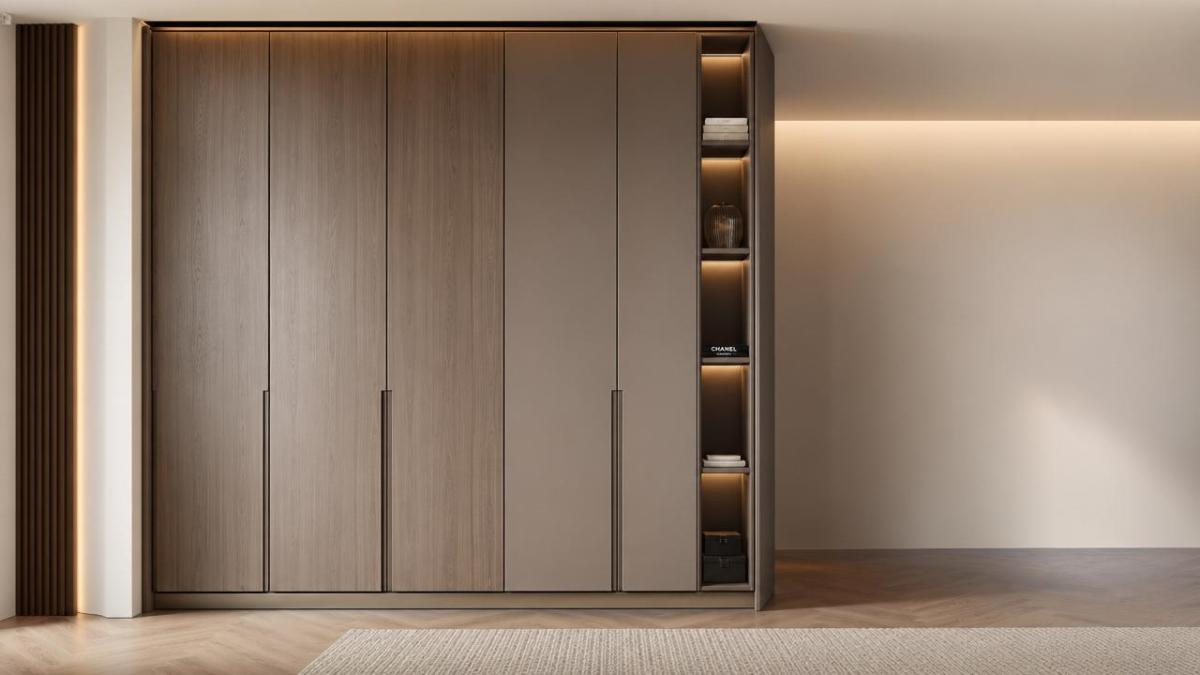
When evaluators inspect a wardrobe in the closed position, they are checking a stable reference state. An open door may appear acceptable because gravity and user handling temporarily mask errors, but closed wardrobe door alignment reveals whether the hinge system, panel weight distribution, and cabinet geometry are working together. In practical fit-out acceptance, this closed-state check should be repeated at least 3 times per unit and from 2 viewing angles: frontal and side reveal.
Poor closed wardrobe door alignment commonly shows up as uneven vertical gaps, top-to-bottom offset, door leaf overlap mismatch, rubbing at the base panel, or rebound after closure. These defects can emerge during factory assembly, after sea transport, or following onsite installation in rooms with changing humidity. In wood-based panel applications, a moisture shift of 8%–12% in ambient conditions can be enough to amplify a previously minor hardware setting issue.
For technical evaluators, the importance lies in separating appearance defects from root-cause defects. If the issue is only a one-step hinge adjustment, the correction is fast. If the root cause is carcass deformation, underspecified hinge load capacity, or inaccurate boring positions, replacement or rework may be required. That difference directly affects labor planning, snagging schedules, and callback exposure across 20, 50, or even 200 installed wardrobes in one project phase.
Typical warning signs seen in closed position
Technical teams should document visible and measurable symptoms instead of relying on general comments such as “door not straight.” The more precise the observation, the easier it becomes to trace the issue back to hardware, machining, or installation. A structured inspection also improves communication between site supervisors, suppliers, and installers.
- Uneven side gap exceeding a typical project tolerance of 1.5–2.0 mm between paired doors.
- Top edge misalignment greater than 2 mm when compared across adjacent wardrobe modules.
- Door face projecting forward or recessing backward by more than 1 mm in closed state.
- Incomplete closure, bounce-back, or the need for extra push force above normal soft-close operation.
These signs should be checked together with hardware type, door dimensions, panel thickness, and the number of hinges used. A tall wardrobe door at 2100–2400 mm height behaves differently from a shorter module door, and the alignment expectation must reflect that structural reality.
Hardware Problems Commonly Hidden Behind Alignment Defects
Closed wardrobe door alignment problems often trace back to hinge performance first. In many projects, the door panel itself is blamed before the hardware is checked. However, worn hinge cups, low-grade spring mechanisms, loose mounting plates, or insufficient adjustment range can create visible offset even when the panel machining is acceptable. On wardrobe doors with mirror inserts, glass elements, or thick decorative fronts, hinge load becomes even more critical.
Another common cause is mismatch between door weight and hinge configuration. For example, a full-height wardrobe door in the 18–25 kg range may require 4 hinges instead of 3, depending on width, substrate density, and opening frequency. If the project uses only the minimum hardware count, the door may initially align but gradually sag after several hundred open-close cycles. That is why closed wardrobe door alignment should be assessed not only at handover but also during mock-up and sample verification.
Mounting plate position and drilling accuracy also matter. A boring deviation of even 0.5–1.0 mm can reduce adjustment effectiveness across multiple hinges. When installers compensate excessively on one hinge, stress shifts to the others, causing uneven reveal or soft-close inconsistency. In technical review, alignment should therefore be read as a system issue involving hinge quality, fixing method, panel weight, and machining tolerance.
Common hardware-related root causes
The table below helps evaluators connect visible symptoms with likely hardware issues and practical checks during site inspection or supplier review.
The key takeaway is that alignment defects should not be handled as isolated visual complaints. If multiple wardrobes show the same closed-state deviation, the issue is more likely systemic—such as hinge specification, drilling jig calibration, or installation method—rather than random installer error.
Hardware checks before approving replacement
- Confirm the hinge type matches door overlay, inset, and opening angle requirements.
- Check whether hinge quantity follows door height and weight range rather than minimum budget practice.
- Inspect all screws for stripping, under-tightening, or weak substrate holding power.
- Verify that hinge adjustment still has available travel and has not reached its limit.
If these four points are not reviewed, replacement decisions may solve the symptom only temporarily. In technical procurement, replacement without root-cause correction often leads to repeated service visits within 3–6 months.
Installation, Cabinet Structure, and Site Conditions That Affect Alignment
Not every closed wardrobe door alignment issue starts with the hinge itself. In many building interior projects, the cabinet carcass, wall flatness, floor level, and transport handling contribute as much as hardware selection. A wardrobe installed on a floor that varies by 4–6 mm across the footprint can force the cabinet out of square unless base adjustment and shimming are done correctly. Once the carcass twists, the hinge must compensate beyond its intended range.
Side panel rigidity is another decisive factor. Large-format customized wardrobes often use melamine-faced boards, plywood, or lacquered panels in thicknesses such as 18 mm or 25 mm. If the side panel, back panel, or top stretcher lacks sufficient stability, the cabinet may rack during transport or onsite handling. In that case, even good hinges cannot maintain consistent closed wardrobe door alignment over time.
Technical evaluators should also review environmental factors. In coastal, humid, or newly completed buildings, interior moisture conditions may remain unstable for several weeks. Panels, edges, and fixing points can respond differently, especially when storage before installation exceeds 7–10 days in uncontrolled conditions. A good evaluation process therefore connects site readiness with final hardware adjustment timing.
Site and structure factors to inspect
The following table summarizes non-hardware conditions that often trigger or worsen alignment complaints in built-in wardrobes and fitted storage systems.
The practical implication is clear: if evaluators focus only on the hinge face, they may miss the structural condition forcing the hinge out of alignment. A robust inspection sequence should start from base level and cabinet squareness before moving to hardware fine tuning.
Frequent project-stage mistakes
- Adjusting doors before all cabinets in a run are fully fixed and leveled.
- Using transport-damaged panels without checking hinge cup area compression or cracking.
- Skipping final re-adjustment after neighboring wall panels, skirting, or ceiling trims are installed.
- Ignoring humidity-related movement in recently plastered or newly air-conditioned spaces.
In large interior packages, these mistakes can turn a minor alignment issue into a repeated defects list item. A 15-minute extra check at installation stage is usually less costly than post-handover revisits across dozens of rooms.
Specification and Procurement Criteria for Reliable Wardrobe Hardware
For procurement and technical review teams, preventing closed wardrobe door alignment problems starts before production. The specification should define not only finish and dimensions but also hinge performance level, adjustment capability, load suitability, and installation tolerances. In B2B furnishing projects, hardware is often a small portion of package value but a major factor in service complaints. That imbalance makes upfront specification especially important.
When comparing suppliers, evaluators should ask how the cabinet maker manages integration between board processing and hardware boring. A manufacturer with stable production flow, calibrated machinery, and export experience is generally better positioned to keep hinge cup positions and overlay settings consistent across batch orders. For customized wardrobes, this consistency matters whether the project quantity is 20 sets or 2,000 doors.
KUCU’s capabilities in production, design, and exportation are relevant here because alignment performance depends on more than a single component. A manufacturing center of 40,000 square meters with 8 production lines can support process control, batch consistency, and coordinated customization for kitchen cabinets, wardrobes, and bathroom vanities. For technical evaluators, that means the supplier conversation should cover production tolerance, packaging method, and pre-shipment quality checks alongside hardware brand level.
Suggested procurement checklist
The checklist below can be used during supplier prequalification, mock-up review, or technical clarification stage to reduce alignment-related risk before bulk ordering.
A useful procurement practice is to request one sample or mock-up unit with full door adjustment review before final mass production. That single step can expose overlay conflicts, soft-close force issues, or hinge quantity gaps early, often saving weeks of later correction.
Recommended technical questions for suppliers
- What hinge configuration is proposed for doors above 2100 mm height or above 20 kg weight?
- What machining tolerance is maintained for hinge cup and plate drilling positions?
- How are cabinets checked in closed condition before packing and export shipment?
- What adjustment guidance is provided to installers for final onsite tuning?
These questions are particularly relevant for projects where wardrobes are supplied in volume to builders, developers, and design-led fit-out contractors that need predictable handover quality rather than one-off residential adjustments.
Inspection Workflow, Corrective Action, and FAQ for Evaluators
A practical evaluation method reduces subjective judgment and speeds up decision-making. Instead of labeling every defect as a door issue, technical teams should follow a sequence: confirm cabinet level, check carcass squareness, inspect hardware fixing, review hinge type and count, then perform fine adjustment. This 5-step order helps distinguish installation defects from specification defects. It is especially effective in hotel rooms, residential towers, and bulk handover environments where time per unit may be limited to 10–20 minutes.
Corrective action should also be proportional. If the reveal deviation is under 1.5 mm and hardware travel remains available, hinge adjustment may be enough. If the side panel screw holding has failed or the carcass diagonal difference exceeds about 2 mm, simple adjustment will not hold. In that case, the technical evaluator should record the issue as structural or machining-related and recommend partial reinstallation or component replacement.
Documentation matters. Photos in closed position, gap measurements at top-middle-bottom, and notes on door weight or hinge count create a repeatable acceptance record. Over a multi-unit project, this allows recurring patterns to be traced back to one production batch, one installation team, or one room-condition factor rather than treated as isolated defects.
A simple field workflow
- Step 1: Measure floor level and cabinet plumb before touching any hinge screws.
- Step 2: Record closed wardrobe door alignment at top, middle, and bottom reveal points.
- Step 3: Confirm hinge model, quantity, fixing integrity, and available adjustment travel.
- Step 4: Adjust gradually across all hinges, not one hinge only, then retest closure 3 times.
- Step 5: If deviation persists, escalate to carcass, boring, or panel stability review.
This workflow is simple enough for site teams yet detailed enough for supplier feedback. It also supports clearer responsibility allocation between cabinet supplier, hardware source, transport handling, and installer.
How much misalignment is usually acceptable?
Project tolerances vary, but many technical teams aim for visual reveal consistency within about 1.5–2.0 mm for standard wardrobe doors in the closed position. Anything beyond that should trigger closer review of hinge setup, carcass squareness, and installation level. Luxury residential and hotel projects may apply tighter appearance criteria.
Can repeated hinge adjustment solve every closed alignment issue?
No. Repeated adjustment is effective only when the root cause is within normal installation variation. If the hinge is underspecified, the screw holding is weak, or the cabinet body is twisted, the alignment may drift again within days or weeks. Evaluators should watch for “temporary correction” patterns, especially on tall or heavy doors.
When should hardware replacement be considered?
Replacement is usually justified when hinges show fatigue, soft-close failure, stripped fixing points, or insufficient load capacity for the actual door configuration. It should also be considered when adjustment travel is already at its limit but closed wardrobe door alignment still remains outside project tolerance.
What should be reviewed before specifying new wardrobes for a project?
Review four areas together: door size and weight, hinge type and quantity, cabinet structural rigidity, and site installation conditions. This integrated review is more reliable than selecting hardware by price alone. It is particularly important for customized export projects, large apartment packages, and high-frequency-use interiors.
Closed wardrobe door alignment is one of the clearest early indicators of whether wardrobe hardware, cabinet construction, and installation quality are working as intended. For technical evaluators, careful closed-state inspection can prevent repeated maintenance, reduce snagging costs, and improve long-term performance across residential and commercial fit-out projects.
If you are reviewing customized wardrobe solutions for builders, design companies, decoration contractors, or building owners, it is worth discussing hardware configuration, machining tolerance, and installation support at the sourcing stage. KUCU Building Materials Co., Ltd. supports customized cabinet, wardrobe, and bathroom vanity supply with integrated production, design, and export capability. To assess suitable configurations for your project, contact us today to get a tailored solution, technical details, or product consultation.