

In humid homes and high-use kitchens, proper care is essential to keep cabinets looking good and performing well. These custom kitchen maintenance tips will help users and operators prevent moisture damage, reduce daily wear, and extend the life of customized cabinetry. With the right routine, your kitchen can stay clean, durable, and efficient for years.
Why Maintenance Needs Change by Kitchen Scenario
Not every kitchen faces the same risk level. A family kitchen in a coastal apartment, a rental unit with frequent turnover, and a project kitchen in a multi-unit building all experience humidity, heat, grease, and cleaning pressure differently. That is why practical custom kitchen maintenance tips should be organized by real use conditions instead of generic advice. For users and operators, the best routine depends on how often the space is used, how much steam is produced, and how well the room is ventilated.
In the building decoration materials industry, cabinet performance is closely linked to substrate quality, edge sealing, hardware durability, countertop joints, and finish resistance. Even well-made customized cabinets can suffer if daily use involves standing water, poor airflow, or harsh cleaners. In many humid homes, relative humidity can stay above 60% for long periods, and this alone can affect door alignment, surface stability, and internal odor if maintenance is not consistent.
For operators, maintenance also affects replacement cost and service life. A simple 10-minute weekly wipe-down and a monthly inspection of hinges, sink joints, and toe kick areas can reduce avoidable damage. These custom kitchen maintenance tips are especially useful for builders, design teams, decoration companies, and owners who manage customized cabinet projects and want better long-term performance after installation.
Core factors that change the maintenance plan
- Humidity exposure: kitchens near the sea, in rainy regions, or with weak exhaust systems need more frequent moisture control.
- Daily traffic: kitchens used 3 to 5 times a day accumulate grease and handle wear faster than low-use spaces.
- Cabinet material system: plywood, particleboard, MDF-based doors, laminates, lacquer, and quartz pairings respond differently to steam and cleaners.
- Water point density: more sink use, dishwashing, and appliance condensation means higher risk around base cabinets and side panels.
When users understand these four variables, they can apply custom kitchen maintenance tips more accurately and avoid over-cleaning one area while ignoring another. This scenario-based approach is more useful than a one-size-fits-all checklist.
Three Common Kitchen Scenarios and What Each One Needs
The following comparison helps users identify where their kitchen fits and which custom kitchen maintenance tips matter most. In customized cabinet projects, scenario matching often determines whether cabinets keep their appearance for 8 to 15 years or start showing swelling, peeling, or hardware looseness much earlier.
This table shows why maintenance cannot be separated from use context. For example, a humid family home may need more moisture control than a dry climate kitchen, while a high-use home may need more attention to grease and hardware. Rental and managed units benefit most from easy-to-follow routines because user behavior changes often.
Scenario 1: Humid homes with frequent steam
In humid homes, the biggest threats are not always visible at first. Moisture can collect around sink cutouts, cabinet corners near the floor, inside corner wall units, and behind closed doors where air circulation is weak. Users should leave cabinet interiors open for 20 to 30 minutes after deep cleaning or after heavy cooking sessions to release trapped moisture.
These custom kitchen maintenance tips start with drying, not scrubbing. After cooking, wipe backsplash splashes, countertop edges, and cabinet fronts with a soft damp cloth, then follow with a dry cloth. This two-step method is safer than letting water evaporate on its own, especially on door edges and around handles where repeated moisture exposure can weaken finish stability over time.
Ventilation is also part of cabinet care. Run the range hood for at least 10 to 15 minutes after cooking, and if possible, keep airflow moving across the room rather than only upward. Good air movement helps protect not just the doors and carcass but also hardware, sealants, and joint lines.
Scenario 2: Daily-use kitchens with heavy cooking
A kitchen used for breakfast, lunch, and dinner faces mechanical wear faster than a show kitchen or occasional-use space. Grease lands on upper doors, drawer fronts near the cooktop, and open shelves. The best custom kitchen maintenance tips here focus on frequency: light cleaning every 2 to 3 days is usually better than aggressive cleaning once a month.
Choose a mild, non-abrasive cleaner for laminate, melamine, lacquered, or painted surfaces. Strong alkaline sprays or rough pads may dull gloss, damage edge transitions, or leave micro-scratches that trap more dirt later. Operators should pay special attention to handle zones, because skin oils and cooking residue build up there first and can discolor finishes over 6 to 12 months.
Countertops also affect cabinet life. If water remains around sink rims or at the joint between countertop and wall, it can move downward and affect the cabinet below. Wiping these transition lines once or twice daily is a small habit that significantly reduces long-term maintenance issues.
Scenario 3: Rental units and managed properties
In rental and managed kitchens, the problem is not only moisture or grease but also inconsistency. One resident may ventilate well, while another may leave wet sponges under the sink for weeks. This is why custom kitchen maintenance tips for these settings should be simple, visible, and repeatable.
A turnover inspection every 3 to 6 months helps catch small issues before they become panel replacement problems. Check under-sink shelves, toe kick edges, silicone joints, hinge screws, and drawer runners. If a musty smell appears when a cabinet is opened, inspect for slow leaks or poor drying rather than only using deodorizing products.
For property operators, durable customized cabinets still perform best when users receive a short cleaning guide. A one-page notice on approved cleaners, no-standing-water rules, and monthly visual checks can reduce unnecessary service calls and preserve decorative finish quality.
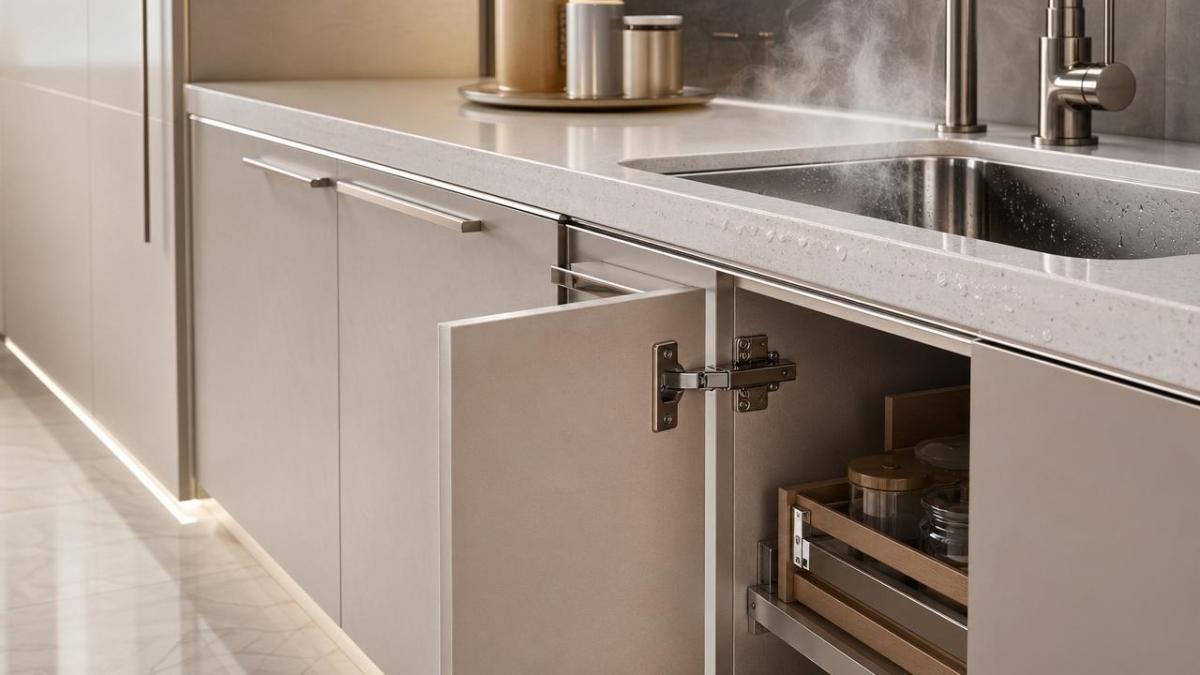
Maintenance Actions by Cabinet Area and Material
Many users clean all cabinet parts the same way, but material and location matter. Door panels near the cooktop need grease control, sink base units need moisture monitoring, and tall units may need less frequent wiping but regular hinge checks. The most effective custom kitchen maintenance tips are area-specific because each zone receives different stress.
Customized kitchens from professional suppliers often combine several decorative materials and hardware systems in one project. That means maintenance should follow surface behavior. A soft microfiber cloth, neutral cleaner, and dry finish pass are suitable for most surfaces, but exposure time should still be short, usually under 1 to 2 minutes before drying.
The guide below helps users match maintenance action to cabinet zone and common material condition. This is especially helpful in projects where kitchen cabinets, wardrobes, and bathroom vanity units are supplied together and the operator wants consistent care standards across spaces.
A zone-based routine prevents random cleaning and helps users spend time where it matters most. In practice, under-sink areas and door edges usually fail earlier than upper decorative panels, so they deserve more attention in any custom kitchen maintenance tips plan.
Daily actions that make the biggest difference
Simple routine for users and operators
- Wipe sink splashes and countertop seams after each heavy use period.
- Dry cabinet fronts near the cooktop at the end of the day.
- Empty and air the under-sink area once a week for 15 to 20 minutes.
- Check hinge tightness and drawer movement once a month.
- Respond to leaks, swelling, or peeling as soon as noticed instead of waiting for a major repair cycle.
These actions are low-cost but effective. In many kitchens, cabinet problems begin with a small leak, a poorly dried corner, or cleaner residue left on the surface. Early action is the most practical form of maintenance.
Common Misjudgments That Shorten Cabinet Life
Some maintenance mistakes come from good intentions. Users may clean too aggressively, assume all moisture is harmless, or ignore small hardware changes until doors stop closing properly. Good custom kitchen maintenance tips should therefore explain not only what to do, but also what to avoid.
One common misjudgment is believing that a cabinet surface is safe if it looks dry. In humid weather, internal moisture can remain behind doors or inside sink cabinets even when outer panels feel normal. Another mistake is using highly concentrated cleaning products directly on decorative boards. This may damage sheen level, edge banding, or printed finish layers over repeated use.
A third issue is delayed inspection. If a hinge becomes loose, the door may start rubbing the adjacent panel. Over 4 to 8 weeks, this can create finish wear or misalignment that is more difficult to correct. Small monthly checks are usually enough to prevent this kind of chain damage.
Mistakes to avoid in humid and busy kitchens
- Leaving wet mats, cloths, or cleaning bottles directly on cabinet floors.
- Spraying cleaner heavily into hinges, runners, or edge joints.
- Using steel wool, abrasive sponges, or strong solvent-type products on decorative surfaces.
- Ignoring sealant discoloration or separation around the sink and backsplash.
- Storing hot appliances too close to cabinet side panels without cooling space.
For operators responsible for multiple units, these misjudgments often repeat across projects. Standardizing custom kitchen maintenance tips at handover can protect not only one cabinet set, but the maintenance performance of an entire residential or commercial interior package.
How to Build a Practical Maintenance Plan for Your Own Use Scenario
The most useful maintenance plan is not the longest one. It is the one that fits your kitchen type, climate, and daily routine. For a private homeowner, that may mean a 5-minute end-of-day wipe and a monthly check. For a managed property, it may mean a turnover checklist, approved cleaning guidance, and a repair response window of 24 to 72 hours after leak reports.
When customized cabinets are selected early in a project, users should also consider future maintenance access. Ask where plumbing passes behind the sink cabinet, how toe kick areas can be cleaned, what surface finish is easiest to maintain, and which hardware needs periodic adjustment. These questions are especially important when builders, design firms, and owners want durable results in humid areas.
KUCU Building Materials Co., Ltd., based in Foshan, Guangdong, China, works in customized cabinetry with a 40,000 square meter manufacture center and 8 high-configuration production lines. With 20 years of experience as a customized cabinet supplier integrating production, design, and exportation, the company provides kitchen cabinets, wardrobes, and bathroom vanity solutions for builders, design companies, decoration companies, and building owners. This background matters because good maintenance starts with practical design, material matching, and clear usage guidance after installation.
A basic scenario-based checklist
Confirm these points before setting your routine
- How humid is the room during most of the year: below 50%, around 60%, or regularly above 70%?
- How many cooking cycles happen each day: 1, 2, or more than 3?
- Which area gets wet most often: sink zone, cooktop zone, or floor-level storage?
- Who is responsible for monthly inspection: homeowner, operator, cleaner, or property manager?
- What products are approved for the cabinet surface and hardware finish?
Once these answers are clear, custom kitchen maintenance tips become easier to apply and more effective over time. The goal is not perfect cleaning every day, but consistent protection where risk is highest.
Why Choose Us for Customized Cabinet Guidance and Support
If you are planning a kitchen project for humid homes, high-use residences, or managed units, maintenance should be considered together with material choice, cabinet structure, hardware selection, and installation details. A well-designed customized solution is easier to clean, less vulnerable to moisture concentration, and more practical for long-term operation.
We can help you discuss cabinet configuration, surface options, project usage scenarios, and maintenance-friendly details before production. This is useful whether you are a builder comparing project standards, a design company balancing appearance and durability, a decoration company coordinating installation details, or a building owner seeking efficient lifecycle value.
Contact us to confirm product parameters, customized cabinet selection, delivery lead time, humidity-related application advice, sample support, and quotation communication. If your project includes kitchen cabinets, wardrobes, or bathroom vanity units, we can also help you review how different spaces should be maintained under daily use and humid conditions.