
Closed wardrobe door alignment often fails after installation because small errors in leveling, hinge adjustment, wall flatness, or panel tolerance become visible only when doors are fully closed. For after-sales maintenance teams, identifying the true cause quickly is essential to reduce callbacks and improve client satisfaction. This guide explains the most common reasons behind misalignment and how to correct them efficiently.
Why a checklist approach works better for closed wardrobe door alignment
In after-sales service, closed wardrobe door alignment problems rarely come from one single defect. A door that looks uneven may be affected by cabinet squareness, floor settlement, hinge cup position, side panel bowing, or even a 2 mm difference in door thickness. If maintenance staff start adjusting hinges before confirming the base structure, the result is often temporary and the callback rate remains high.
A checklist method helps teams move from the fastest visible symptom to the most probable root cause. In most wardrobe projects, a 10 to 15 minute structured inspection is enough to separate adjustment issues from material or installation issues. This matters especially in building decoration materials work, where the interface between panel, hardware, wall condition, and installer accuracy determines final visual performance.
For maintenance teams serving builders, design firms, decoration companies, and property owners, consistency is as important as repair speed. A repeatable process improves field judgment, supports photo-based reporting, and reduces unnecessary replacement requests. When dealing with closed wardrobe door alignment, the right sequence is usually more valuable than applying force or replacing hardware too early.
First priorities before touching the hinges
- Confirm whether the gap problem appears at the top, bottom, center, or latch side, because each pattern points to a different cause.
- Measure cabinet level and plumb first; if the carcass is out of plumb by more than 2 to 3 mm over full height, hinge-only correction may not hold.
- Check whether the issue appeared immediately after installation or after 30 to 90 days of use, which may indicate settlement, load shift, or humidity response.
- Record door size, hinge quantity, and panel material before adjustment, especially for tall wardrobe doors above 2100 mm.
This sequence is practical for customized cabinet and wardrobe service because it reduces guesswork. It also protects the reputation of manufacturers and installers by distinguishing installation error from site condition influence. In many service cases, the visible closed wardrobe door alignment defect is only the last symptom in a chain that starts at the wall or floor.
Core inspection checklist: what after-sales teams should verify first
Before making any correction, maintenance staff should inspect the cabinet system in a fixed order. This is especially useful in apartment, villa, and commercial residential projects where wardrobe dimensions vary but the failure logic is similar. The table below summarizes the main checkpoints, likely symptoms, and recommended first action.
The value of this checklist is that it separates adjustable causes from non-adjustable causes. If the cabinet body is already twisted beyond normal hinge compensation range, repeated fine-tuning will only shift the misalignment from one edge to another. In practical service work, closed wardrobe door alignment should be treated as a system issue first and a hardware issue second.
A fast 5-step field routine
- Close both doors fully and photograph the gap at top, center, and bottom from 1 to 1.5 meters away.
- Check plumb of side panels and level of the top panel with a standard spirit level.
- Open doors and inspect hinge screws, base plate fixation, and cup seating depth.
- Measure door diagonals and compare left and right reveal; a diagonal difference over a few millimeters usually indicates structural distortion.
- Adjust only after confirming that wall pressure, floor settlement, and panel warp are not the main source.
Signs that the problem is not just hinge adjustment
If the top hinge corrects the upper gap but worsens the lower gap, the carcass may be out of square. If the door closes flush near the hinges but projects outward at the handle side, the door panel may be bowed. If the alignment changes between morning and evening in coastal or humid climates, moisture response in panel material or surrounding construction may be contributing.
These distinctions matter in custom wardrobe projects because after-sales teams often serve completed interiors, where repainting, wall correction, or cabinet refixing is more disruptive than hinge tuning. A clear diagnosis supports better communication with project managers and homeowners and avoids unrealistic promises during the first service visit.
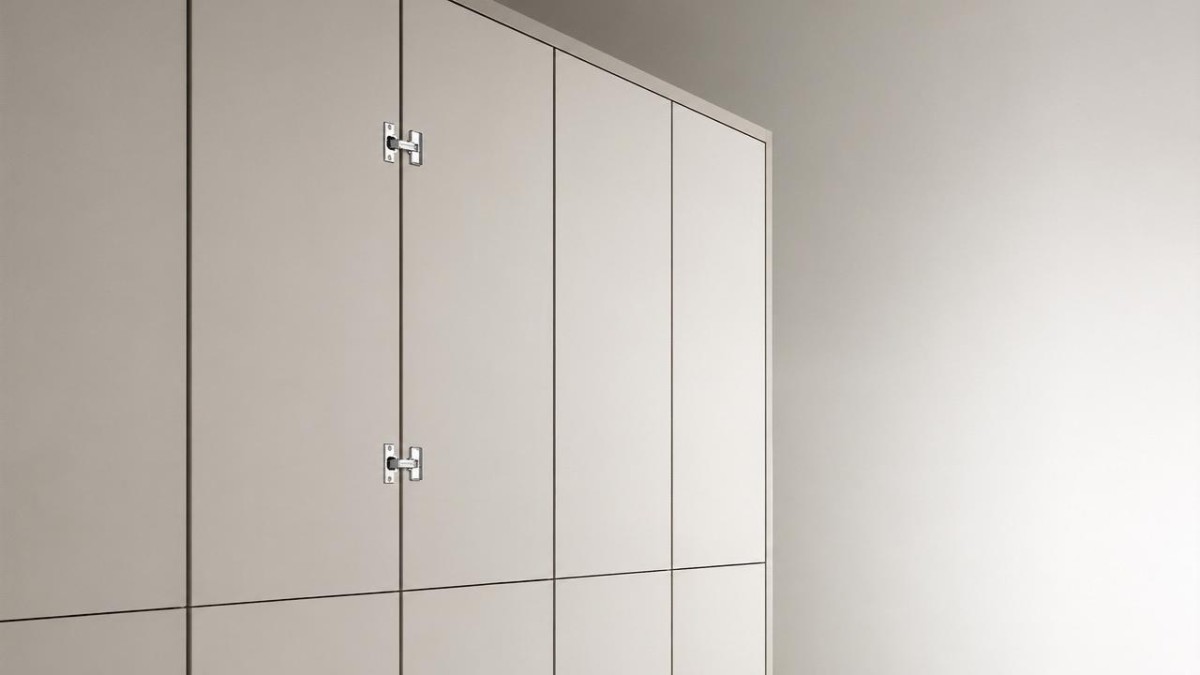
Most common causes of closed wardrobe door alignment failure after installation
In the building decoration materials industry, wardrobe installation is affected by both factory accuracy and site reality. Even when production tolerances are controlled, site walls may be uneven, floors may not be level, and transport or storage can affect door geometry. For after-sales teams, understanding which causes are most frequent helps prioritize troubleshooting.
A large share of closed wardrobe door alignment complaints comes from four recurring sources: cabinet body distortion, hinge adjustment drift, door panel warp, and fixing stress against non-flat walls. These often become visible only after final closure because open doors can hide reveal inconsistencies of 2 mm to 4 mm. Tall doors and dark finishes make the problem appear even more obvious under side lighting.
Another important factor is timing. If misalignment appears within the first 7 days, installation sequence or transport handling is a likely cause. If it appears after 1 to 3 months, floor movement, occupancy load, repeated use, or environmental moisture changes should also be considered. Maintenance staff should always ask when the defect was first noticed.
Cause-by-cause checklist
- Out-of-level base or plinth: the carcass receives uneven load, causing diagonal shift and visible top-to-bottom reveal variation.
- Incorrect hinge sequencing: installers adjust side gap before depth, or adjust one hinge fully instead of balancing all hinges together.
- Overtight wall fixing: side panels are pulled toward a hollow or bowed wall, twisting the cabinet box after installation.
- Door panel tolerance or warp: longer doors, especially above 2200 mm, are more sensitive to panel straightness and storage conditions.
- Insufficient hinge quantity: heavy or tall wardrobe doors need hardware spacing that matches door weight and height.
- Loose screws after use: repeated opening cycles can reduce holding force if substrate density or screw bite is inconsistent.
Many service teams focus on the front view only, but side-view inspection often reveals the actual source faster. A carcass that looks acceptable from the front may already be under torsion because one back corner is forced tight against the wall. In custom cabinet service, such hidden stress is a frequent reason closed wardrobe door alignment fails again after a seemingly successful repair.
Practical thresholds for field judgment
There is no single universal number for every project, but after-sales teams can use practical ranges. A reveal difference around 1 mm may be acceptable in some large matte-finish wardrobes, while 3 mm to 4 mm will usually be visible and trigger a complaint. A cabinet plumb deviation beyond about 2 mm over a standard door height often justifies structure-focused correction before hardware adjustment.
Likewise, if a door corner rubs only during the last 20 to 30 mm of closing travel, the issue often relates to depth setting or carcass twist rather than simple side-to-side offset. These field thresholds help technicians make faster decisions and explain to clients why one repair may take 15 minutes while another requires partial refixing.
How to diagnose by symptom pattern instead of trial and error
A symptom-based method is one of the fastest ways to resolve closed wardrobe door alignment problems. Instead of adjusting every hinge repeatedly, teams can match the visible pattern to the most likely structural or hardware cause. This approach reduces service time, especially on multi-unit residential projects where technicians may need to inspect several wardrobes in one visit.
The table below can be used as a quick decision aid in the field. It is particularly useful for after-sales technicians who need to document why a problem can be corrected on site or why it should be escalated for cabinet refitting, panel replacement, or site rectification.
This symptom table helps standardize service judgment. It also improves communication between field technicians, project coordinators, and cabinet suppliers. When the diagnosis is documented by pattern rather than opinion, repair planning becomes more efficient and disputes over responsibility are easier to manage.
When to repair, when to refit, when to replace
Repair on site
On-site repair is usually suitable when the cabinet body is fundamentally stable and the misalignment falls within normal hinge compensation range. Typical examples include uneven reveals caused by transport vibration, minor screw loosening, or incomplete final adjustment after installation. In many cases, a 20 to 40 minute service visit is enough.
Partial refit
Partial refit is more appropriate when wall anchoring has twisted the carcass or when base leveling was incomplete. This may involve releasing fixing points, re-shimming, correcting plumb, and resetting doors. It takes more coordination but is often the only durable way to restore closed wardrobe door alignment when the cabinet geometry has changed after installation.
Panel or hardware replacement
Replacement should be considered only after measurement confirms that warp, machining deviation, or hardware failure is the true source. Replacing a door without checking cabinet squareness can waste time and materials. In after-sales management, replacing parts too early is one of the most avoidable cost drivers.
Commonly missed risk points in wardrobe after-sales maintenance
Some alignment failures are not obvious during the first inspection because the root cause sits behind trim, inside the plinth, or at the wall interface. Maintenance teams that want fewer repeat visits should pay close attention to these overlooked details. In custom wardrobe service, small hidden stresses can keep reappearing as visible door line problems.
A frequent mistake is adjusting a door to match a distorted neighboring door rather than correcting the cabinet line itself. Another is ignoring load distribution inside the wardrobe. If one tall unit carries heavier internal storage or if shelves are fixed under tension, the side panels can respond differently over time. This effect is more likely in units above 2400 mm or in installations spanning uneven floor transitions.
Environmental conditions also matter. In humid regions, newly completed interiors may stabilize over several weeks as walls, screeds, and joinery adapt to occupancy conditions. Maintenance teams should note whether the project was handed over recently, whether air-conditioning is running regularly, and whether moisture-related movement may still be in progress during the first 30 to 60 days.
Risk reminder checklist
- Do not assume both doors are manufactured equally if only one side shows recurrent misalignment.
- Do not tighten all wall fixings fully before confirming plumb and front reveal consistency.
- Do not ignore back panel influence; uneven fixing can contribute to carcass squareness issues.
- Do not skip reinspection after adjustment; operate the door 10 to 15 cycles to confirm stability.
- Do not treat every gap complaint as a manufacturing defect; site conditions often play a major role.
Recommended service records to keep
Good records improve future diagnosis. At minimum, teams should keep front-view photos, hinge close-ups, level readings, door size notes, and a short timeline of when the closed wardrobe door alignment issue first appeared. These records support warranty evaluation, help technical teams compare recurring patterns, and make it easier to advise builders or decoration companies on preventive improvements.
For suppliers with integrated production, design, and export capabilities, field feedback is especially valuable. It connects manufacturing tolerance, packing method, transport handling, and installation sequence to actual site performance. Over time, this reduces service friction and supports better wardrobe system design for different project conditions.
Execution advice for faster resolution and fewer callbacks
After-sales teams perform best when diagnosis, correction, and reporting follow one standard. For closed wardrobe door alignment, the goal is not just to make the door look straight at the end of one visit, but to ensure the correction remains stable after daily use. This requires both technical discipline and realistic communication with the client.
A practical service workflow is to inspect first, classify the cause second, correct third, and verify last. Verification should include repeated opening and closing, visual check from normal room perspective, and a final review of reveal consistency under regular lighting. In most residential wardrobes, a stable reveal and smooth closing action are more important than chasing a mathematically perfect line in a non-ideal building environment.
Teams should also know when to escalate. If the site condition prevents durable adjustment, immediate escalation saves time. Typical triggers include major wall bowing, floor settlement signs, repeated screw pull-out, or visible panel deformation beyond normal service correction. Escalation is not a service failure; it is part of accurate technical judgment.
A simple field standard for technicians
- Inspect structure before hardware, and hardware before replacement decisions.
- Use measured evidence, not visual guessing, especially on tall wardrobe doors.
- Apply balanced hinge adjustment in sequence rather than over-correcting one point.
- Document if the cause is installation, site condition, usage, or material deformation.
- Confirm stability through repeated operation before closing the service case.
Why choose us for wardrobe system support
KUCU Building Materials Co., Ltd. is located in Foshan, Guangdong, China, with a 40,000 square meter manufacture center and 8 high-configuration production lines. With 20 years as a customized cabinet supplier, we combine production, design, and exportation capabilities to support projects requiring kitchen cabinets, wardrobe systems, and bathroom vanity solutions at competitive pricing.
For builders, design companies, decoration companies, and building owners, we understand that after-sales maintenance depends on more than product supply. It also depends on clear dimensional coordination, practical hardware matching, project communication, and realistic guidance for installation and service teams. That is why discussions about closed wardrobe door alignment should start with the full cabinet system, not only the door face.
If you need support, contact us to discuss parameter confirmation, wardrobe door size and hinge matching, material selection, delivery cycle planning, customized project solutions, sample support, or quotation communication. Sharing door dimensions, cabinet height, hinge configuration, photos of the gap pattern, and installation timing will help us suggest a more efficient technical direction for your project or maintenance case.