Custom Kitchen Cabinets & Whole House Cabinetry Manufacturer in China
KUCU is a China-based manufacturer providing custom kitchen cabinets, wardrobes and whole-house cabinetry for global residential and commercial projects.About KUCU.
Can KUCU provide kitchen cabinets design services?? For project managers handling multi-unit developments, the answer goes beyond basic design support. KUCU delivers custom kitchen cabinet solutions tailored to apartments, condos, and large-scale residential projects, combining fast 3D design, eco-certified materials, and export-ready production to help streamline planning, procurement, and installation across North America and Australia.
In multi-unit construction, cabinet design is rarely just about appearance. Project managers must coordinate unit standardization, code compliance, production timing, material approvals, shipping schedules, and installation sequencing across dozens or even hundreds of kitchens. A supplier that only provides drawings is often not enough. What matters is whether the manufacturer can translate design intent into a repeatable, buildable, and cost-controlled package.
For developers, builders, and procurement teams working in North America and Australia, KUCU positions its service as a full project solution. The company supports custom kitchen cabinet design, 3D visualization, material selection, production, export logistics, customs coordination, and installation support. That integrated model can reduce handoff errors, shorten approval cycles, and improve predictability for apartment, condo, and residential community projects.
What Design Services Does KUCU Offer for Multi-Unit Kitchen Cabinet Projects?
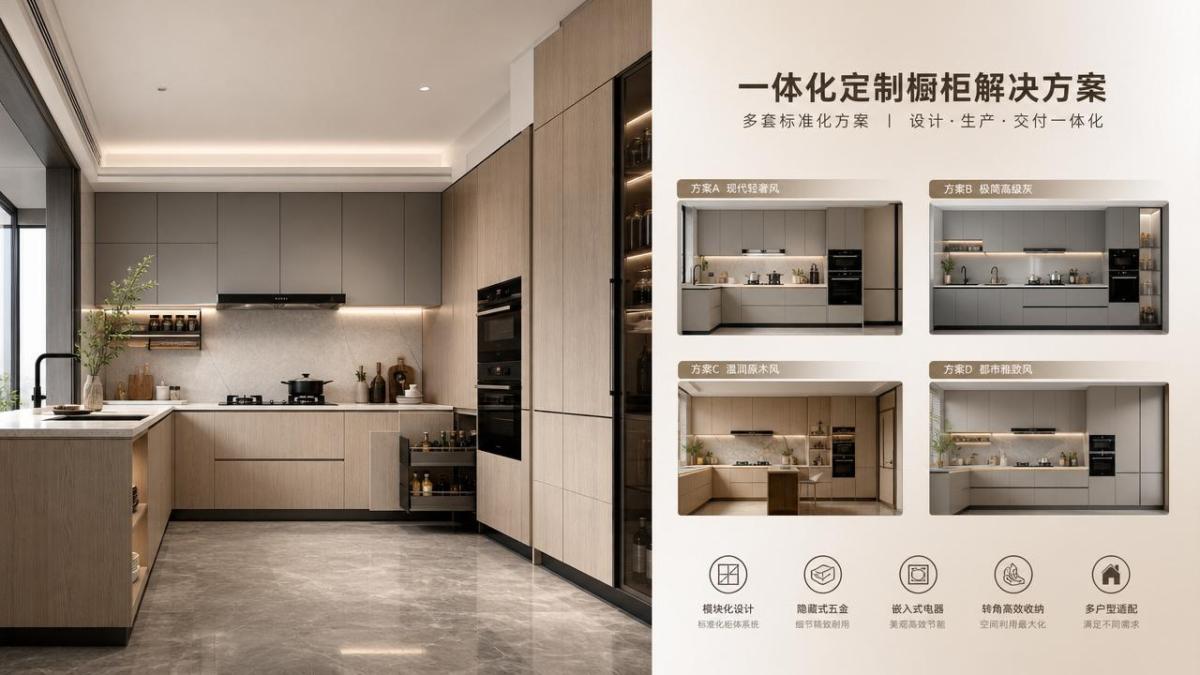
When project teams ask, “Can KUCU provide kitchen cabinets design services?”, the practical answer includes much more than cabinet layout drawings. KUCU supports a design-to-delivery workflow that is suited to repeated unit types, mixed floor plans, and value-engineering needs. For multi-unit projects, that usually means balancing 3 priorities at the same time: visual consistency, cost efficiency, and installation feasibility.
Core scope of design support
KUCU’s service begins with customized planning for kitchens in apartments, condominiums, and residential developments. Using AI-powered real-time 3D tools, the company can complete design proposals within about 7 days in many standard workflows. That speed is valuable for project managers who need to confirm dimensions, finish combinations, appliance integration, and storage functions before procurement is locked.
The design service typically covers cabinet layouts, door styles, finish selection, internal storage planning, hardware coordination, and adaptation to project-specific room sizes. For multi-unit programs, the ability to standardize 3 to 8 common kitchen types while preserving some flexibility for premium or accessible units is often more useful than fully unique designs for every apartment.
Why this matters for project managers
- Fewer design revisions during procurement and shop drawing approval
- Better control of material usage across 20, 50, or 200+ units
- Improved coordination between cabinetry, plumbing, electrical, and appliance suppliers
- More predictable installation sequencing at the site level
The table below shows how KUCU’s design service aligns with common multi-unit project requirements.
For procurement and planning teams, the key takeaway is that KUCU’s design service is structured around execution, not only aesthetics. The combination of 3D design, standardized systems, and custom adaptation is especially relevant where project delays can come from repeated design clarification rather than manufacturing capacity alone.
Support for compact and high-density residential layouts
Many multi-unit kitchens face the same challenge: limited space with high user expectations. KUCU’s patented features such as Bi-Fold Doors, trackless sliding systems, and concealed hardware are practical in these scenarios because they can help save up to 90% of hallway space in specific layouts. For project managers working on narrow circulation zones or compact urban apartments, that design flexibility can improve both usability and sales presentation.
This is particularly relevant in projects where 600 mm to 900 mm working clearances, appliance placement, and corner access must be considered early. A cabinet manufacturer that understands these constraints can help avoid conflicts that otherwise emerge during site installation.
How KUCU Supports Planning, Production, and Delivery Across Multi-Unit Programs
A major reason buyers ask, “Can KUCU provide kitchen cabinets design services?” is that design is only valuable when it connects smoothly to manufacturing and shipping. In export-oriented multi-unit work, project risk often sits between approved drawings and on-site installation. KUCU addresses this by linking design, factory production, logistics coordination, and local delivery support in one workflow.
Integrated process from design to installation
For project managers, one of the biggest advantages of an integrated supplier is fewer coordination points. Instead of separating design consultant, cabinet factory, export agent, and logistics provider, KUCU offers an end-to-end sequence that can be easier to monitor. This is especially useful in projects with 3 to 5 milestone gates, such as design approval, sample confirmation, mass production, shipping release, and installation scheduling.
- Project brief, drawings, and quantity review
- 3D cabinet design and finish confirmation
- Shop drawing approval and production planning
- Factory manufacturing under ISO 9001 management
- Export logistics, customs clearance, tracking, and installation coordination
The next table outlines a typical multi-unit workflow and what project teams should verify at each stage.
The practical benefit here is predictability. When design data, production records, and shipment planning are handled through one supply chain, project managers have a better chance of controlling variation across dozens of kitchens. That is often more valuable than chasing a lower unit price from fragmented vendors.
Material compliance for export markets
For North American and Australian projects, material compliance is not a minor detail. KUCU uses CARB P2 and FSC-certified formaldehyde-free boards, which is important for developers, builders, and contractors managing environmental requirements and specification reviews. In practical procurement terms, compliant board materials can reduce approval friction and support smoother submittal processes.
Project teams should still confirm the required finish grade, board type, hardware expectations, and moisture-resistance level for each application. Kitchens, bathroom-adjacent pantry areas, and utility storage zones do not always require the same configuration. Early alignment on these details can prevent costly changes after production starts.
What Project Managers Should Evaluate Before Choosing a Cabinet Design Partner
Not every cabinet supplier is set up for multi-unit work. Some are strong in residential customization but weak in documentation, lead time control, or packaging for export projects. If your team is evaluating whether KUCU can provide kitchen cabinets design services for a development, it helps to review the decision through operational criteria rather than marketing language.
Four evaluation factors that affect project success
- Design responsiveness: Can the supplier return revisions within 3 to 7 days instead of several weeks?
- Material and compliance readiness: Are CARB P2, FSC, and related documents available for submittals?
- Production scalability: Can the factory handle repeated unit types without quality drift across batches?
- Logistics execution: Is there support for customs clearance, shipment tracking, and local installation coordination?
KUCU’s profile addresses these points with 15 years of industry experience, service to more than 5,000 overseas households and 200+ construction contractors, and an average customer satisfaction rate of 98%. For project managers, those figures do not replace due diligence, but they do indicate familiarity with international project expectations and repeat-order execution.
Typical risks in multi-unit cabinet procurement
The most common procurement problems are rarely dramatic at the beginning. They usually appear as small inconsistencies: cabinet dimensions that do not match field conditions, unclear labeling between unit types, hardware substitutions not aligned with approval samples, or delayed site release because shipment timing missed the construction sequence by 1 to 2 weeks.
A design-capable manufacturer helps reduce these risks by identifying conflicts earlier. For example, if one project includes studio units, one-bedroom units, and accessible units, the cabinet package should clearly separate standard modules from special modules. That distinction can improve both packing accuracy and installer productivity on site.
Questions worth asking before issuing the purchase order
Before final commitment, project teams should request a detailed review covering at least 6 checkpoints: unit schedule confirmation, finish board approval, hardware list, packaging method, shipping lead time, and installation support scope. If the project is in California, Toronto, Sydney, or other regulated metro markets, material and logistics confirmation should be part of the pre-order process rather than an afterthought.
This is also where KUCU’s export experience is relevant. The company serves major regions including California, Texas, New York, Florida, Toronto, Vancouver, Sydney, Melbourne, Brisbane, and Perth. For project managers overseeing cross-border sourcing, a supplier familiar with these destination patterns may be easier to work with than a factory that only handles domestic orders.
Best-Fit Applications, Common Misunderstandings, and Next Steps
KUCU is particularly well suited to projects that need custom design plus repeatable production. That includes apartment developments, condo towers, build-to-rent communities, student housing, and mid-scale residential programs where kitchen quality affects both buyer perception and construction efficiency. The ability to coordinate kitchen cabinets with wardrobes, bathroom vanities, and storage systems can also simplify whole-home package procurement.
Common misunderstanding: custom means slow
One common misconception in multi-unit procurement is that custom cabinetry always causes delays. In reality, customized design can improve speed if it is supported by digital visualization, standardized production logic, and export-ready documentation. A 7-day design cycle combined with a 25–35 day delivery framework may be more efficient than forcing unsuitable standard products into non-standard unit layouts.
Another misunderstanding is that every unit must be unique to feel premium. In many developments, a better strategy is to create 3 or 4 carefully planned cabinet families, then vary finish or handle details by unit grade. That preserves project identity while controlling manufacturing complexity and installation learning curves.
FAQ for engineering and procurement teams
Can KUCU support large-quantity projects?
Yes, the company is positioned for multi-unit and contractor-oriented work, not only single-home orders. The important step is to define unit counts, repeated layouts, and delivery phases early so production and shipment can be sequenced correctly.
Can KUCU provide design and installation coordination together?
Yes, KUCU’s offering includes end-to-end services from design and manufacturing to logistics and local installation support. For project managers, this can reduce communication gaps between off-site production and on-site execution.
Is KUCU suitable for environmentally sensitive markets?
The use of CARB Phase 2 compliant materials, FSC-certified boards, and ISO 9001 quality management supports projects targeting regulated export markets such as the USA, Canada, and Australia. Teams should still verify the exact specification package required by the project architect or developer.
If your team is asking whether KUCU can provide kitchen cabinets design services, the stronger question may be whether the supplier can help your project move from concept to installed reality with fewer delays and fewer coordination problems. Based on its custom design capabilities, compliant materials, patented space-saving solutions, export logistics network, and experience with overseas contractors, KUCU is built for that broader role.
For project managers and engineering leaders planning apartments, condos, or residential communities in North America or Australia, KUCU offers a practical combination of design speed, customization depth, and execution support. To discuss unit plans, material options, or delivery scheduling, contact Foshan KUCU Building Materials Co., Ltd. at sasa@fsgzhome.com or +86 158 1717 8181 to get a tailored kitchen cabinet solution for your next multi-unit project.