
Choosing a closed wardrobe for walk-in closet projects involves more than style alone. For procurement teams, cost structure, material performance, manufacturing capability, and avoidable design mistakes all directly affect project budgets and delivery outcomes. This guide breaks down the key factors to compare, helping buyers source practical, durable, and customized wardrobe solutions with greater confidence and efficiency.
Understanding the Role of a Closed Wardrobe for Walk-In Closet Projects
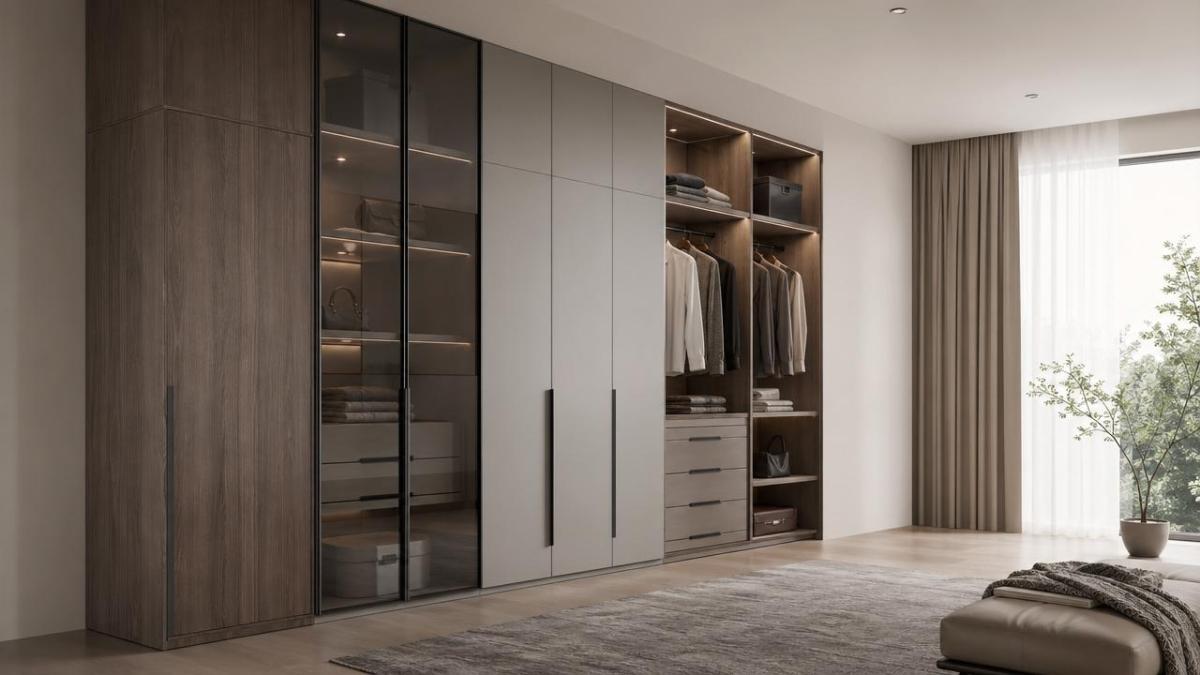
A closed wardrobe for walk-in closet applications is a storage system designed to keep clothing, accessories, and household items protected behind doors rather than exposed on open shelving. In residential and hospitality projects, this format is widely selected because it improves visual order, reduces dust accumulation, and supports a more finished interior appearance. For procurement personnel in the building and decorative materials industry, the product is not only a cabinet category but also a cost-sensitive package that combines panels, doors, hardware, surface finish, layout planning, and installation coordination.
In practical terms, a closed wardrobe for walk-in closet layouts usually includes carcass panels, door systems, hanging zones, drawer modules, shelves, mirrors, lighting provisions, and edge-banded components. Typical module depths often range from 550 mm to 650 mm, while common wardrobe heights in apartment and villa projects fall between 2200 mm and 2800 mm. These dimensions matter because they influence raw material yield, transportation volume, labor time, and fit accuracy on site. A small design adjustment of 50 mm to 100 mm can affect both function and production efficiency.
The reason buyers pay close attention to this category is simple: wardrobes are no longer treated as isolated furniture pieces in many developments. They are increasingly integrated into interior packages that must match doors, wall finishes, flooring tones, and other built-in cabinet systems. This means the sourcing decision for a closed wardrobe for walk-in closet projects often sits inside a broader material schedule, where consistency, repeatability, lead time, and installation control are just as important as appearance.
Why the market continues to prefer closed systems
Open dressing systems still appear in premium concept designs, but closed formats remain more practical for most multi-unit projects. Builders and decoration companies prefer enclosed wardrobes because they simplify visual delivery at handover. Owners prefer them because maintenance is easier over a 3-year to 10-year use cycle. Design firms also value the ability to hide internal storage variation while maintaining a clean external look across multiple units.
For humid or dusty environments, door coverage adds another layer of protection to garments and textiles. In many projects in coastal or fast-developing urban areas, this functional benefit is not minor. It can reduce visible shelf cleaning frequency and support a better occupancy experience after project completion. Procurement teams should therefore view the wardrobe not just as a decorative item, but as a building-related interior system that must balance utility, durability, and cost control.
When comparing suppliers, buyers should also consider whether the manufacturer can support integrated customization. KUCU Building Materials Co., Ltd., based in Foshan, Guangdong, China, operates a 40,000 square meter manufacture center with 8 high-configuration production lines and 20 years of customized cabinet supply experience. For project buyers, this kind of capacity matters because wardrobe programs frequently involve repeated unit types, finish consistency, export packing, and coordinated production for kitchens, wardrobes, and bathroom vanities within one project schedule.
Core features commonly specified
- Full-height or near full-height panel construction, often between 2.2 m and 2.8 m.
- Door options such as hinged, bi-fold, or sliding systems depending on room clearance.
- Internal zoning for long hanging, short hanging, drawers, shelves, and luggage storage.
- Surface finishes including melamine, lacquer, laminate, veneer, glass, or mixed material fronts.
- Hardware packages with soft-close hinges, runners, handles, rails, and optional lighting.
These details shape the final procurement outcome. A wardrobe that looks similar in a rendering may vary significantly in service life, maintenance demands, and installed cost once real materials and hardware are selected.
Industry Background and the Main Cost Drivers Buyers Should Track
The current market for built-in wardrobes is driven by three parallel expectations: visual uniformity, efficient space use, and reliable delivery. In apartment projects, developers often request repetitive module logic for dozens or even hundreds of units. In villa, hotel, or high-end residential work, the number of units may be smaller, but finish expectations and customization complexity increase. In both cases, the closed wardrobe for walk-in closet category sits at the intersection of furniture manufacturing and interior building materials supply.
From a budgeting perspective, the biggest mistake is assuming wardrobe cost is mainly determined by square meter price. In reality, project quotations are usually shaped by at least 6 variables: base board material, door type, finish level, hardware grade, internal accessory count, and manufacturing complexity. If site conditions are uncertain, packaging method, split-module design, and installation constraints may add another 5% to 15% to the total delivered cost.
The table below outlines common cost components that procurement teams should compare before approving a closed wardrobe for walk-in closet package. It is particularly useful when aligning design intent with supplier quotations during tender or value-engineering stages.
The key takeaway is that a low starting quotation may hide later additions. For example, a supplier may quote basic carcass construction but exclude premium runners, glass doors, lighting channels, or reinforced packing. A procurement review should therefore compare complete scope, not only unit price. In many projects, a 10% increase in material cost can reduce post-installation issues enough to improve the overall budget outcome.
How project type changes the budget logic
In builder-grade apartment projects, standardization usually has the biggest financial benefit. Repeating 3 to 5 wardrobe module types across many units improves material yield and machining efficiency. In premium homes, however, buyers often prioritize finish quality, interior organization, and seamless architectural integration. This means the right sourcing strategy depends on whether the project values repetition, flexibility, or luxury detailing.
Lead time is another budget factor that procurement teams sometimes underestimate. For customized wardrobes, common production periods may range from 20 to 45 days after shop drawing confirmation, while more complex finishes or large export volumes can require 45 to 60 days. Delayed approvals in dimensions, color boards, or hardware selection can push delivery and increase site coordination costs.
A practical sourcing method is to request a transparent bill of materials, door and carcass specifications, edge-banding details, hardware brand level if applicable, packing standard, and tolerance assumptions. This gives the buyer a more reliable basis for commercial comparison than relying on visual drawings alone.
Material Options and Performance Trade-Offs
Material selection is central to the long-term performance of a closed wardrobe for walk-in closet installation. The most common board choices in the cabinet industry include particle board, MDF, and plywood, each with different strengths. No single option fits every project. Instead, buyers should match material type to climate, budget, design detail, and intended service level. For example, a project focused on cost control and visual consistency may prefer melamine-faced engineered board, while a project requiring stronger moisture tolerance may consider upgraded board specifications.
Door material deserves separate attention because it affects not only appearance but also maintenance and hardware behavior. A lacquer door can deliver a refined look, yet it may require stricter surface protection during transportation and installation. A melamine or laminate-faced door generally offers stronger scratch resistance for high-turnover residential projects. Glass or aluminum-framed door combinations can add a contemporary style, but they raise both material and installation precision requirements.
Buyers should also evaluate edge sealing, back panel thickness, and hardware interface quality. An 18 mm panel with stable edge-banding and correct screw anchoring can perform better than a thicker panel with weak processing control. In humid environments, poor sealing around exposed panel edges may lead to swelling over time, especially in wardrobes close to exterior walls or poorly ventilated dressing areas.
Common material choices for procurement comparison
The table below summarizes typical wardrobe material options and where they are commonly used. This format helps procurement teams evaluate suitability beyond surface appearance when selecting a closed wardrobe for walk-in closet programs.
The comparison shows why material decisions should not be made in isolation. Procurement teams need to consider the full assembly: board, finish, hardware, packaging, and site environment. In many cases, the best-value solution is not the cheapest board, but the most balanced combination of durability, appearance, and production consistency.
A note on door formats
Door selection should follow space behavior. Hinged doors work well where there is enough front clearance and a stronger preference for full-access opening. Sliding systems are efficient when circulation is tighter or when a more streamlined front elevation is desired. In some projects, buyers exploring Sliding Door Wardrobes may find they provide a practical answer for narrower walk-in pathways while still achieving a closed storage appearance.
That said, sliding doors require quality track systems and accurate installation. Poor alignment can affect operation within months. Procurement specifications should therefore define rail quality, panel weight assumptions, stopper details, and soft-close expectations where needed.
- Use moisture-aware board specifications for coastal, humid, or low-ventilation projects.
- Confirm whether visible and non-visible panels share the same finish standard.
- Check edge-banding quality on internal components, not only door fronts.
- Request samples for scratch, color, and touch comparison before mass approval.
Application Value Across Project Types and User Needs
A closed wardrobe for walk-in closet design delivers value differently depending on the project context. In private residences, the emphasis is often on order, privacy, and personalized storage behavior. In hospitality or serviced apartment environments, the focus shifts toward easy maintenance, visual consistency, and durability under repeated occupancy. In developer projects, the wardrobe also contributes to perceived handover quality, which can influence buyer satisfaction and post-handover service pressure.
For procurement managers, this means the same cabinet category should not be specified in a one-size-fits-all manner. A high-end villa may require detailed compartment planning for long garments, accessories, luggage, and display. A compact urban apartment may need tighter module logic, mirror integration, and simpler installation sequencing. In both cases, the closed wardrobe for walk-in closet system adds business value by turning wall area into controlled storage without exposing interior disorder.
There is also a coordination value that matters in large-scale furnishing programs. Suppliers capable of producing wardrobes alongside kitchen cabinets and bathroom vanities can help maintain finish continuity and reduce communication fragmentation. For buyers working with builders, design firms, decoration companies, and building owners, this cross-category coordination can save time across the 3 major stages of material approval, production release, and site delivery.
Typical use scenarios and specification focus
The following table shows how specification priorities can change by application type. It offers a practical overview for teams evaluating wardrobe packages in the building decoration materials field.
What this table highlights is that procurement quality improves when the wardrobe specification is tied to the actual use profile. A premium specification may be unnecessary in one project and insufficient in another. Matching the solution to the project’s end-user behavior is a better method than using a generic benchmark alone.
Functional value beyond aesthetics
Buyers should also consider operational benefits that do not always appear clearly in a rendering. Closed fronts can visually reduce clutter in handover inspections. Internal zoning can improve end-user satisfaction without major area increase. Even simple additions such as two extra drawers, a top luggage shelf, or a divided hanging section can significantly improve usability in everyday living.
In compact projects, door strategy becomes part of circulation planning. Where aisle clearance is limited, the previously mentioned Sliding Door Wardrobes approach may be relevant if the room layout does not comfortably support hinged door swing. The correct decision depends on spatial dimensions, access behavior, and the desired façade language.
At a broader level, the product supports space efficiency, especially when integrated early in the design stage. If wardrobe planning begins after wall finishes and MEP details are fixed, adjustment options become narrower and costlier. Early coordination typically produces better results.
Common Mistakes in Specification, Production, and Installation
Many issues in closed wardrobe for walk-in closet projects come from avoidable misalignment between design intent and execution details. One common mistake is underestimating dimensional coordination. A walk-in area may appear adequate on plan, but once door swing, skirting, uneven walls, ceiling drops, and lighting positions are considered, usable cabinet dimensions may shrink. If this is not checked before production, on-site modification can increase labor cost and reduce finish quality.
Another frequent problem is selecting materials only by appearance board samples. A matte finish that looks strong in a showroom may be less suitable for a high-use rental property if it marks easily. Similarly, premium internal accessories may appear attractive but become unnecessary cost if end users do not need them. Procurement teams should always compare function, environment, and lifecycle expectations, not just design intent.
Installation mistakes also matter. Even well-produced wardrobe components can perform poorly if wall conditions are inaccurate or if installers do not follow level and alignment controls. In projects with 20 units, 50 units, or more, small installation inconsistency becomes a repeated defect source. That is why technical drawings, labeling, packing logic, and site coordination are essential parts of wardrobe procurement.
Mistakes buyers should actively prevent
- Approving quotations without confirming full internal configuration and hardware level.
- Ignoring site measurement tolerances before final shop drawing release.
- Using the same material specification in all climates and all room conditions.
- Choosing door systems without considering aisle clearance or user access pattern.
- Underestimating packaging protection for export or multi-stage transport.
- Delaying finish and sample approval until production time becomes compressed.
A disciplined procurement checklist can prevent most of these issues. Before issuing a purchase order, confirm at least 8 points: dimensions, board type, finish code, door method, hardware package, internal accessory scope, packing standard, and installation responsibility. This simple step reduces ambiguity and supports more accurate supplier accountability.
Quality checkpoints worth setting
It is useful to define acceptance criteria before manufacturing begins. Common checkpoints include panel thickness tolerance, color consistency between batches, edge-banding continuity, door gap uniformity, drawer runner movement, and packaging integrity. Buyers may also request pre-production samples or one mock-up unit, especially for projects with customized finishes or mixed-material fronts.
For export programs, labeling accuracy and packing order are especially important. A wardrobe project may involve hundreds of parts, and poor identification can waste installation time on site. If the wardrobe is part of a broader cabinet package, coordinated packing by room or unit type usually improves installation efficiency.
Finally, avoid excessive late-stage design changes. A modification after cutting and edge processing can trigger material waste, schedule delay, and color mismatch risk. Early decision discipline has a direct effect on both cost and delivery quality.
Practical Sourcing Advice and Why Buyers Work With Integrated Cabinet Manufacturers
For procurement teams, the best sourcing approach usually combines clear technical definition with manufacturer capability review. A reliable closed wardrobe for walk-in closet supplier should be able to discuss more than style boards. The buyer should look for response quality in shop drawings, material explanation, module logic, export packing, finish consistency, and production scheduling. These are the factors that reduce project friction after contract award.
Integrated manufacturers can be especially useful when the project includes kitchens, wardrobes, and bathroom vanities under one interior package. Coordination under one supplier does not automatically solve every issue, but it can simplify communication lines and help align colors, board sources, and delivery stages. This matters when procurement teams are balancing budgets, handover timing, and multi-trade coordination in building decoration projects.
KUCU Building Materials Co., Ltd. focuses on customized cabinet supply with production, design, and exportation capabilities. With a 40,000 square meter manufacture center and 8 high-configuration production lines, the company serves builders, design companies, decoration companies, and building owners with kitchen cabinets, wardrobes, and bathroom vanities. For buyers, this kind of operating structure can support both standardized project supply and tailored product development, depending on the project brief.
What to confirm before placing an order
- Project dimensions and whether site measurement is final or estimated.
- Preferred board material, visible finish, and internal finish consistency requirements.
- Door type, including hinged or sliding logic, handle style, and hardware expectations.
- Estimated quantity, unit repetition level, and target delivery period such as 30, 45, or 60 days.
- Packing method for local delivery or export shipping, including labeling detail.
- Whether sample panels, mock-up units, or shop drawing revisions are needed before mass production.
These confirmations shorten the quotation cycle and improve price accuracy. They also help suppliers recommend the most suitable closed wardrobe for walk-in closet solution rather than quoting on assumptions that may later change.
Why choose us
If you are planning a closed wardrobe for walk-in closet program, we can support you from early specification review through customization and delivery planning. Our team can discuss material options, door structures, module sizes, finish coordination, and practical ways to balance appearance with budget. We understand that procurement decisions depend on more than a product image; they depend on manufacturability, consistency, and commercial clarity.
You can contact us to confirm product parameters, compare material choices, review project drawings, discuss delivery timelines, request sample support, or communicate quotation details for wardrobes, kitchen cabinets, and bathroom vanities. For buyers working on apartment, villa, hospitality, or decoration company projects, we can help translate design requirements into practical cabinet solutions that are easier to produce, ship, and install.
To move your project forward, send your layout, target finish, quantity estimate, and schedule requirements. We will help you evaluate suitable configurations, customization direction, and supply planning for a closed wardrobe for walk-in closet solution that fits your project goals.