
Choosing the right open cabinet custom design can improve storage efficiency, visual appeal, and project value at the same time. For procurement teams, project managers, and distributors, the key is balancing material quality, functional layout, manufacturing capability, and cost control. With 20 years of customization experience, Kucu helps clients identify practical cabinet solutions that match design goals, construction standards, and market demands.
What Should You Evaluate First in an Open Cabinet Custom Design?
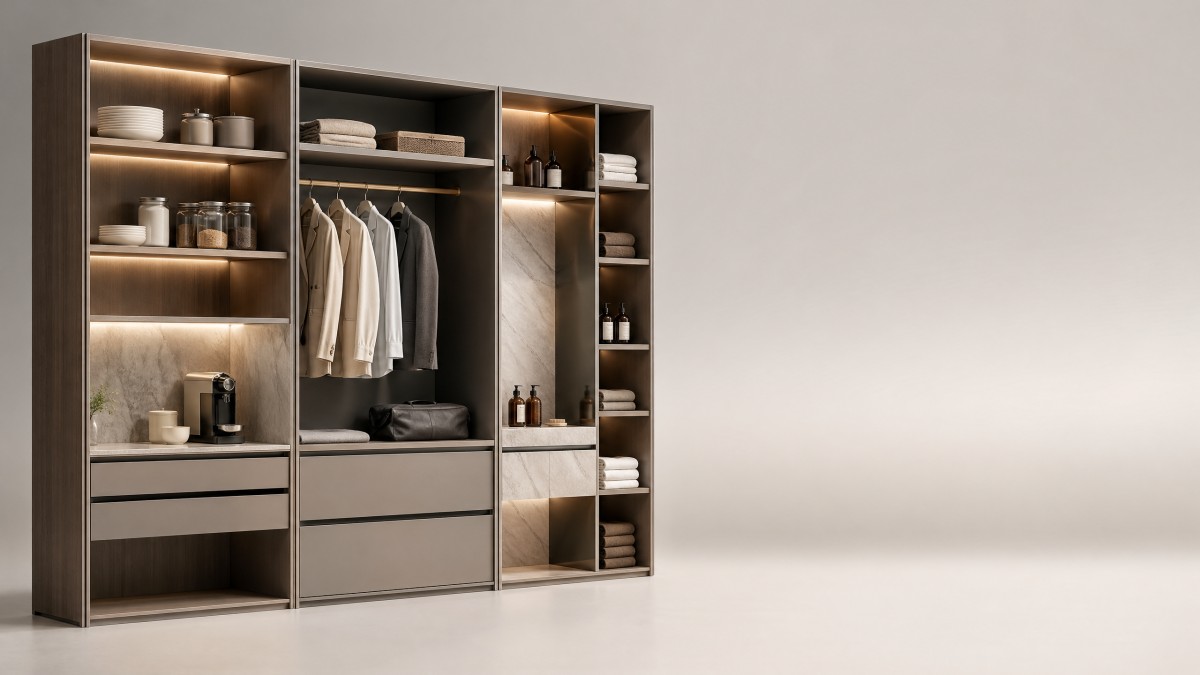
An open cabinet custom design is not only about appearance. In building decoration materials projects, it directly affects installation coordination, storage logic, maintenance frequency, and the final perceived quality of the space. For buyers handling apartment projects, villas, retail display spaces, or hospitality interiors, the first decision should be the intended use scenario rather than the finish color.
In most projects, procurement teams usually review 4 core dimensions first: cabinet function, material system, dimensional accuracy, and production capacity. If one of these is ignored, the result may be delayed delivery, repeated site modifications, or a design that looks good in drawings but performs poorly after installation. Open shelving especially requires tighter visual consistency because every exposed panel edge remains visible.
Project managers often need open cabinet solutions that fit within 3 common constraints: limited installation time, coordination with electrical or plumbing points, and target cost per unit. A custom design that works in a showroom may fail on a multi-unit project if it cannot be standardized, packed safely for export, or produced in stable batches across dozens or hundreds of sets.
Key Questions Before Confirming the Design
Before selecting an open cabinet custom design, the responsible team should define whether the cabinet is mainly for display, daily storage, mixed residential use, or commercial use. Load expectation matters. A decorative open cabinet and a kitchen open cabinet may look similar, but they differ in board thickness, moisture resistance, hardware needs, and cleaning requirements over a 3–5 year usage cycle.
- Is the cabinet intended for kitchens, wardrobes, bathroom zones, or dry decorative walls?
- Will the project require single-batch delivery, phased delivery over 2–4 weeks, or repeated restocking?
- Does the design need exposed shelves only, or a combination of open and closed storage for better dust control?
- Are dimensional tolerances and wall conditions already confirmed before production drawings are released?
Kucu’s advantage in this stage is integrated support across design, production, and export. With a 40,000 square meter manufacturing center and 8 high-configuration production lines, the company can support both custom visual requirements and practical batch execution. For distributors and contractors, this reduces the gap between concept approval and factory-ready production documents.
Which Material and Structural Choices Matter Most?
Material selection is one of the most important parts of an open cabinet custom design because open systems expose more surfaces, edges, and joints than closed cabinets. In building decoration materials procurement, common decisions usually involve substrate type, surface finish, edge treatment, shelf span, and hardware matching. The right combination depends on use intensity, humidity level, and price positioning in the target market.
For dry residential areas, engineered wood panels are often selected for a balance of cost and design flexibility. In kitchens and bathroom-adjacent zones, buyers usually pay closer attention to moisture resistance, edge sealing quality, and dimensional stability. A shelf that looks flat during sample review can show deflection later if the unsupported span is too long or if the stored load exceeds the design expectation.
As a practical rule, buyers should compare at least 5 technical checkpoints: substrate density, surface finish consistency, edge banding quality, shelf support method, and cleaning durability. These items influence both appearance and after-sales risk. Open cabinets face direct visual inspection every day, so even small inconsistencies become more noticeable than in closed storage systems.
Material Selection Guide for Common Open Cabinet Uses
The table below helps procurement and project teams compare common material considerations for open cabinet custom design across different interior scenarios. It is not a fixed specification list, but it can support early-stage selection and supplier discussion.
This comparison shows that there is no single best material for every open cabinet custom design. The better approach is to align board type, finish, and support method with the environment. Kucu supports kitchen cabinets, wardrobes, and bathroom vanity projects, allowing buyers to coordinate multiple cabinetry categories through one manufacturing source instead of splitting orders across several suppliers.
Structural Details Often Overlooked
Many problems appear not in the panel itself, but in the structure. Long shelf spans, insufficient backing, weak fixing points, or mismatched wall anchors can reduce service life. In practical procurement review, teams should ask for section details, shelf load assumptions, and exposed-edge treatment. These are more useful than only reviewing a front elevation rendering.
For projects with repeated unit layouts, standardizing 2–3 cabinet module widths can improve production efficiency and reduce site measurement complexity. This is especially useful for builders and decoration companies that need cost control without giving up custom appearance. Kucu’s design-to-production approach helps transform custom requests into manufacturable modules.
How Do Procurement Teams Compare Open Cabinet Solutions Efficiently?
Procurement decisions are rarely made on aesthetics alone. Buyers need a framework that balances quote clarity, technical suitability, lead time, and replacement risk. In an open cabinet custom design project, comparing only unit price can create hidden costs later, including repacking, redesign, material mismatch, site delay, or rejected batches. A structured comparison saves time in both sourcing and project execution.
A useful comparison model includes 6 practical dimensions: design flexibility, material suitability, batch consistency, delivery schedule, export packing readiness, and after-sales communication efficiency. For overseas buyers and distributors, the last two points are especially important because transport damage and incomplete technical confirmation can affect entire project timelines.
Comparison Table for Supplier Evaluation
The following table can be used as a procurement checklist when evaluating open cabinet custom design suppliers for residential or commercial interior projects.
For many contractors and dealers, supplier integration reduces more cost than negotiating a small discount on one cabinet line. Kucu combines production, design, and exportation ability in one operation, which is valuable when a project includes multiple cabinet categories and requires unified finishes, coordinated schedules, and one contact window for technical revisions.
A Practical 4-Step Procurement Process
- Confirm application zones, quantity range, and whether the project requires prototype approval or sample review before mass production.
- Review drawings, dimensions, material options, exposed surfaces, and installation conditions with the supplier.
- Compare quotations by configuration, not just headline price, including hardware scope, packaging level, and delivery terms.
- Lock the production schedule, quality checkpoints, and shipment sequence for site readiness and receiving efficiency.
This process is especially useful for project managers working under a 2–6 week fit-out window or phased building handover. It reduces rework and keeps open cabinet custom design decisions tied to measurable project needs instead of subjective preference alone.
What About Cost Control, Lead Time, and Project Coordination?
Cost control in an open cabinet custom design project should be based on total project value, not the board price alone. Buyers should assess direct material cost, hardware scope, design complexity, packing method, shipment efficiency, and site installation labor. A design with too many unique modules may increase both production setup time and on-site sorting difficulty, especially in medium-volume or export projects.
Lead time also deserves early attention. In common custom cabinet projects, the schedule often includes 3 stages: drawing confirmation, production, and shipment arrangement. If site dimensions are not frozen in time, the first stage can become the main bottleneck. For this reason, project managers should define approval deadlines and revision limits before purchase order release.
Kucu’s manufacturing base and 8 production lines create an operational advantage for clients who need repeated cabinet programs across several units or mixed product categories. Instead of treating each cabinet type as a separate sourcing project, buyers can align kitchens, wardrobes, and bathroom vanity programs under one coordination plan. This helps reduce communication gaps and improve schedule visibility.
Cost Drivers in Open Cabinet Custom Design
The table below outlines typical cost drivers that often affect quotations in custom open cabinet projects. It can help procurement teams explain pricing differences internally and identify where value engineering is possible without harming the final result.
The most effective savings usually come from smarter standardization, not from cutting essential material performance. For distributors, another benefit of structured cost planning is easier product positioning. You can create a good-better-best cabinet offer using different finish and module combinations while keeping the same underlying manufacturing logic.
Coordination Tips for Multi-Party Projects
- Lock wall, floor, and ceiling conditions before final cabinet dimensions are approved.
- Confirm whether the open cabinet will be factory-assembled, flat-packed, or semi-assembled for transport.
- Check the sequence between cabinet installation and lighting, stone tops, mirrors, or sanitary fittings.
- Prepare a receiving checklist covering labels, quantities, exposed panels, and hardware bags within 24 hours of delivery.
These steps are simple, but they protect schedule control. In open cabinet custom design, visible defects and coordination errors are harder to hide than in closed systems, so disciplined execution matters from quotation to installation.
Common Questions, Risks, and Why Many Buyers Make the Wrong Choice
Even experienced buyers can make avoidable mistakes when sourcing an open cabinet custom design. The most common issue is treating open cabinets as purely decorative components. In reality, they are part of the architectural finish package and must be evaluated in terms of durability, cleaning, installation method, and how they integrate with the rest of the cabinetry system.
Another frequent mistake is asking for full customization on every unit without checking whether the project actually needs it. Over-customization can increase cost, prolong approvals, and create spare-part complexity. A better strategy is to keep 70%–80% of modules standardized and reserve true customization for focal locations, unusual dimensions, or high-visibility zones.
For distributors and agents, one more risk is selecting a supplier that can produce attractive samples but cannot maintain batch consistency. Color difference, drilling deviation, or inconsistent labeling can become major problems once the order grows from sample stage to repeated delivery. This is why production organization matters as much as design presentation.
FAQ: How to Choose Open Cabinet Custom Design with Fewer Problems
How do I know whether open cabinets are suitable for my project?
Open cabinets are suitable when the project values accessibility, visual display, and a lighter spatial feel. They work well in kitchen feature zones, wardrobe display sections, bathroom side storage, and retail interiors. They are less suitable where dust protection, hidden storage, or heavy load use is the main priority. A mixed design with both open and closed storage is often the most practical option.
What should I check in samples before placing a bulk order?
Check 5 points carefully: surface finish consistency, edge banding neatness, corner treatment, shelf stability, and packaging method. If possible, ask for a sample or mock-up that reflects the real exposed structure instead of only a material swatch. For export projects, outer packaging and part labeling should also be reviewed before order confirmation.
What is a reasonable lead time for custom open cabinet orders?
There is no universal timeline because it depends on quantity, design complexity, and shipment arrangement. However, buyers should separate the process into drawing confirmation, manufacturing, and logistics scheduling. This staged view helps identify where time is really consumed. Early drawing approval often saves more time than pushing the factory after details remain unresolved.
How can distributors create a better product line from one cabinet supplier?
Use one core structure with 3 market levels: entry, mid-range, and premium. Change visible finishes, shelf features, and accessory scope rather than rebuilding the entire technical base for each level. This approach supports easier quotation, clearer inventory planning, and better branding consistency. A supplier like Kucu that covers kitchen cabinets, wardrobes, and bathroom vanity categories can support this strategy more efficiently.
Why Choose a Manufacturing Partner with Design, Production, and Export Support?
A strong open cabinet custom design partner should do more than quote a drawing. The supplier should help clarify structure, reduce avoidable cost, support finish coordination, and prepare the order for real-world shipment and installation. This is especially important for builders, design companies, decoration companies, and building owners who need a solution that works from sample stage through final delivery.
Kucu Building Materials Co., Ltd. brings 20 years of customized cabinet experience, a 40,000 square meter manufacture center, and 8 high-configuration production lines. That combination is valuable for buyers looking for one source for kitchen cabinets, wardrobes, bathroom vanity programs, and coordinated open cabinet systems at a competitive price. It also supports better communication between design intent and production execution.
For procurement teams, the value is clearer technical coordination and stronger batch support. For project managers, it means better control over drawings, production, and shipment planning. For distributors and agents, it creates more room to build market-specific cabinet programs without starting from zero on every inquiry.
What You Can Discuss with Kucu
- Open cabinet custom design options for kitchen, wardrobe, and bathroom vanity projects
- Material and finish recommendations based on dry areas, humid zones, or display-focused applications
- Quantity planning for small-batch, medium-batch, or larger project procurement
- Drawing review, module standardization, and cost optimization suggestions
- Sample support, quotation communication, packaging expectations, and delivery schedule coordination
If you are comparing suppliers for an open cabinet custom design, the most productive next step is to send your layout, quantity estimate, application scenario, and target delivery window. This allows a practical discussion around parameters, product selection, custom solutions, lead time, and export requirements instead of a generic price-only conversation.