
Planning an open cabinet custom design project starts with understanding what really drives cost—materials, layout complexity, finishes, hardware, and production capability. For buyers, project managers, and distributors, this guide explains how to evaluate pricing while balancing design flexibility, quality, and long-term value, so you can make smarter sourcing decisions for residential and commercial cabinet projects.
What drives open cabinet custom design cost in real projects?
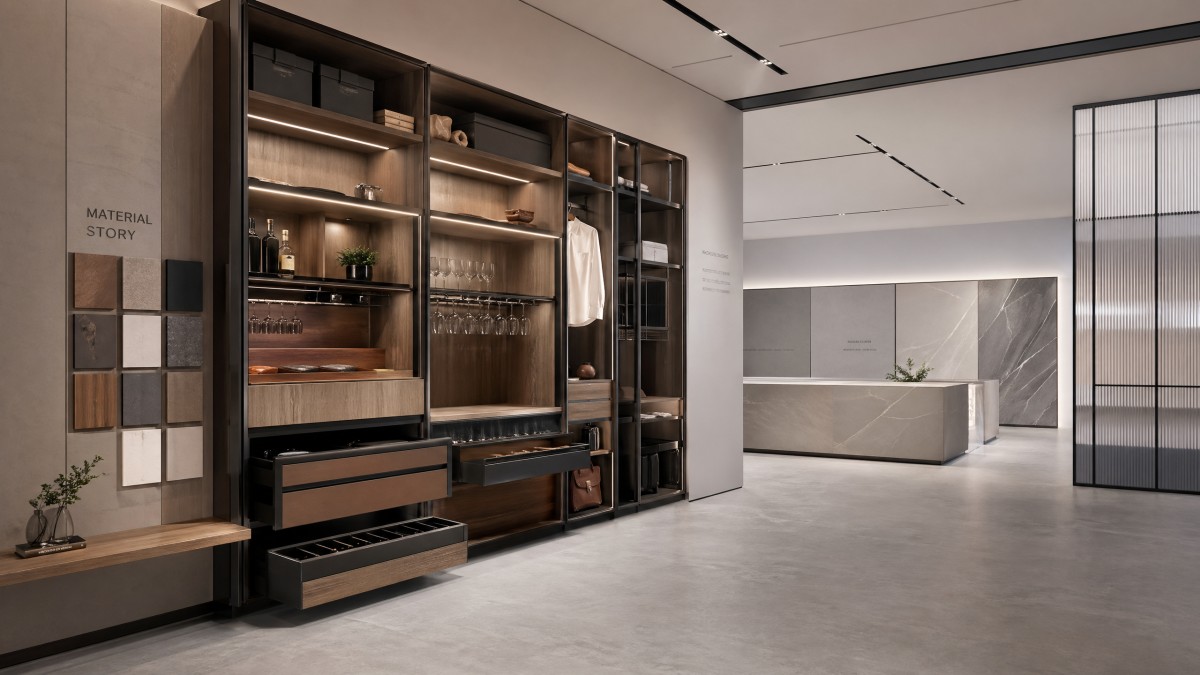
Open cabinet custom design cost is rarely determined by one factor alone. In building decoration materials projects, the final budget usually comes from 5 core dimensions: board material, cabinet structure, surface finish, hardware specification, and manufacturing complexity. For procurement teams, this means a low unit price on paper may still become a high total project cost if the design creates excessive installation time, waste, rework, or after-sales claims.
In practical sourcing, open cabinets are often selected for kitchens, wardrobes, display storage, utility rooms, and selected commercial interiors where accessibility and visual openness matter. Compared with fully enclosed cabinet systems, open cabinet designs may reduce door-related hardware costs, but they often increase requirements for panel appearance consistency, edge banding quality, dimensional accuracy, and clean assembly. Tolerances such as ±0.5 mm to ±1.0 mm can make a visible difference in open layouts.
Project managers also need to consider scale. A small residential order, a mid-volume apartment package, and a large mixed-use development have different cost logic. In many export and construction supply projects, pricing is affected by 3 stages: design confirmation, production execution, and delivery coordination. Any delay in drawings, finish approval, or site readiness can increase the effective cost even if the factory quotation does not change.
For distributors and agents, the cost question is also a margin question. The best open cabinet custom design is not always the cheapest structure; it is the solution that supports repeatable quality, manageable lead times, and a clear target market. Kucu, based in Foshan with a 40,000 square meter manufacturing center and 8 high-configuration production lines, is positioned to support projects that need both design flexibility and production consistency across kitchen cabinets, wardrobes, and bathroom vanity programs.
Five cost layers buyers should separate before comparing quotes
- Material base cost: substrate type, panel thickness, moisture resistance level, and face material selection all influence the starting cost of open cabinet custom design.
- Design and engineering cost: irregular corners, floating sections, integrated lighting channels, and non-standard depths usually require more shop drawing time and more production setup.
- Hardware and accessory cost: even open cabinets without doors may still require concealed connectors, hanging systems, support brackets, drawer runners, pull-out baskets, or anti-tip devices.
- Finish and appearance cost: wood grain matching, matte painted surfaces, anti-scratch laminates, and visible edge detailing affect both factory processing and quality inspection.
- Logistics and installation cost: export packing method, knock-down or assembled supply, and on-site installation conditions can shift total landed cost by a meaningful margin.
When these 5 layers are separated clearly, procurement decisions become more accurate. Instead of asking only for a lower quote, buyers can identify whether savings should come from finish simplification, module standardization, hardware adjustment, or packaging optimization. This is usually the most practical path to cost control.
How do materials, finishes, and hardware change the budget?
Material selection is one of the most visible cost drivers in open cabinet custom design because open storage exposes more surfaces. In concealed systems, some internal components remain out of sight. In open cabinets, side panels, shelves, undersides, and edges are often fully visible. This means the substrate quality and finish uniformity need closer review, especially in projects where the cabinets are part of the visual design statement.
Common board options in cabinet manufacturing include particle board, MDF, and plywood-based solutions, each with different cost and performance implications. In humid zones such as kitchens, laundries, or bathroom-adjacent areas, moisture-resistant boards are often preferred. For project buyers, the right question is not only which material costs less per square meter, but which one fits the environmental condition, loading requirement, and finish expectation over a typical use cycle of 5–10 years or more.
Surface finish also matters more than many first-time buyers expect. Melamine, laminate, veneer, and painted surfaces create very different cost structures. Painted finishes may deliver a refined look, but they can require more process time, stricter quality control, and more care in packaging. Laminate and melamine can offer stronger repeatability for larger-volume distribution programs, especially when consistent color batches and durable edges are important.
Hardware costs are often underestimated in open cabinet budgeting. Even when doors are removed, projects may still include drawers, hidden supports, reinforced shelf connectors, hanging rails, toe-kick systems, and leveling devices. For high-use commercial or rental environments, specifying hardware for frequent operation and easier maintenance can reduce replacement and complaint costs over the long term.
Typical cost impact by component group
The table below helps procurement teams compare how each component affects open cabinet custom design cost, where value engineering is possible, and where reducing specification too far may create quality risk.
A useful buying principle is to protect performance-related cost and simplify appearance-related complexity where possible. For example, reducing too much on board quality or support hardware can create long-term risk, while rationalizing decorative details often saves money with less functional sacrifice.
Material choice by application scenario
- Residential kitchens: balance moisture resistance, easy cleaning, and shelf stability, especially for spans carrying cookware or appliances.
- Apartment wardrobes: prioritize repeatable dimensions, finish consistency, and efficient packaging for batch delivery over 20–200 sets.
- Bathroom vanity programs: review humidity exposure carefully and avoid using a low-cost specification in zones with repeated moisture contact.
- Dealer display systems: focus on appearance quality, edge detailing, and modularity to support showroom presentation and resupply.
What should buyers compare when evaluating custom cabinet quotations?
A quotation for open cabinet custom design should never be reviewed as a single total figure. Procurement personnel and project leaders need a comparison model that separates product scope, service scope, and delivery conditions. Two quotes can differ by 10%–25% while appearing similar, simply because one includes shop drawings, export packing, finish sampling, and installation labeling, while the other excludes these items.
For distributors and agents, the quotation structure also affects future sales execution. If cabinet modules are difficult to reorder, color batches are unstable, or replacement parts take 6–8 weeks, the initial price advantage may disappear in the market. A better quote is one that supports scalable selling, predictable replenishment, and lower complaint handling effort.
Project managers should review not only unit rate but also drawing depth, bill of materials clarity, packing type, and delivery sequencing. In many construction projects, a cabinet program succeeds because the supplier can coordinate design confirmation, production schedule, and site delivery windows in a disciplined way. This is especially important where multiple trades share tight installation periods of 3–7 days per zone.
Kucu’s integrated ability in production, design, and exportation is useful here because buyers often need a supplier that can reduce coordination gaps. When one team handles design refinement, manufacturing planning, and shipment preparation, the risk of inconsistent interpretation is lower than in fragmented sourcing models.
Quotation comparison checklist for open cabinet projects
Before approving a supplier, use a structured comparison table. It helps identify whether an open cabinet custom design quote is truly comparable or only looks cheaper due to missing scope.
This type of comparison reduces hidden cost risk. It also creates a better negotiation basis because discussions shift from general price pressure to specific value-engineering points such as module repetition, finish substitution, or hardware tier matching.
Four procurement questions worth asking before order confirmation
- How many unique cabinet modules are included, and can repeated units be increased to improve factory efficiency?
- Which surfaces are visible in final use, and do they require upgraded finish consistency or protective packaging?
- What is the lead time split between drawing approval, production, and shipment, and where are the critical delays most likely?
- Does the quote include sample support, replacement policy discussion, and export documentation matching the destination market?
How can you control cost without sacrificing project quality?
The most effective cost control strategy in open cabinet custom design is not aggressive downgrading. It is disciplined simplification. In many cabinet programs, 3 levers produce the best result: standardizing module sizes, reducing unnecessary decorative complexity, and matching material grades to actual use conditions. These steps can protect visual effect and service life while improving purchase efficiency.
For example, if a project includes 30–50 cabinet units with many slight dimension changes, production waste and drawing time increase quickly. By consolidating modules into a smaller family of repeatable sizes, buyers may reduce production complexity and make packing easier. This can also help future replenishment. A distributor benefits because replacement or expansion orders become faster to process.
Another practical method is to separate front-facing design value from hidden technical requirements. Open shelf edges, exposed end panels, and high-visibility side panels deserve more attention because users see them every day. Less visible backing zones or concealed support details can sometimes be optimized if structural and installation requirements remain satisfied. This allows cost reduction where it is less noticeable.
Lead time planning is also part of cost control. Standard custom cabinet production commonly moves through 4 steps: design confirmation, sample or finish approval, mass production, and shipment arrangement. If drawings are frozen early and site conditions are verified, procurement teams reduce the risk of change orders, premium freight, or on-site waiting charges. In many projects, avoiding one late change saves more than negotiating another small percentage off the unit price.
Value-engineering ideas for open cabinet custom design
- Use modular dimensions for a portion of units, especially in apartment, hotel, or builder programs where repeated room types exist.
- Select durable, repeatable surface finishes for volume projects instead of over-specifying a premium finish for every zone.
- Apply stronger support hardware only where shelf loads, frequent access, or long spans require it, rather than using one premium level across all modules.
- Coordinate packaging format with installation strategy so site teams spend fewer hours sorting parts during the 1–3 day installation window per area.
These measures are especially useful for builders, decoration companies, and project owners who need competitive pricing without increasing the downstream burden on site. A capable factory partner can recommend where customization adds value and where standardization improves economics.
Which risks and compliance points are often missed in cabinet sourcing?
In building decoration materials procurement, buyers often focus heavily on price and appearance, but open cabinet custom design also requires attention to compliance, usability, and delivery discipline. Even when a project does not require a named certification in the brief, it is still wise to confirm material suitability, finish performance expectations, and destination-market documentation needs before production begins.
For export projects, the destination country may have different expectations for panel emissions, labeling, packing, or moisture performance. The exact requirement depends on market and project type, so buyers should align specifications during the pre-order stage rather than after production. A 2–3 week delay caused by documentation mismatch or re-approval can affect site sequencing and distributor launch plans.
Another frequently missed issue is installation environment. Walls that are out of level, uneven floors, or inaccurate MEP locations can affect open cabinet appearance more than closed systems because gaps are more visible. Site measurement verification, tolerance review, and installation drawings should therefore be treated as commercial risk control, not just technical routine.
Kucu works mainly with builders, design companies, decoration companies, and building owners, so this multi-party coordination is highly relevant. In cabinet supply, factory capability is not only about machines. It is also about whether the supplier can support design communication, mass production consistency, export handling, and practical problem solving across the order cycle.
Common mistakes that increase total project cost
- Approving finishes from photos only, without confirming physical samples or clear finish references for visible open shelves.
- Comparing quotations without confirming whether installation hardware, labeling, or export packing are included.
- Using a single low-cost board specification across dry and humid spaces without adjusting for kitchen or bathroom exposure.
- Leaving drawing approval too late, which compresses production into an unrealistic 2–4 week window and causes shipment pressure.
FAQ for buyers, project managers, and distributors
How long does an open cabinet custom design project usually take?
The timeline depends on order volume, finish complexity, and drawing readiness. A typical process includes 1–2 weeks for drawing and specification confirmation, followed by production and shipment scheduling based on project scope. If modules are highly standardized and finishes are straightforward, execution is usually faster than a project with many unique sizes and painted details.
Are open cabinets always cheaper than closed cabinets?
Not always. Removing doors can reduce some hardware and front-panel cost, but open cabinet custom design often needs better appearance control on visible surfaces, more precise edge finishing, and stronger shelf planning. In premium designs, those factors may offset the savings from fewer door components.
What matters most for dealers and distributors?
Dealers should look beyond the first order price. Reorder consistency, manageable lead time, stable finishes, replacement part handling, and packaging clarity are essential. A cabinet line that is easy to resupply and explain to installers often performs better commercially than a lower-cost line with unpredictable execution.
What should project managers confirm before production starts?
Confirm 5 key items: final dimensions, visible finish schedule, hardware scope, installation condition, and packing method. These points influence manufacturing accuracy, delivery sequencing, and on-site efficiency more than many buyers initially expect.
Why work with a supplier that can design, manufacture, and export?
For open cabinet custom design, coordination is often the hidden cost center. When design interpretation, production execution, and export arrangement are split across multiple parties, response time slows and responsibility becomes less clear. A supplier with integrated capabilities can help shorten communication loops and reduce avoidable errors between approved drawings and finished goods.
Kucu Building Materials Co., Ltd. operates in Foshan, Guangdong, China, with a 40,000 square meter manufacture center and 8 high-configuration production lines. With 20 years of customized cabinet supply experience, Kucu supports kitchen cabinets, wardrobes, and bathroom vanity projects for builders, design companies, decoration companies, building owners, and channel partners that need both customization and scalable delivery.
This matters for buyers who need a practical balance between cost and project control. A supplier that understands production detail can help refine specifications before quotation. A supplier with export ability can also help align packing, shipment, and documentation needs earlier, which is valuable for cross-border distribution and scheduled project delivery.
If you are comparing open cabinet custom design options, the most useful next step is to review your project in detail rather than request a generic price only. This helps identify where budget should be protected, where design can be simplified, and how lead time can be kept realistic.
Contact us for a more accurate cabinet cost evaluation
You can contact Kucu to discuss cabinet layout parameters, material selection, finish options, hardware matching, packaging format, and expected delivery cycle. If you are a procurement manager, project leader, distributor, or agent, we can support quotation review, product selection, custom design planning, sample discussion, and export-oriented order coordination based on your application scenario.
To make communication faster, prepare 4 items in advance: project drawings or dimensions, target finish direction, estimated quantity range, and required delivery timing. With those basics, it becomes much easier to evaluate whether the best solution is a fully custom open cabinet program, a semi-standard modular approach, or a value-engineered alternative that protects both quality and commercial return.