Custom Kitchen Cabinets & Whole House Cabinetry Manufacturer in China
KUCU is a China-based manufacturer providing custom kitchen cabinets, wardrobes and whole-house cabinetry for global residential and commercial projects.About KUCU.
What are the customization options for KUCU kitchen cabinets?? For premium homes, KUCU offers fully tailored solutions covering layout, materials, finishes, storage systems, hardware, and smart space-saving features. Designed for developers, designers, and sourcing decision-makers, these custom cabinets combine eco-certified boards, fast 3D design, and export-ready service to meet the quality, style, and project efficiency demands of North America and Australia.
For B2B buyers in residential development, interior fit-out, and project sourcing, customization is not just about appearance. It directly affects installation efficiency, environmental compliance, owner satisfaction, lifecycle value, and the ability to standardize quality across 10, 50, or even 200 units. That is why understanding what are the customization options for KUCU kitchen cabinets is essential before finalizing specifications, budgets, and delivery schedules.
KUCU Building Materials focuses on export-oriented whole-home cabinetry with end-to-end support, from design and manufacturing to shipping, customs coordination, and local installation support. For premium homes in the USA, Canada, and Australia, the company’s value lies in balancing tailored design freedom with practical project control: 7-day design response, 25–35 day average delivery, and material choices aligned with CARB P2, FSC, and ISO 9001 quality expectations.
Core Customization Categories for Premium Kitchen Cabinet Projects
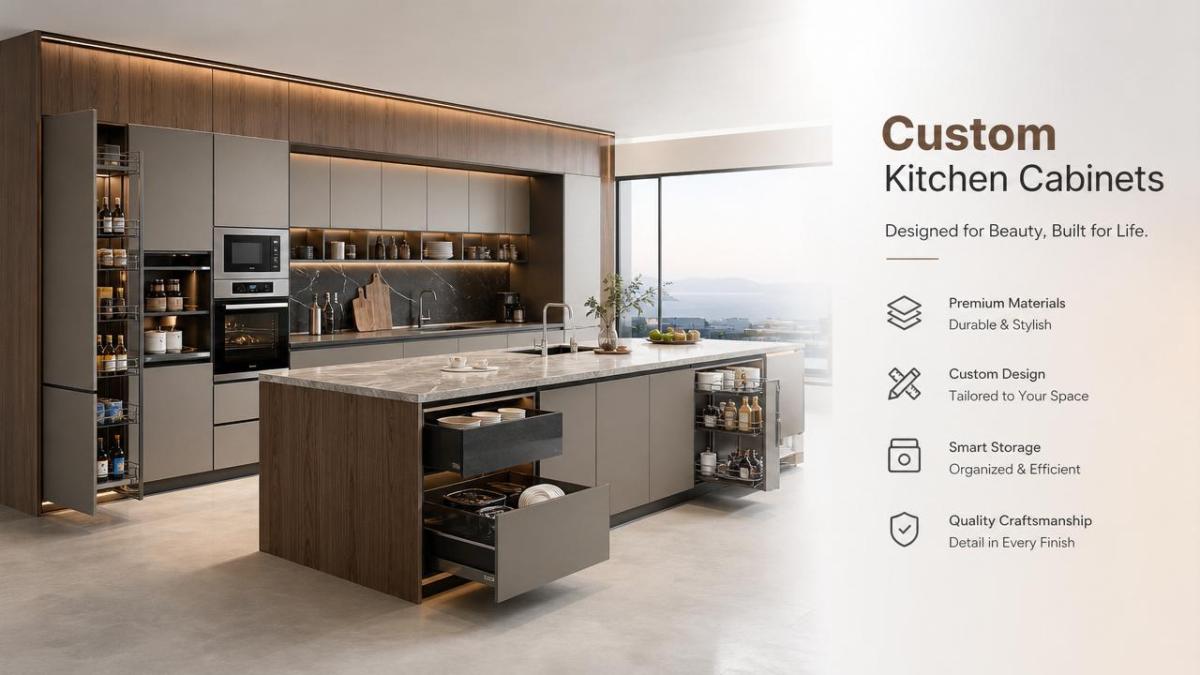
When decision-makers ask what are the customization options for KUCU kitchen cabinets, the answer usually starts with six major categories: layout planning, cabinet construction, material selection, surface finish, interior organization, and hardware integration. In premium residential projects, these six areas determine whether the final kitchen feels generic or fully aligned with the home’s architecture, user habits, and target market positioning.
Layout and Space Planning
KUCU customizes kitchen layouts based on room dimensions, workflow zones, appliance sizes, and traffic flow. Common premium configurations include L-shaped, U-shaped, galley, island, and peninsula kitchens. For larger villas or high-end apartments, designers may combine a main kitchen with a butler’s pantry or hidden prep zone to improve functionality and visual cleanliness.
In practical terms, layout customization should account for at least 3 work zones: storage, preparation, and cooking. For premium homes, many buyers also request a fourth zone for display or coffee service. KUCU’s 3D design tools help clients review circulation clearances, island proportions, and door swing conflicts before production, reducing on-site revisions and helping design sign-off happen within 7 days.
Cabinet Dimensions and Construction Details
Customization also extends to cabinet depth, height, toe-kick design, filler panels, open niches, and ceiling-height integration. This matters in North America and Australia, where homes vary widely between detached houses, urban condos, and mixed-use residential developments. Standard modules may work in some projects, but premium homes often need millimeter-level coordination with stone tops, appliances, bulkheads, and lighting channels.
Base cabinets, wall cabinets, and tall units can be configured to suit ergonomic goals and project aesthetics. For example, taller pantry units increase vertical storage, while reduced-depth overhead units can create a lighter visual line. In compact luxury apartments, KUCU’s patented Bi-Fold Doors and trackless sliding solutions can save up to 90% of hallway clearance compared with conventional swing-door interference in tight circulation areas.
Materials, Finishes, and Door Styles
For premium projects, material selection is a specification issue as much as a design issue. KUCU uses CARB P2 and FSC-certified formaldehyde-free boards, which are especially relevant for projects selling into California, Toronto, Vancouver, Sydney, and other markets where environmental compliance and indoor air quality are closely reviewed. Buyers can choose from multiple panel structures depending on finish goals, durability requirements, and budget bands.
Door styles can be customized into modern slab, shaker, fluted, integrated-handle, framed, or mixed-material compositions. Surface finish options commonly include matte lacquer, UV-coated surfaces, melamine-faced boards, wood-grain textures, and premium veneer effects. For many developers, the right customization strategy is not choosing the most expensive finish, but matching the finish to the project’s price point, daily wear level, and maintenance expectations.
The table below outlines the main customization areas and why each one matters in premium home procurement.
For project buyers, the key takeaway is that custom cabinetry should be evaluated as a system, not as a door style alone. Layout, board specification, and storage design usually have greater long-term impact on owner satisfaction than decorative features by themselves.
Storage Configuration and Functional Accessories
High-Use Storage Upgrades
Premium kitchen performance depends on interior organization. KUCU can customize drawer divisions, cutlery trays, spice pull-outs, waste sorting compartments, tray storage, corner pull-out systems, and integrated pantry shelving. For households with 3–5 daily cooking sessions per week, these functional details often determine whether a kitchen feels high-end in use, not just in appearance.
Appliance Integration
Cabinets can also be tailored around built-in ovens, microwaves, refrigerators, dishwashers, and wine storage. This is particularly important when appliance dimensions differ between US, Canadian, and Australian brands. Early coordination reduces cut-out errors, panel mismatch, and site delays. In most projects, appliance confirmation should happen before final shop drawings are approved, ideally within the first 1–2 design rounds.
- Custom drawer heights for cookware, utensils, and dry goods
- Vertical divisions for baking trays and chopping boards
- Sink-base adjustments for plumbing access and waste sorting
- Tall-unit pantry solutions for small-footprint luxury apartments
- Island storage combinations for seating, display, and hidden utility
How KUCU Supports Specification, Compliance, and Project Execution
Beyond product design, what are the customization options for KUCU kitchen cabinets also includes service-level customization. For developers, procurement managers, and design firms, the success of a cabinet package depends on design coordination, documentation accuracy, lead time predictability, and installation readiness. A premium cabinet supplier must support these operational requirements, not only provide finish samples.
Design Workflow and Approval Efficiency
KUCU uses real-time 3D design tools so clients can visualize cabinet layouts, elevations, color schemes, and storage details before production begins. For overseas projects, this matters because every unresolved design issue can add 7–14 days later in the process if discovered after shipment or installation starts. A structured design workflow reduces those risks.
- Requirement collection, including floor plans, site dimensions, and appliance lists
- Concept layout and finish direction
- 3D design review and revision cycle
- Shop drawing confirmation and hardware selection
- Production release, packing, shipment, and installation coordination
In many premium residential jobs, 2–3 revision rounds are normal before approval. KUCU’s 7-day design completion target helps procurement teams maintain schedule discipline while still allowing flexibility on style and function.
Environmental and Quality Standards
For export projects, premium customization must stay within the compliance framework of the destination market. KUCU’s CARB Phase 2 boards, FSC-certified material sourcing, and ISO 9001 quality management system are relevant because many project stakeholders now review environmental credentials during supplier qualification, especially in multifamily, townhouse, and high-spec private residence developments.
These standards are not just formalities. They influence approval speed, submittal acceptance, and buyer confidence. In practical sourcing terms, eco-certified panels and documented quality controls help reduce questions during material review, especially when the cabinet package is part of a broader decorative materials procurement schedule with tight milestone control.
The following table shows how decision-makers can compare specification priorities when selecting customized kitchen cabinets for premium homes.
For most procurement teams, the best supplier is not the one with the broadest catalog, but the one that can prove consistency across compliance, drawings, delivery, and installation support. That is where customization becomes commercially reliable, not just visually attractive.
Delivery, Logistics, and Installation Coordination
One frequent pain point in imported cabinetry is the gap between factory completion and successful site installation. KUCU addresses this by supporting shipment tracking, customs clearance coordination, and local installation services in key North American and Australian markets. For developers managing multiple trades, this reduces handoff uncertainty between procurement and project execution.
Average delivery timing of 25–35 days is especially useful for projects that need predictable sequencing with stone fabrication, appliance delivery, and final interior finishing. In premium residences, cabinet installation is rarely isolated; it typically sits between flooring completion and final electrical fixture adjustment, so timing discipline matters.
Where Premium Buyers Should Be Careful
Common Specification Risks
Even high-end projects can fail at the details. The most common issues include incomplete appliance schedules, unclear wall conditions, late finish changes, and underestimating the need for functional storage in compact kitchens. These problems often do not appear on the first render but become expensive during installation.
Practical B2B Procurement Advice
- Confirm all appliance dimensions before approving final cabinet shop drawings
- Review at least 4 points: board specification, hardware selection, finish sample, and packing list structure
- Allow for 1 final site verification before manufacturing release when project conditions are uncertain
- Request storage planning per user type, such as family home, condo owner, or rental premium unit
- Align delivery schedule with countertop templating and installation sequence to avoid idle labor time
Best-Fit Customization Strategies for Different Premium Residential Scenarios
The most effective answer to what are the customization options for KUCU kitchen cabinets depends on the project type. A luxury detached home, an urban condo, and a boutique developer project all require different priorities. Smart buyers choose customization packages based on user profile, available area, expected daily use, and resale positioning rather than applying one design language to every job.
Detached Homes and Large Villas
In spacious premium homes, customization often focuses on visual statement and layered functionality. Larger islands, double pantry systems, tall feature cabinetry, and integrated appliance walls are common. Here, buyers may prioritize material richness, seamless finish transitions, and hidden utility zones over aggressive space saving. The goal is to support both everyday use and entertaining.
Condos and Compact Luxury Apartments
In compact units, the emphasis shifts. Every 100–150 mm of clearance matters, and premium value comes from efficient movement and concealed storage. KUCU’s Bi-Fold Doors, trackless sliding systems, and optimized internal accessories become especially useful here. In these projects, buyers should treat space efficiency as a measurable benefit, not a secondary feature.
Developer and Multi-Unit Projects
For multi-unit developments, customization should be controlled rather than unlimited. A common strategy is to standardize 70%–80% of core cabinet construction while allowing flexible finish packages or storage upgrades across unit tiers. This keeps production efficient, simplifies replacement management, and still gives the project a premium market identity.
With 15 years of experience, service to 5,000+ overseas households, and collaboration with 200+ construction contractors, KUCU is positioned to support this type of balance between standardization and personalization. That is especially relevant for decision-makers who need both design differentiation and operational control.
Frequently Asked Buyer Questions
How much design flexibility is realistic?
Very high, but within the realities of site measurements, appliance dimensions, finish availability, and production lead times. The best results come when design ambition is paired with clear technical input in the first phase.
Can custom cabinets still be delivered on a project schedule?
Yes, if the approval process is disciplined. A 7-day design turnaround and 25–35 day average delivery can fit many premium residential schedules, especially when cabinetry is integrated early with the overall fit-out plan.
What matters most for export buyers?
Three things usually matter most: compliant materials, accurate drawings, and predictable logistics. Premium design loses value quickly if any of those three areas are weak.
For premium homes, the customization options for KUCU kitchen cabinets cover far more than colors and door fronts. Buyers can tailor layout, dimensions, eco-certified materials, finish systems, interior storage, space-saving hardware, and project execution support to suit villas, condos, and multi-unit developments across North America and Australia.
For developers, designers, and sourcing managers, the strongest value comes from choosing a cabinetry partner that can connect design freedom with compliance, fast response, and delivery reliability. KUCU combines whole-home cabinetry manufacturing, 3D design within 7 days, export-ready logistics, and installation support to help premium projects move from concept to completion with less friction.
If you are evaluating what are the customization options for KUCU kitchen cabinets for an upcoming residential project, now is the right time to review your floor plans, finish goals, and delivery schedule. Contact KUCU Building Materials to get a tailored cabinet proposal, discuss material and hardware details, or request a custom solution for your next premium home development.