Custom Kitchen Cabinets & Whole House Cabinetry Manufacturer in China
KUCU is a China-based manufacturer providing custom kitchen cabinets, wardrobes and whole-house cabinetry for global residential and commercial projects.About KUCU.
Can KUCU provide kitchen cabinets design services?? For quality control and safety managers, the answer depends on design accuracy, certified materials, and process reliability. KUCU combines AI-powered custom cabinet design, CARB P2 and FSC-certified boards, and ISO 9001 quality management to support projects that meet North American and Australian standards while reducing compliance risks and installation issues.
In export-oriented cabinetry projects, design service is not only about appearance. It directly affects fit accuracy, material compliance, installation efficiency, indoor air quality, and post-delivery risk. For teams responsible for product quality, site safety, and regulatory alignment, the key question is whether a cabinet supplier can turn custom design into a controlled, auditable, and standards-conscious process.
Foshan KUCU Building Materials Co., Ltd. positions its kitchen cabinet design service around full-project execution. The company supports North America and Australia with custom kitchen cabinets, wardrobes, bathroom vanities, and storage systems, covering design, production, logistics, customs coordination, and local installation support. For buyers managing residential developments, renovation programs, or contractor procurement, that integrated model matters because design mistakes often become expensive quality claims later.
What Quality and Safety Managers Should Evaluate in Cabinet Design Services
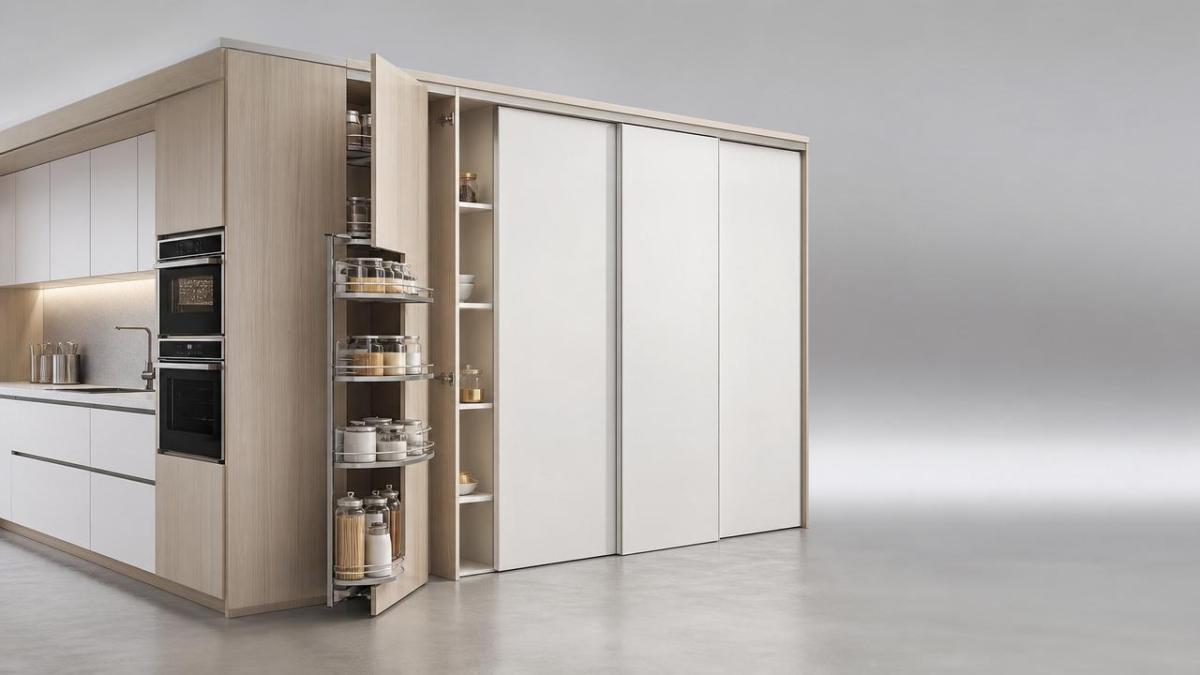
When reviewing whether KUCU can provide kitchen cabinets design services that match quality standards, decision-makers should assess at least 4 dimensions: dimensional precision, material certification, process control, and delivery coordination. A good-looking 3D rendering is not enough if the boards fail CARB Phase 2 requirements, if installation tolerances are unclear, or if hardware selection creates safety issues in compact kitchens.
In practical terms, quality control teams often check whether the supplier can keep design-to-production deviation within a reasonable tolerance, organize revision records, and align selected materials with destination-market requirements. Safety managers, meanwhile, focus on formaldehyde emissions, edge treatment, traffic flow, door swing clearance, and secure hardware integration in high-use family kitchens or multifamily units.
Why design quality is a compliance issue, not just a visual issue
A cabinet design package affects more than cabinet shape. It influences ventilation around cooking areas, corner accessibility, overhead storage reach, appliance spacing, and safe movement paths. In apartments, condos, and renovation projects with limited circulation space, poor layout planning can increase collision risk, reduce usability, and create installation rework that delays handover by 3 to 10 days.
KUCU’s service model is relevant here because it combines custom 3D visualization with patented space-saving solutions such as Bi-Fold Doors, trackless sliding systems, and concealed hardware. These features are especially useful where hallway or galley kitchen widths are tight, and where a standard swing door may interfere with movement or appliance access.
Core checkpoints for supplier qualification
Before approving a design partner, procurement and quality teams should compare service capability against measurable checkpoints. The table below highlights the factors most relevant to kitchen cabinet design review in export projects.
The strongest point for risk-sensitive buyers is that KUCU’s design service is linked to certified material selection and quality procedures, not treated as a separate front-end sales step. That connection helps reduce a common problem in custom cabinetry: approved drawings that later require material substitution or field adjustment.
Typical risks if cabinet design is weak
- Misalignment between appliance dimensions and cabinet openings
- Unsafe clearance around doors, drawers, and walkways
- Incorrect board selection for destination compliance requirements
- Excessive site cutting, increasing dust, waste, and safety exposure
- Higher installation labor due to incomplete hardware planning
How KUCU Aligns Kitchen Cabinet Design with North American and Australian Standards
For projects in the USA, Canada, and Australia, design services must account for more than style preferences. They need to reflect regional expectations on emissions control, documentation discipline, fit consistency, and shipment readiness. KUCU’s design-to-delivery model is built around those export realities, which is why the company is relevant to safety managers and quality officers managing overseas supply chains.
Certified materials reduce approval friction
One of the first questions in any kitchen cabinet compliance review is what substrate is being used. KUCU states that all products use CARB P2 and FSC-certified formaldehyde-free boards. For North American and Australian projects, this matters because emissions and sourcing documentation are often reviewed during procurement, especially for multifamily developments, education-related housing, and quality-controlled residential construction.
Material compliance alone does not guarantee project success, but it removes a major risk point at the beginning. Quality managers can evaluate board certificates alongside shop drawings, hardware selections, and production lists instead of chasing substitutions after production starts. That can save 1 to 2 approval cycles in custom programs where multiple stakeholders need sign-off.
ISO 9001 adds process discipline to custom work
Custom cabinet projects are inherently variable, which is why process control is critical. ISO 9001 does not eliminate every error, but it provides a framework for document control, inspection routines, corrective action handling, and traceable production procedures. In a kitchen project with dozens of cabinet components, filler panels, hinges, and finish details, consistent process management is often more valuable than a low initial quote.
For quality teams, the real value is repeatability. A design service that feeds directly into a controlled production workflow lowers the chance of panel mismatch, drilling inconsistency, hardware omission, and packaging confusion. These are the kinds of issues that frequently trigger rework claims on imported cabinetry.
Design, production, and logistics must work as one chain
Many suppliers can create drawings, but fewer can carry the design through manufacturing, shipment, customs coordination, tracking, and installation support. KUCU’s average delivery window of 25 to 35 days, together with port partnerships in North America and Australia, is important because schedule risk is a quality issue too. If installation teams arrive before cabinets clear customs or if the final package lacks labeling clarity, even accurate designs can fail operationally.
The following table shows how design service quality should be judged across the full project chain rather than at the drawing stage alone.
This full-chain view is especially important for contractors and developers handling multiple units at once. A supplier that controls 4 connected stages can often prevent the small coordination failures that lead to major punch-list delays at handover.
How Quality Teams Can Validate KUCU’s Cabinet Design Service Before Purchase
Even when a supplier has strong credentials, quality control and safety managers should still perform a structured review before approval. The goal is to verify that the kitchen cabinet design service works for the actual project conditions, not just for marketing presentation. In most B2B projects, a 5-step validation approach is practical and efficient.
Step 1: Review design inputs in detail
Confirm room dimensions, ceiling height, utility locations, appliance sizes, doorway limitations, and installation surface conditions. If the project includes 10, 50, or 200 units, even a small measurement error can multiply into significant replacement cost. Ask whether KUCU’s design team can work from site measurements, architectural drawings, or renovation photos and how design revisions are logged.
Step 2: Match materials to project compliance needs
Request confirmation that the specified boards, finishes, and supporting materials align with destination requirements. For safety-focused buyers, CARB P2 and FSC are strong starting points, but they should also verify whether the selected finish and hardware combination is suitable for the kitchen’s humidity, cleaning frequency, and expected daily use cycle.
Step 3: Check high-risk design zones
The most common quality failures occur at corners, sink bases, appliance towers, wall cabinet alignment, and traffic paths. In compact homes, door swing conflicts and drawer pull interference should be checked early. KUCU’s patented space-saving features may be particularly valuable in these areas, but the project team should still verify exact movement clearance and hardware behavior in the final drawing set.
Recommended review checklist
- Confirm all cabinet dimensions against site drawings.
- Review board certification and finish specifications.
- Check clearance for doors, drawers, and appliances.
- Verify packing, labeling, and installation sequence requirements.
- Align delivery schedule with site readiness and labor planning.
Step 4: Audit delivery and installation coordination
A strong design package loses value if the installation team cannot identify the right parts quickly. Ask how cabinets are packed, how components are labeled, and how shipment tracking is shared. For overseas projects, a 25 to 35 day average delivery window is useful only when linked to realistic site readiness planning, customs timing, and local installation sequencing.
Step 5: Evaluate supplier experience in similar markets
KUCU reports 15 years of industry experience, service to more than 5,000 overseas households, support for over 200 construction contractors, and a 98% customer satisfaction rate. For procurement teams, those figures do not replace technical review, but they do suggest operational familiarity with export cabinetry expectations in California, Texas, New York, Florida, Toronto, Vancouver, Sydney, Melbourne, Brisbane, Perth, and other metro markets.
Is KUCU the Right Fit for Safety-Driven and Quality-Driven Cabinet Projects?
If the question is simply, can KUCU provide kitchen cabinets design services, the answer is yes. The more important question for professional buyers is whether those services can support compliance, reduce risk, and improve execution quality. Based on the available information, KUCU’s offering is well aligned with projects that require certified materials, export-ready coordination, and a design process tied closely to production and delivery.
This makes KUCU particularly suitable for developers, contractors, interior fit-out teams, and procurement managers who need more than a cabinet factory. It is also relevant for quality control personnel and safety managers who want documented material standards, process-managed production, and practical layout solutions for compact or high-use kitchen environments.
For buyers who need custom kitchen cabinets, wardrobes, bathroom vanities, or whole-home storage systems for North America or Australia, a structured consultation is the next sensible step. To review design feasibility, certification alignment, delivery planning, or installation support, contact Foshan KUCU Building Materials Co., Ltd. at sasa@fsgzhome.com or +86 158 1717 8181 to get a tailored solution and discuss project-specific quality requirements.