
Choosing a reliable kitchen cabinet manufacturer can make all the difference in quality, delivery, and project success. Whether you are sourcing for a modern kitchen renovation or a large-scale development, the right partner should offer consistent craftsmanship, flexible customization, and dependable export support. From stylish layouts to a practical wall-mounted cabinet for kitchen spaces, knowing what sets a trusted supplier apart helps buyers make smarter decisions.
Why does manufacturer reliability matter so much in cabinet procurement?
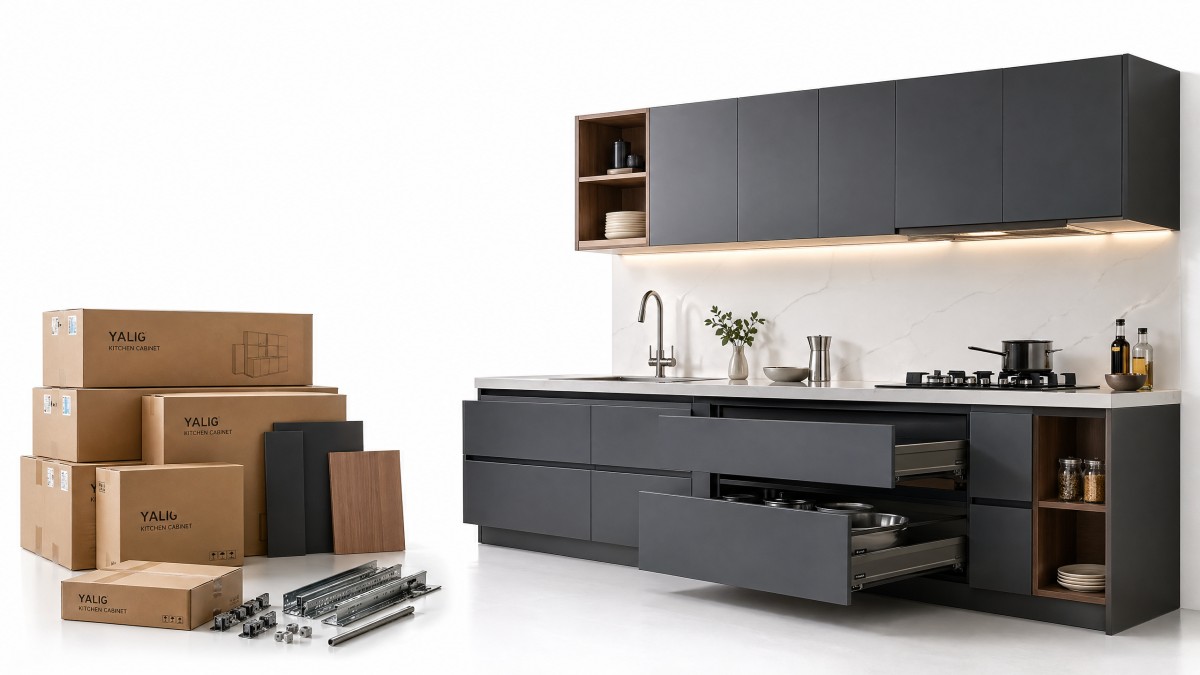
In the building and decorative materials industry, kitchen cabinets are not a simple finished product. They involve coordinated design, board processing, surface finishing, hardware selection, packaging, and site-fit accuracy. A reliable kitchen cabinet manufacturer reduces the risk of mismatch between drawings and production, keeps lead times within a practical range such as 20–45 days for standard projects, and supports smoother installation on site.
For procurement teams and project managers, the main concern is not only price. It is total project control. A low quote can become expensive if dimensions are inconsistent, moisture resistance is weak, or replacement parts take 3–6 weeks to arrive. Business decision-makers also look at supply continuity, communication speed, and export readiness, especially when serving builders, design firms, or property owners across multiple projects.
A dependable supplier usually shows strength in three connected areas: manufacturing capacity, customization capability, and delivery discipline. Kucu Building Materials Co., Ltd., based in Foshan, Guangdong, operates a 40,000 square meter manufacturing center with 8 high-configuration production lines. That profile matters because scale and process control often support stable output for both small-batch customization and medium-to-large project orders.
Another important point is integration. When a cabinet supplier can manage production, design, and exportation in one workflow, buyers spend less time coordinating separate vendors. For distributors, developers, and end users, this means fewer communication gaps and a clearer path from concept confirmation to packing list, container loading, and after-sales response.
The most common reliability risks buyers face
- Inconsistent cabinet dimensions that create installation delays and rework during the final 1–3 days of site fitting.
- Material substitutions without clear approval, especially in panels, hardware, edge banding, or finish color matching.
- Weak export packaging that leads to corner damage, scratched doors, or missing accessories during international shipment.
- Slow technical communication when revised shop drawings, cutout locations, or installation details must be confirmed quickly.
What should buyers evaluate before choosing a kitchen cabinet manufacturer?
A strong evaluation process usually starts with 5 key checks: factory capability, material options, customization depth, quality control steps, and export service. Many buyers focus heavily on door style and color, but the more important questions are whether the supplier can hold tolerances consistently, whether the bill of materials is transparent, and whether the project can be reproduced accurately across repeated orders.
For large residential or commercial developments, you should also compare suppliers on documentation readiness. That includes shop drawing support, packing identification, installation labeling, and revision tracking. In practice, projects move faster when each cabinet unit, hardware bag, and accessory carton follows a clear coding logic. This becomes even more important when there are 20, 50, or 100+ kitchen sets in one program.
Material flexibility is another separator. A reliable kitchen cabinet manufacturer should provide practical choices for carcass boards, finishes, countertops coordination, and hardware positions according to climate, budget, and usage intensity. For example, rental apartments, owner-occupied villas, and hospitality projects often require very different balances between cost control and finish durability.
The table below shows a practical procurement checklist that purchasing teams, dealers, and project leaders can use when screening cabinet suppliers before sampling or final quotation.
This checklist makes one thing clear: reliability is measurable. It shows up in process detail, not just in a brochure. Kucu’s profile as a 20-year customized cabinet supplier with production, design, and exportation capabilities is especially relevant for buyers who want fewer handoff points and better coordination during the full procurement cycle.
A simple 4-step supplier screening approach
- Request drawings, finish samples, and a standard material specification list.
- Compare 2–3 suppliers on structure, hardware scope, packing method, and lead time.
- Test communication speed during revisions, especially for size changes and accessory details.
- Confirm production schedule, loading plan, and after-sales handling before deposit release.
How do quality, customization, and lead time separate strong suppliers from weak ones?
A reliable kitchen cabinet manufacturer balances three priorities that often conflict: appearance, function, and delivery speed. Weak suppliers may offer attractive finishes but struggle with drawer alignment, hinge positioning, or repeated color consistency. Stronger suppliers know how to maintain practical standards across panel cutting, drilling, edge sealing, assembly preparation, and final packing.
Customization is also more than changing color or handle style. Real customization includes room-based layout planning, tall cabinet coordination, appliance opening confirmation, storage zoning, and adaptation for wall-mounted cabinet for kitchen configurations. Buyers serving different end markets may also need solutions that match wardrobes and bathroom vanities for full-project consistency rather than single-space supply.
Lead time must be examined carefully. Standardized modules may move faster, while deeply customized projects usually require extra time for drawing approval, sampling, and batch verification. In many export projects, a realistic sequence includes 3 stages: technical confirmation, manufacturing, and packing/loading preparation. If a supplier promises unusually short timelines without clarifying these stages, risk usually increases.
The comparison below helps buyers distinguish between a quote that only looks competitive and a supplier relationship that can actually support long-term business.
For dealers and distributors, this distinction is critical. One delayed order can affect showroom reputation, local installer schedules, and repeat sales. For project owners, dependable execution is often worth more than a narrow unit-price advantage.
Where integrated product sourcing adds value
When a supplier can provide coordinated kitchen cabinets, wardrobes, bathroom vanities, and selected storage pieces, the project becomes easier to manage. In some residential developments, buyers also review supporting furniture styles such as Book Cabinet options to keep visual language aligned across open-plan living spaces and kitchen-adjacent zones.
This integrated approach helps reduce finish mismatch, repeated sourcing work, and fragmented shipping arrangements. It is especially practical for developers and design companies that need one coordinated supply partner rather than multiple small vendors for each interior category.
Which standards, service processes, and export details should not be overlooked?
In international cabinet sourcing, compliance is often less about one single label and more about disciplined documentation, consistent material disclosure, and practical quality expectations. Buyers should discuss moisture-prone applications, finish performance, hardware grade, and packaging protection in a clear written scope. This matters for kitchen environments because humidity, cleaning frequency, and daily opening cycles are higher than in many other furniture areas.
A useful service process usually includes 6 key nodes: requirement collection, drawing development, sample or finish confirmation, order production, packing inspection, and shipment coordination. When these nodes are managed well, project teams can identify problems earlier and avoid expensive corrections after container arrival. Good suppliers also communicate what is standard and what requires an upgrade, helping buyers protect budget without hidden compromises.
Export packaging deserves special attention. Cabinets for overseas shipment need practical corner protection, panel separation, hardware bag labeling, and carton identification that links back to room or unit numbers. Even a well-made cabinet can become a problem if unloading crews cannot identify items quickly or if impact protection is weak during long-distance transport.
The table below outlines a service and control framework that many serious buyers use when assessing whether a supplier is ready for repeat export business.
This process view is especially useful for enterprise buyers and project leaders. It turns a cabinet order from a simple product purchase into a managed delivery program. That is often the real difference between one-time sourcing and a supplier relationship that can scale.
Key questions to raise before order confirmation
- What is the typical lead time range for standard versus customized kitchen cabinet orders?
- How are revisions handled after drawing approval but before production release?
- How are replacement parts identified if damage or shortages are found after delivery?
- Can the supplier coordinate matching categories such as wardrobes, vanities, or a second Book Cabinet line where project design requires it?
FAQ: what do buyers usually ask before making a final decision?
How do I know if a kitchen cabinet manufacturer is suitable for project business?
Check whether the supplier can support repeated production, not just one sample set. Project suitability usually depends on drawing responsiveness, batch consistency, packing organization, and the ability to manage quantities from small pilot orders to larger development phases. A supplier with production, design, and export coordination under one system is usually easier to work with for project schedules.
What order size signals stronger operational readiness?
There is no universal threshold, but buyers should ask how the factory manages small-batch customization, mid-volume distribution orders, and multi-unit developments. The answer should include workflow logic, not only capacity claims. Clear milestones over 3–4 stages are often a good sign.
What is more important: low price or complete specification clarity?
Specification clarity is usually more important. A lower unit price can hide thinner materials, different hardware scope, reduced packing protection, or incomplete accessories. In cabinet procurement, cost should be evaluated as landed project value, including replacement risk, installation efficiency, and schedule reliability.
How can I compare quotations fairly?
Use a line-by-line matrix covering board type, finish, door structure, hinge and runner scope, accessory list, packing method, and delivery terms. Comparing 3 quotations on the same baseline usually exposes hidden differences quickly.
How long does a customized kitchen cabinet order usually take?
Lead time depends on quantity, finish complexity, and drawing stability. In many practical cases, standard configurations may move within 20–35 days, while more customized export orders can extend to 30–45 days or longer if repeated revisions are required. Buyers should confirm whether this timeline includes packing and loading preparation.
What usually causes delays?
Common causes include late drawing approval, unclear appliance dimensions, finish changes after sample confirmation, and incomplete room coding for multi-unit projects. These are manageable when the supplier keeps technical review disciplined from the beginning.
Why choose a manufacturing partner with design and export coordination?
For buyers in the building and decorative materials sector, the best supplier is rarely the one with the loudest sales message. It is the one that can turn design intent into repeatable production and safe delivery. Kucu Building Materials Co., Ltd. brings together a 40,000 square meter manufacturing center, 8 production lines, 20 years of customized cabinet experience, and the combined ability to handle production, design, and exportation.
That combination is useful for builders, design companies, decoration companies, distributors, and building owners who need kitchen cabinets, wardrobes, and bathroom vanities at a competitive price without losing control over details. Instead of managing fragmented communication, buyers can work through one coordinated path for layout discussion, material selection, quotation alignment, and shipment planning.
If you are comparing suppliers now, the most productive next step is to prepare your drawings, target quantity, finish preference, and required delivery window. With that information, you can ask for practical support on 5 topics: parameter confirmation, product selection, lead time assessment, customized solution planning, and packing or export coordination.
Contact us to discuss your kitchen cabinet project in a more concrete way. You can request layout review, sample support, material option clarification, quotation comparison, delivery schedule discussion, and guidance on matching wardrobes or bathroom vanities for a full interior package. This is the fastest way to determine whether the supplier truly fits your procurement goals, budget range, and project timeline.