
As 2026 approaches, open cabinet custom design is becoming a defining trend in modern interior projects, combining visual openness, flexible storage, and personalized functionality. For buyers, project managers, and distributors in the building materials industry, understanding these design shifts can help improve project value, meet client expectations, and strengthen market competitiveness in kitchen, wardrobe, and bathroom cabinet solutions.
Why Open Cabinet Custom Design Is Gaining Momentum in 2026 Projects
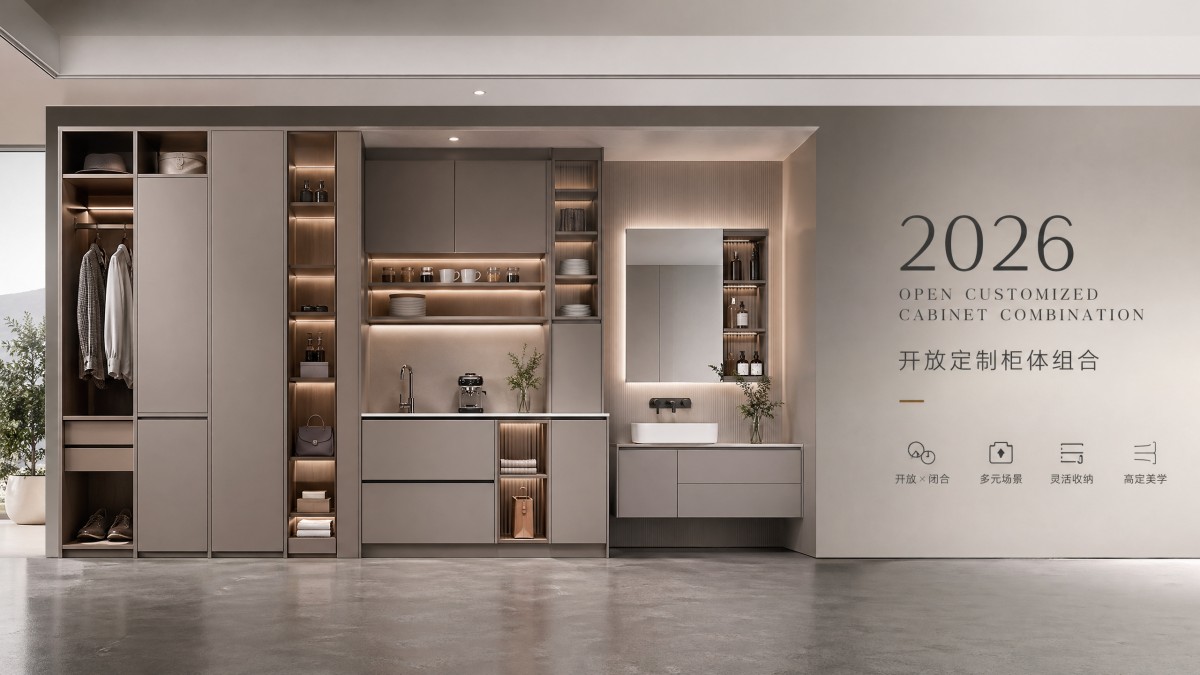
Open cabinet custom design is no longer limited to boutique kitchens or display-focused interiors. In 2026, it is increasingly specified across residential developments, serviced apartments, model homes, and selected commercial spaces because it supports lighter visual layouts, faster access, and stronger styling flexibility. In the building decoration materials sector, this trend matters because cabinet systems are now expected to combine storage, appearance, and project-level coordination in one package.
For procurement teams, the trend creates both opportunity and pressure. Buyers must evaluate not only the front-facing design language, but also substrate stability, hardware compatibility, moisture resistance, and manufacturing consistency. Project managers face another layer of complexity: open cabinet custom design often requires tighter dimensional control, cleaner installation sequencing, and better coordination with lighting, wall finishes, plumbing points, and appliance positions within a 2–4 week installation window.
Distributors and dealers also see a clear shift in client expectations. End customers increasingly ask for customizable open shelves, mixed closed-and-open storage, integrated lighting, and color-matched cabinet accessories. This means standard catalog products may no longer be enough. A supplier with production, design, and export capability can help bridge the gap between concept drawings and bulk delivery, especially when order volumes range from small sample runs to multi-unit project supply.
For companies serving builders, design firms, decoration contractors, and property owners, open cabinet custom design is not simply a visual trend. It affects project planning, bill of materials, packaging method, and after-sales risk. That is why many B2B buyers now treat cabinet customization as a strategic procurement item rather than a finishing detail.
- Open layouts improve perceived space, especially in compact kitchens, wardrobes, and bathroom vanity areas.
- Custom combinations of open and closed storage help different user groups balance display, privacy, and maintenance.
- Project customization requires coordinated production drawings, material confirmation, and export-ready packaging in 3 key stages.
What makes this trend commercially relevant?
The commercial value comes from upgrade potential. Compared with fully closed standard cabinets, open cabinet custom design can increase product differentiation without necessarily increasing structural complexity across every unit. A well-planned system may only adjust 20%–40% of visible modules while retaining standardized carcass dimensions for the remaining sections, which helps control production efficiency and simplifies large-order management.
This is especially relevant for cabinet suppliers supporting export and project business. Kucu Building Materials Co., Ltd., based in Foshan, Guangdong, operates a 40,000 square meter manufacture center with 8 high-configuration production lines. With 20 years of customized cabinet experience in kitchen cabinets, wardrobes, and bathroom vanity solutions, Kucu is well positioned to support B2B buyers who need both customization depth and manufacturing continuity across project batches.
Which Open Cabinet Design Trends Will Shape Kitchen, Wardrobe, and Vanity Projects?
The 2026 market is not moving toward fully exposed storage everywhere. Instead, the stronger trend is selective openness. Designers and project owners prefer open cabinet custom design where it improves usability or creates a premium visual zone, while closed sections remain important for concealed storage, maintenance, and code-conscious project execution. This hybrid approach gives procurement teams more room to control budget and reduce long-term complaints.
In kitchen projects, open shelves are frequently used near preparation zones, breakfast areas, or feature walls. In wardrobes, open niches, display towers, and accessory sections are replacing some full-height doors. In bathroom vanity systems, open lower shelving and side display compartments are common when the goal is a lighter hospitality-style appearance. Across these applications, the design challenge is not the open section itself, but how it performs under daily use, humidity change, and cleaning frequency.
Color and finish coordination is another defining trend. Instead of using one finish throughout, many 2026 cabinet packages combine 2–3 material expressions, such as matte panels with woodgrain accents or lacquer-look doors with textured open shelving. This requires careful matching between visible surfaces, edge treatment, and hardware tone. Procurement teams should confirm whether the supplier can maintain finish consistency across repeated batches, especially for phased projects delivered every 30–60 days.
Lighting integration is also becoming more common. Open cabinet custom design often works best when paired with LED strips, under-shelf lighting, or wardrobe sensor lighting. Although the cabinet supplier may not provide the complete electrical system, cabinet structure must still reserve the required channels, backing gaps, and mounting space to avoid rework during installation.
High-demand trend directions in 2026
- Mixed open-and-closed storage systems that improve display while keeping daily clutter hidden.
- Slim-profile shelving and visually lighter frames for modern apartments and urban renovation projects.
- Moisture-aware bathroom vanity layouts with raised legs, open bases, or ventilated side modules.
- Wardrobe display areas for bags, folded clothing, and accessories in premium residential units.
- Project-friendly modular customization that allows repeated dimensions with selective visual upgrades.
Trend impact by application type
A practical way to assess the trend is by space function. Kitchens usually prioritize accessibility and social appearance. Wardrobes prioritize organization and presentation. Bathroom vanity projects prioritize moisture management and cleaning convenience. Understanding these three use logics helps specifiers avoid simply copying a kitchen-style open shelf into a high-humidity vanity area where material performance requirements are different.
The table below compares how open cabinet custom design is commonly applied in the three main cabinet categories. It can help buyers, project managers, and distributors align product planning with use conditions rather than relying only on aesthetic references.
The comparison shows that open cabinet custom design must be adjusted by environment, not repeated blindly across all room types. A reliable supplier should be able to convert the same design concept into different material and structural responses depending on whether the project is a dry wardrobe zone or a wet bathroom vanity zone.
How Should Buyers Evaluate Materials, Structure, and Manufacturing Readiness?
Open cabinet custom design exposes more of the cabinet body, shelf lines, edges, and fixing logic than traditional fully closed systems. That means manufacturing quality becomes easier to see. For B2B procurement, evaluation should go beyond door finish samples. Buyers should check substrate suitability, visible edge consistency, shelf span stability, and whether the open modules are engineered for repeated production rather than built as one-off prototypes.
In practical terms, there are at least 5 critical checkpoints. First, confirm the board material category and where it will be used. Second, review edging quality and color match. Third, verify hardware support for open and mixed modules. Fourth, assess moisture-sensitive areas such as sinks or vanity bases. Fifth, check packaging and labeling for export or site-based phased delivery. These points are particularly important when a project includes dozens or hundreds of repeated units.
Tolerance control also matters. In custom cabinet projects, installation issues often begin with poor dimensional discipline rather than design flaws. For many projects, site measurement, drawing confirmation, production, and installation coordination typically move through 4 stages. If revisions happen late, the risk of mismatch rises sharply, especially for open shelves aligned with wall tiles, mirrors, or lighting strips where even small visual deviations are more obvious than on closed cabinetry.
Kucu’s combined production, design, and exportation ability is relevant here. When the supplier understands not only manufacturing but also project documentation and shipment preparation, procurement teams can reduce communication gaps between concept approval and site execution. This is particularly valuable for overseas buyers, contractors, and distributors managing multiple SKUs and container-level planning.
Core technical and procurement checks
The table below highlights practical evaluation items for open cabinet custom design in building materials procurement. It is intended to help decision-makers compare suppliers using visible, operational criteria instead of relying only on showroom appearance.
A supplier that can discuss these points in detail usually has stronger project readiness than one that only presents style boards. For larger orders, buyers should also request sample confirmation, drawing review, and packaging logic before releasing full production quantities.
Recommended supplier review checklist
- Confirm whether the supplier can support custom kitchen cabinets, wardrobes, and bathroom vanity systems under one coordinated project order.
- Ask how drawings are reviewed and revised, and whether approvals follow a 3-step process: layout confirmation, material confirmation, and final production sign-off.
- Check if packaging is prepared for local distribution, export shipment, or site-by-site installation sequencing.
- Review whether the supplier can handle repeated batches without visible finish variation between early and later shipments.
What Should Procurement Teams Compare on Cost, Lead Time, and Project Risk?
Cost control remains a top concern, but open cabinet custom design should not be judged by unit price alone. The total project cost includes design adaptation, material selection, hardware configuration, packaging complexity, transportation method, site labor, and the cost of rework if the cabinet design does not match the installation environment. In many projects, a lower initial quotation can become more expensive if it creates delays or replacement claims later.
Lead time is another major decision factor. Custom cabinet programs often move through 3 main time blocks: design and technical confirmation, production, and shipping or local delivery. Depending on project scale and revision complexity, buyers commonly plan several weeks for the full process rather than expecting immediate dispatch. Open modules with integrated lighting space, mixed finishes, or special display proportions may add coordination time even when the basic carcass structure remains standardized.
Risk is highest when design ambition exceeds execution discipline. For example, very open wardrobe layouts may look premium in renderings but generate client dissatisfaction if hanging space becomes insufficient. In bathroom vanity projects, an elegant open lower shelf may underperform if cleaning access and splash exposure were not considered. Buyers should compare not only cabinet appearance, but also scenario fit, replacement difficulty, and maintenance expectations during the first 6–12 months of use.
For distributors and agents, the best-selling open cabinet custom design is often not the most extreme version. Products with balanced complexity tend to be easier to quote, repeat, and service. That is why many channel partners prefer customizable systems with clear option ranges instead of unlimited bespoke development for every order.
A practical comparison for B2B decision-making
The table below helps compare three common cabinet planning approaches from a procurement perspective. It is especially useful when deciding how far to adopt open cabinet custom design in multi-unit or channel-based business.
For most builders, project managers, and distributors, the hybrid route offers the best balance between design trend adoption and delivery control. It allows open cabinet custom design to create impact where customers notice it most, without turning the whole cabinet package into a high-risk specification.
How Can Project Managers and Distributors Implement the Trend More Safely?
Successful implementation begins with early alignment. Before order confirmation, project stakeholders should agree on 4 basic items: room use, storage expectation, visible finish direction, and installation conditions. This reduces the common problem of approving a visually attractive open cabinet custom design that later conflicts with electrical points, tile joints, plumbing traps, or local maintenance habits.
The second step is sample and drawing validation. For repeated project orders, one approved mockup or full-detail sample zone can reduce confusion across later batches. This is especially important when the project includes multiple unit types, because open cabinet layouts are more sensitive to proportion and sightline than standard closed cabinets. A small change in shelf spacing or panel finish can alter the overall result.
The third step is installation planning. Open cabinet custom design usually demands cleaner on-site sequencing because visible shelves and open edges are easier to damage during later work. Project managers should coordinate cabinet installation with wall painting, countertop fitting, mirror placement, lighting connection, and sanitary fixture completion. In many sites, preventing late-stage impact damage saves more cost than negotiating a lower ex-factory price.
Distributors can use the same logic in retail or channel sales. Instead of promoting open cabinetry as a universal solution, they should classify it into suitable customer profiles: compact apartment upgrades, model home presentation, premium wardrobe packages, and hospitality-style vanity programs. This improves quote accuracy and reduces after-sales mismatch.
4-step implementation path
- Define the functional target: display emphasis, quick-access storage, premium look, or mixed-use organization.
- Lock the material and finish strategy: match substrate, surface, edging, and visible accessories to the room environment.
- Review technical drawings and mockups: confirm dimensions, open module spacing, appliance clearances, and reserved lighting routes.
- Plan phased delivery and installation protection: align packaging, labeling, sequence, and site handover conditions.
Common mistakes to avoid
One common mistake is overusing open storage in high-frequency family kitchens. Another is copying wardrobe display layouts into budget-driven rental projects where user behavior is different. A third is underestimating visible finish consistency. Because open cabinet custom design shows more surfaces at once, slight color variation between panels can become far more noticeable than in fully closed systems.
A more reliable approach is to specify open zones where they add measurable value: easier access, stronger visual merchandising, or better space perception. Then keep less visible storage closed. This approach helps protect both project performance and long-term customer satisfaction.
FAQ and Why Many Buyers Choose a Capable Custom Cabinet Partner
For many B2B customers, the real question is not whether open cabinet custom design is attractive. It is whether the concept can be converted into a practical, profitable, and deliverable cabinet package. The answers below address the most common concerns from procurement personnel, project managers, distributors, and agents.
How do I know if open cabinet custom design fits my project type?
Start with user behavior and maintenance demands. If the project needs better visual openness, easy display, or quick daily access, open elements are usually a strong fit. If the project prioritizes dust control, concealed storage, or minimum upkeep, use open sections selectively rather than across the full layout. A balanced solution often works best in 3 main settings: kitchens with feature zones, wardrobes with display areas, and bathroom vanity programs with controlled open shelving.
What should I ask a supplier before requesting a quotation?
At minimum, confirm 6 items: available cabinet categories, customization scope, material options, drawing workflow, estimated production schedule, and packaging method. You should also ask whether the supplier can support kitchen cabinets, wardrobes, and bathroom vanity systems within one coordinated order, because mixed-space projects are common in the building decoration materials industry.
Is open cabinet custom design always more expensive?
Not always. Cost depends on how much of the project is customized, how many finishes are used, and whether structural changes are repeated or unique. A hybrid system can keep much of the cabinet body standardized while upgrading selected visible areas. This often provides better value than either extreme: fully basic standard units or highly complex all-open feature cabinetry.
What kind of supplier is better for long-term cooperation?
For repeat B2B business, the better partner is usually one that combines design coordination, manufacturing capacity, and export or shipment experience. Kucu Building Materials Co., Ltd. offers that combination through its 40,000 square meter manufacture center, 8 high-configuration production lines, and 20 years in customized cabinet supply. This structure is useful for buyers who need responsive quotation, project-level customization, and consistent delivery across multiple order stages.
Why choose us for open cabinet custom design projects?
Kucu supports B2B customers who need more than a catalog cabinet supplier. We work with builders, design companies, decoration companies, and building owners, and we understand that open cabinet custom design must balance appearance, function, cost, and delivery control. Our product coverage includes kitchen cabinets, wardrobes, and bathroom vanity solutions, allowing buyers to centralize sourcing instead of managing several separate vendors.
If you are planning 2026 cabinet projects, you can contact us to discuss parameter confirmation, product selection, material matching, open-and-closed layout strategy, sample support, lead time planning, export packaging, and quotation communication. If your team already has drawings, we can review customization feasibility. If you are still comparing options, we can help you evaluate which open cabinet custom design route best fits your market, budget range, and project schedule.
A practical conversation can start with 4 simple inputs: application space, target quantity, finish preference, and expected delivery timeline. With those details, it becomes much easier to build a cabinet solution that is commercially realistic, visually competitive, and easier to execute on site.