

Planning an open cabinet custom design for a residential or commercial project requires more than appearance alone. For buyers, project managers, and distributors, the real question is whether the cabinet solution will fit the layout, control cost, support efficient installation, and hold up over time. In most projects, a successful open cabinet design is one that is easy to specify, practical to manufacture, reliable to install, and appropriate for the end-user environment. This checklist focuses on the points that matter most when evaluating a custom cabinet supplier and making sourcing decisions with less risk.
What should you check first before approving an open cabinet custom design?
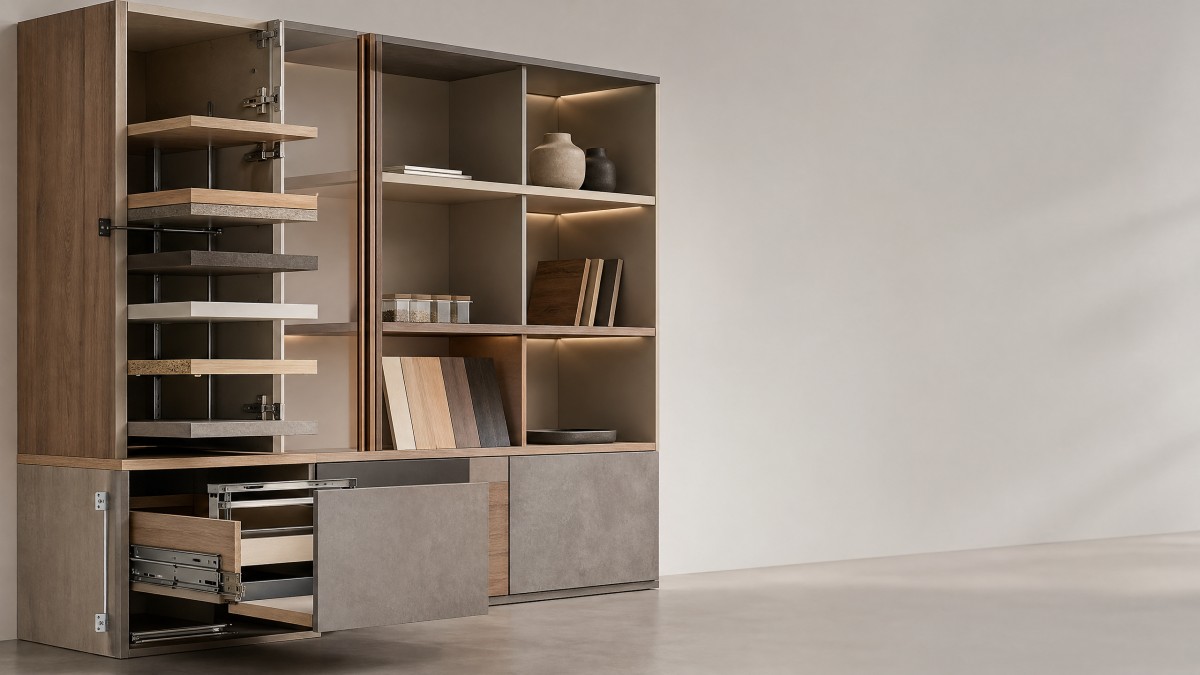
The first priority is not color or decorative style. It is whether the proposed design works in real project conditions. For procurement teams and project leaders, the most useful starting point is a practical review of layout, use scenario, material performance, and installation requirements.
Before moving forward, confirm these essentials:
- Application type: Is the open cabinet intended for kitchens, wardrobes, bathroom vanity areas, retail display, or mixed-use storage?
- Project environment: Will the cabinet face humidity, grease, heavy daily use, or frequent cleaning?
- Required dimensions: Are site measurements complete, verified, and aligned with MEP conditions, walls, floors, and ceiling tolerances?
- Storage purpose: Is the design for display, fast access, bulk storage, or a balance of open and concealed storage?
- Target budget: Does the design match the project’s cost level without creating hidden manufacturing or installation expenses?
- Delivery schedule: Can the supplier meet design confirmation, production, packing, and export timelines?
For many projects, open cabinet custom design works best when aesthetics and functionality are balanced from the beginning. If the design looks attractive but ignores installation tolerance, load requirements, or material suitability, the project risk increases quickly.
How do you know if open cabinet design is suitable for the project?
Open cabinets are not ideal for every application. They offer visual openness, quick access, and design flexibility, but they also require stricter control over organization, cleaning, and material finish quality.
Open cabinet solutions are usually a good fit when:
- The project wants a lighter and more modern visual effect
- Users need frequently accessed storage
- Display value is important, such as premium kitchens, boutique spaces, or branded interiors
- The layout benefits from reducing visual heaviness compared with full closed cabinetry
They may be less suitable when:
- The end users need to hide clutter completely
- The environment produces high dust, oil, or moisture exposure
- Maintenance standards are low or inconsistent
- The project prioritizes sealed storage over visual presentation
For builders, design companies, and distributors, this evaluation matters because it affects after-sales satisfaction. A well-designed open cabinet can improve space usability and project appeal, but only when the actual use case supports it.
Which layout details have the biggest impact on usability and installation?
In custom cabinet projects, layout errors are one of the main causes of rework, delays, and site conflicts. Open cabinets make dimensional inaccuracies even more visible, so layout planning must be precise.
Key layout checkpoints include:
- Clear width and depth: Ensure shelf depth and opening width match the storage purpose. Shallow cabinets may look clean but reduce practical use.
- Reach range: Frequently used items should be within comfortable user reach, especially in kitchens and wardrobes.
- Height coordination: Confirm relationship with countertops, appliances, mirrors, lighting, plumbing points, and nearby doors.
- Wall condition: Check whether the wall is flat and strong enough for mounting, particularly for floating or wall-fixed open cabinets.
- Corner handling: Review if open corners create dead zones, difficult cleaning areas, or visual imbalance.
- Traffic flow: Make sure cabinet projections do not affect circulation paths in residential or commercial spaces.
For project managers, one of the most effective methods is to request detailed shop drawings with all dimensions, fixing methods, and site interfaces marked clearly before production approval.
What materials and finishes are practical for open cabinets?
Material selection has a direct effect on durability, cost, maintenance, and perceived quality. Because open cabinets expose shelves, edges, and surfaces more visibly than closed cabinets, finish consistency is especially important.
Common material considerations include:
- Cabinet board core: MDF, plywood, and particle board each have different cost and performance levels. Moisture resistance should match the use environment.
- Surface finish: Melamine, lacquer, PVC, veneer, and laminate offer different visual effects and maintenance characteristics.
- Edge treatment: Since edges remain visible, edge banding quality and color matching should be checked carefully.
- Shelf strength: Long open spans need proper thickness or reinforcement to avoid sagging over time.
- Hardware support: Hidden brackets, connectors, and mounting systems must match the cabinet load and wall condition.
In kitchen and bathroom projects, moisture resistance and cleanability should usually take priority over purely decorative choices. In retail or display environments, finish appearance and brand presentation may have greater weight. A good customized cabinet supplier should be able to recommend material options based on performance, budget, and export requirements.
How can buyers control cost without lowering project quality?
Cost control in open cabinet custom design is not only about choosing cheaper materials. The smarter approach is to reduce unnecessary complexity while protecting the features that affect long-term performance and installation efficiency.
Practical cost-control strategies include:
- Standardize module sizes where possible to improve production efficiency
- Limit excessive variation in finishes, thicknesses, and internal structures
- Use open sections strategically instead of applying them everywhere
- Match material grade to actual use conditions instead of over-specifying all areas
- Review packing and shipping impact for export projects
- Reduce site modification risk by confirming drawings early
For distributors and procurement teams, the best value often comes from a supplier that can balance design flexibility with manufacturing discipline. A lower unit price may not save money if the product creates installation delays, damages during transport, or inconsistent finish quality.
What should you ask a customized cabinet supplier before placing the order?
Supplier evaluation is a critical part of the checklist. Even a strong cabinet design can fail if production control, export experience, or technical coordination is weak.
Important questions to ask include:
- Can the supplier provide design support, production, and export coordination in one process?
- Do they have experience with project-based custom cabinet manufacturing?
- Can they produce detailed shop drawings and confirm technical specifications before mass production?
- What quality control steps are used for board cutting, edge banding, drilling, assembly, and packing?
- How do they handle custom dimensions, finish matching, and replacement parts?
- What is the lead time for sampling, production, and shipping?
- Can they support kitchen cabinets, wardrobes, and bathroom vanity projects under one sourcing plan?
For global buyers, factory capacity and export handling matter as much as product design. A manufacturer with integrated design, production, and shipping capability can usually reduce communication gaps and simplify project coordination.
Which common mistakes cause delays or dissatisfaction in open cabinet projects?
Many project issues come from a small number of preventable mistakes. Knowing them in advance helps teams reduce risk during specification and procurement.
- Choosing open cabinets only for appearance: This often ignores maintenance and daily use requirements.
- Using unsuitable board materials in wet areas: This leads to swelling, deformation, or early failure.
- Ignoring load limits on long shelves: This can cause sagging and customer complaints.
- Approving drawings without site verification: This creates installation mismatch and rework.
- Underestimating visible finish quality: Open cabinets expose manufacturing details more directly than closed systems.
- Failing to coordinate lighting, appliances, and wall fixing points: This can create on-site conflicts and delays.
For project-based orders, preventing these issues is often more valuable than simply negotiating a lower purchase price.
A practical checklist for better sourcing decisions
When reviewing an open cabinet custom design, use this simplified decision checklist:
- Is open storage suitable for the user and environment?
- Have site dimensions and installation conditions been verified?
- Does the layout support real storage and movement needs?
- Are board materials and finishes appropriate for moisture, wear, and cleaning?
- Have shelf loads, edge details, and support systems been checked?
- Does the design align with budget and production efficiency?
- Can the supplier manage design, manufacturing, quality control, and export reliably?
- Are drawings, samples, and specifications confirmed before order release?
For buyers, project managers, and distributors, the strongest open cabinet solution is not necessarily the most decorative one. It is the one that performs well across design, cost, manufacturing, delivery, and installation.
In summary, a practical open cabinet custom design checklist helps decision-makers reduce sourcing risk and improve project outcomes. By focusing on suitability, layout accuracy, material performance, cost control, and supplier capability, you can evaluate custom cabinet options more clearly and avoid common project problems. For businesses handling residential or commercial cabinetry projects, this approach leads to more dependable specifications, smoother execution, and better long-term value.