Custom Kitchen Cabinets & Whole House Cabinetry Manufacturer in China
KUCU is a China-based manufacturer providing custom kitchen cabinets, wardrobes and whole-house cabinetry for global residential and commercial projects.About KUCU.
What are the customization options for KUCU kitchen cabinets?? For brand resellers, the answer goes far beyond colors and layouts. KUCU offers fully tailored cabinet solutions, from door styles, finishes, and hardware to space-saving innovations, eco-certified materials, and market-specific design support. This guide explores how distributors and agents can use KUCU’s flexible manufacturing capabilities to meet diverse customer needs in North America and Australia.
Why Resellers Should Evaluate Customization Through a Checklist
For distributors, agents, and private-label cabinet resellers, customization is not only a product feature. It is a sales tool, a margin driver, and a way to fit different regional preferences. That is why the best way to answer the question “What are the customization options for KUCU kitchen cabinets?” is with a structured checklist rather than a generic product description.
A checklist helps resellers quickly judge whether a manufacturer can support premium retail, project-based supply, or scalable brand expansion. It also reduces common risks such as limited finish selection, weak engineering support, inconsistent export compliance, or poor adaptation to compact urban homes in the USA, Canada, and Australia.
When evaluating KUCU kitchen cabinets, the priority is to confirm which elements can truly be customized, how flexible the production system is, and whether the factory can adapt designs for target markets without delaying delivery or increasing claims risk.
Core Checklist: What Resellers Should Confirm First
If you are comparing suppliers or building your own cabinet line, start with these key checks. This is the fastest practical way to understand what are the customization options for KUCU kitchen cabinets and how those options translate into resale value.
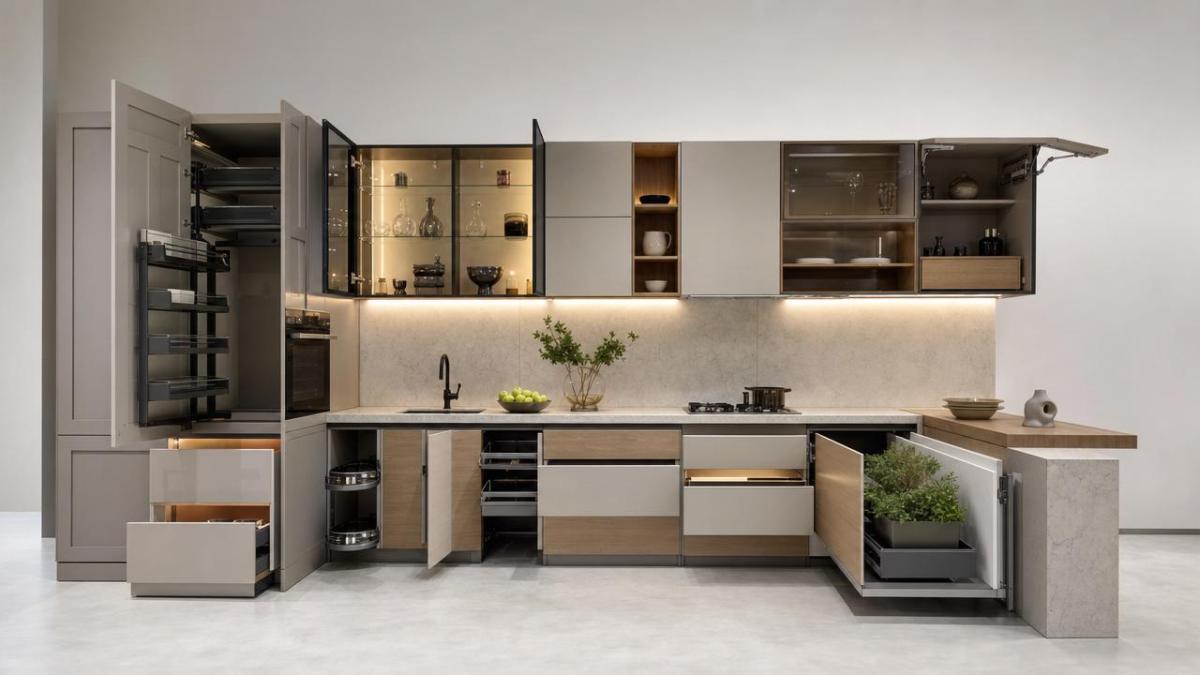
- Cabinet box customization: confirm whether carcass dimensions, panel thickness, interior shelf layout, toe kick height, and edge banding specifications can be adjusted for market standards or project requirements.
- Door style flexibility: check availability of shaker, flat-panel, slim-frame, glass-door, integrated-handle, and contemporary minimalist fronts for different consumer segments.
- Finish options: ask about matte, high-gloss, woodgrain, lacquer, melamine, PVC, PET, and painted finishes, plus color-matching support for reseller branding.
- Material compliance: verify CARB P2 and FSC-certified formaldehyde-free boards, especially if you sell in California, Canada, or environmentally regulated metro markets.
- Hardware selection: confirm hinge brands, drawer runner types, lift-up mechanisms, soft-close standards, concealed accessories, and upgrade paths for premium packages.
- Storage functions: review pull-out baskets, corner systems, cutlery organizers, pantry units, under-sink modules, spice racks, tray dividers, and tall-unit configurations.
- Space-saving features: check whether patented options such as Bi-Fold Doors, trackless sliding systems, and concealed hardware are available for compact apartments and condos.
- Branding support: ask if packaging, labels, assembly instructions, and specification sheets can be adapted for private-label distribution.
- Design-to-delivery workflow: confirm online 3D design, drawing turnaround, sample approval steps, customs clearance, shipment tracking, and installation support.
Product-Level Customization Options That Matter Most
1. Cabinet Structure and Sizing
One of the most important answers to “What are the customization options for KUCU kitchen cabinets?” is structural flexibility. KUCU can tailor cabinet width, height, and depth to suit local housing layouts, appliance dimensions, and installation practices. This matters for resellers serving both single-family homes and urban condominiums, where standard modular sizes may not be enough.
You should also confirm whether KUCU can adapt sink bases, oven housings, refrigerator surrounds, island cabinets, and pantry towers to fit project-specific plans. In export markets, these details often determine whether a cabinet system feels premium and built-in rather than generic.
2. Door Designs and Visual Positioning
Door style defines the retail identity of a kitchen line. KUCU supports multiple visual directions, allowing resellers to create collections for entry-level, mid-range, and luxury buyers. Shaker styles remain popular in North America, while sleek slab doors and minimalist profiles are strong options for Australian metro projects and modern developments.
For agents building differentiated product ranges, the key is to ask which styles are best suited for your target customer mix: renovation retail, builder packages, apartment developers, or custom home studios. A factory that offers visual flexibility gives you stronger showroom strategy and easier market segmentation.
3. Surface Finishes and Color Programs
When resellers ask what are the customization options for KUCU kitchen cabinets, finish selection is usually one of the first commercial concerns. KUCU offers a broad range of finish options that can support both trend-led collections and evergreen programs. Matte neutrals, natural wood effects, dark contemporary tones, and high-gloss urban finishes can all serve different retail channels.
Color consistency is especially important for repeat orders and project expansions. Resellers should ask about batch control, sample approval, and how custom tones are documented. If you are building your own cabinet brand, this directly affects your ability to maintain a reliable product image across multiple shipments.
4. Hardware, Motion Systems, and User Experience
Hardware upgrades often create some of the easiest margin opportunities for brand resellers. KUCU can customize hinges, soft-close drawer systems, lift-up doors, pull-out mechanisms, and concealed fittings. These details may look secondary on paper, but they strongly influence customer satisfaction and perceived quality.
A practical reseller strategy is to create tiered packages: standard, upgraded, and premium. This allows you to serve budget-sensitive builder clients while still offering higher-value upgrades to design-focused buyers.
How KUCU Supports Market-Specific Customization
Not all customization is visual. Some of the most valuable options are market-specific adjustments that improve compliance, installation, and customer acceptance. KUCU’s export experience in North America and Australia is important here because resellers often need more than factory production alone.
Checklist by Reseller Type: What to Prioritize
For Distributors
Distributors should focus on breadth and repeatability. The main question is not only what are the customization options for KUCU kitchen cabinets, but which options can be scaled across multiple dealers or branches. Prioritize stable finish programs, modular compatibility, packaging quality, documentation, and order consistency.
For Agents and Project Suppliers
Agents serving contractors or developers should prioritize engineering adaptability, fast quoting, and installation logic. In these cases, custom dimensions, apartment-friendly designs, and fast 3D design support often matter more than having the largest number of color choices.
For Private-Label Brand Resellers
Private-label buyers should ask about sample development, color customization, branded packaging, technical manuals, and how KUCU handles recurring model programs. If your goal is long-term brand building, the right supplier should support visual identity and operational consistency at the same time.
Commonly Overlooked Risks When Reviewing Custom Cabinet Options
Many resellers focus heavily on appearance and price, but that is not enough. To fully understand what are the customization options for KUCU kitchen cabinets, you should also review the less visible factors that affect claims, delays, and customer feedback.
- Ignoring installation compatibility: custom cabinets must fit local wall conditions, appliance standards, and jobsite tolerance expectations.
- Underestimating finish matching: special colors are valuable, but only if repeat orders remain consistent.
- Over-customizing low-volume SKUs: too many unique models can weaken inventory efficiency and complicate after-sales service.
- Not verifying compliance documents early: export paperwork and certifications should be confirmed before sales expansion.
- Missing storage-function opportunities: smart internal accessories often improve close rates more than cosmetic add-ons.
Practical Execution Advice Before You Start Cooperation
If you want to turn KUCU customization into a profitable cabinet program, begin with a focused launch plan. Do not request every possible variation at once. Instead, identify the 3 to 5 cabinet styles, 2 to 3 finish directions, and 2 storage-level packages that best suit your market.
Then prepare a reseller briefing sheet that includes target customer type, preferred price band, common kitchen sizes, compliance requirements, installation expectations, and branding goals. This helps KUCU’s design and production teams translate your market positioning into a workable product structure faster.
Because KUCU provides AI-powered 3D design with completion within 7 days, resellers can also shorten the sales cycle by using visual proposals early. This is particularly useful when pitching builders, developers, or multi-unit housing clients who need quick concept approval before placing larger orders.
Final Buying Guide: Questions to Ask KUCU First
To make your next step efficient, use the following questions when discussing what are the customization options for KUCU kitchen cabinets:
- Which cabinet sizes, door styles, and finishes are most suitable for my target region?
- Can you support private-label branding, custom packaging, and repeat color programs?
- Which eco-certified materials and compliance documents are available for my market?
- What space-saving innovations are recommended for apartments or narrow kitchen layouts?
- How does the design approval, production, shipping, and installation support process work?
- What is the recommended starter collection for a reseller who wants both flexibility and fast turnover?
For resellers in North America and Australia, KUCU offers more than made-to-order cabinetry. It provides a customizable export-ready system backed by 15 years of experience, eco-certified materials, patented space-saving features, and end-to-end support from design to delivery. If you need to confirm specifications, market fit, pricing structure, lead time, or partnership terms, it is best to begin with your target customer profile, preferred product tier, and required certifications. That approach will help KUCU recommend the most commercially practical cabinet customization plan for your brand.